Students blog

Explore the latest trends, tips, and experiences in college life in this blog written by fellow students.

Explore posts in other areas.

PreK-12Higher EducationProfessional

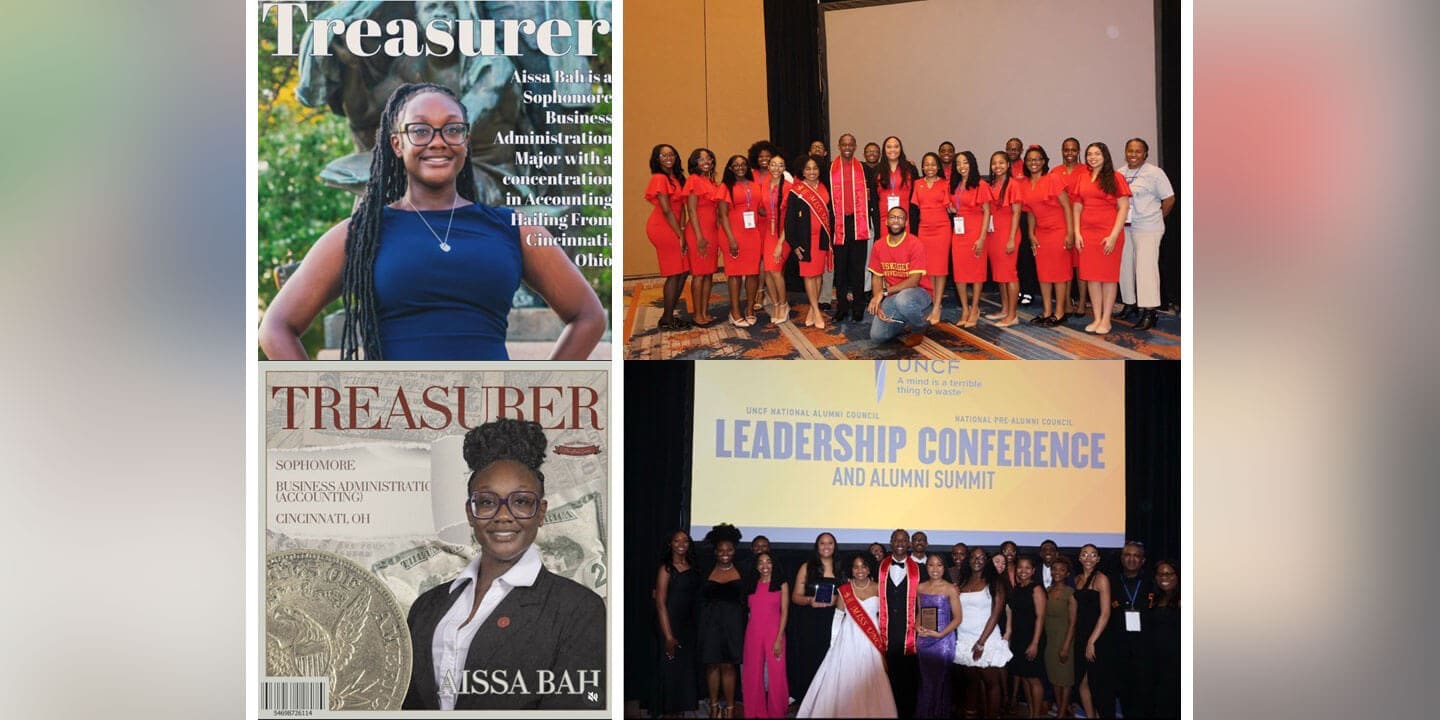
  • A photo collage of blog author Aissa in four different involvement events.

    Home Away From Home

    Aissatou Bah

    Hi, I'm Aissa! I’m currently studying business administration with a concentration in accounting at Tuskegee University. I’ve always had a love for numbers and organization, which is what drew me to accounting. However, my passion doesn't stop my college experience; there has been a balance of academic rigor and active involvement in campus life, helping me grow in ways I never imagined.

    Since starting at Tuskegee, I’ve engaged with clubs and organizations that have shaped my college experience and made the transition from being far away from home so much easier. One of my proudest achievements so far has been becoming the National Business Manager for UNCF (United Negro College Fund). This role allows me to contribute to an incredible cause by helping to raise funds and awareness for scholarships that support all college students.

    In addition to being on a national board, I serve as the treasurer for several organizations on campus: the NAACP, the Pre-Alumni Council, and the Ohio Club. Managing finances for these groups has given me real-world experience and allowed me to give back to the community that’s supported me. I also hold the position of Social Media Chair for the Entrepreneurial and Leadership Club, where I get to combine my love for organization with my interest in digital communication.

    I became a Pearson Campus Ambassador last Fall, and it’s been a fantastic opportunity to engage with other students, promote educational resources, and connect with a broader network. As if all that wasn’t enough, I’m also a Dean's List scholar, which keeps me focused on maintaining high academic standards while juggling my extracurricular responsibilities.

    Despite all the commitments, I’ve managed to keep a healthy balance by making time for my friends and family, especially when I need a break from the hustle of daily life. Being so far from home can be tough, but getting involved in campus activities has helped me feel connected, not just to my university, but also to the community I’m building here.

    Being active on campus has not only helped me grow personally and professionally but also made adjusting to life away from home a little easier. No matter where life takes me, I am thankful for the opportunities I’ve had to make a positive impact at Tuskegee University, and I’m excited to continue on this journey of growth, leadership, and success.

    Do you have a compelling story or student success tips you’d like to see published on the Pearson Students blog?  If you are a college student and interested in writing for us – click here to pitch your idea and get started! 

     

  • A young woman wearing a blue cap and gown. exits the stage after receiving her diploma. 

    Grades Aren't the Only Standouts on Your College Apps: Breaking the All-AP Mindset

    Dhwani Adhishesh

    We have all heard of APs, or Advanced Placement courses, and many of us have probably taken a few. In my experience, a majority of my peers in high school took around 2-3 AP classes per year, averaging around 12 total Advanced Placement courses by graduation. Let's be real: most didn't put themselves through this strenuous academic experience for the hope to learn more about riveting microeconomics or DNA strands. They did it for their college resumes, and the glorifying view to include each and every course on their Ivy League applications. But why isn't this enough?

    My High School Experience

    From 2020 to 2024, I went to one of the most academically rigorous high schools in the Bay Area. I performed in the theatre arts program for my high school all four years, on top of being a club officer for three clubs throughout my time. I was infamously known as one of the select few students who would only leave school when it was dark, due to the long rehearsals that were pretty much year-round. I was a classic theatre kid, but I also took my academics seriously. Though my experience was filled with long lasting memories and provided me with the ability to be where I am today, high school was a time of immense stress for everyone around me, especially due to the high levels of competitiveness specifically centered around a GPA craze and the obsession to constantly do more than your peers. I was never someone who wanted to take APs. To this day, I don’t regret taking solely one honors Spanish class and enjoying the rest of my school days. Here's why.

    The AP Appeal

    There’s no question that Advanced Placement courses give students a GPA boost and prepare them for a more difficult college curriculum. Moreso, various AP high school courses can land students credit that can carry on to college. So yes, there is a relatively understandable appeal. The issue isn’t merely taking an AP biology course if one plans to be a nursing major. The real problem is the number of APs students are taking, and the false reality they are sliding into that makes many believe that these classes are all a person needs to get into college. I believe that the issue is often not caused by a single person. As each graduating year goes by, peer pressure grows stronger. A small whisper in the year to take the “easy” AP Psychology class begins spreading the rumors. The phrase “everything is okay in moderation” doesn’t just apply to the number of donuts a person consumes in one morning. Taking a schedule consisting of a majority of AP courses is neither healthy nor enjoyable. Additionally, it doesn’t do as much as one might believe for their college applications.

    College App Curations

    In my opinion, a well-rounded college application includes an academically sound record, various extracurricular activities, and special and additional features like volunteer hours or commitments to specific outside pursuits. In fact, several admission websites state that a 4.0+ GPA and 12-15 APs aren’t primarily nor solely what admission officers look at. The biggest way to achieve this application layout while truly making the most out of one’s high school years is researching by themselves, minus the peer pressure culture. More often than not, the more people search and examine certain classes themselves, the less likely they will be to overload themselves with classes they never wanted in the first place. Doing what is best for one’s academic, intellectual, and recreational aspirations is the most important factor at the end of the day.

    High school is supposed to be a time to savor the last sips of our childhood before launching into the real world, where nothing is measured by a test score of one to five.

    Do you have a compelling story or student success tips you’d like to see published on the Pearson Students blog?  If you are a college student and interested in writing for us – click here to pitch your idea and get started! 


  • A young college woman on a stage presenting information on how to pronounce vowels in Italian words.

    So, What’s Next?

    Kelly Delpino

    College is an interesting place, one day you think you have life figured out and the next you are lost. I started college as an Architecture major and now I am graduating as a Communications major. Keep reading if you want to find out how I chose my major.

    General Education Classes

    When my advisor said to explore classes outside of my major, I naturally decided to only pick classes within the architecture major. Unfortunately (or fortunately), my plans were disrupted when all of the classes were taken, and I was forced to follow my advisor’s suggestion. To my surprise I ended up hating my only architecture class but loving my psychology and communications classes.

    Clubs

    With an infinite list of clubs, finding one I liked felt like working on a highly complicated project that could alter my life forever (ok..maybe I was being a little dramatic but as an indecisive person this task was difficult). After signing up for more clubs than I can count I ended up committing to the Hall Council. We were responsible for organizing activities for our building and collaborating with the Resident Assistance. This made me aware of my passion for working in teams, managing projects, and studying people’s behaviors to better cater to them.

    Self-Reflection

    After joining multiple organizations and living the college life for a year, I reflected on all my experiences and made a list of all the jobs that I saw myself doing based on the skills I’ve gained and what I’ve discovered about myself. Once I had the list finalized, I ranked them and looked up what the three highest positions actually entailed.

    Choice

    With the list of jobs narrowed down to my top three, all I needed to do was pick. Difficult for sure, but not impossible. Time told me what I searched for, showing me the right path along the way. Looking back at my choices and comparing it to my passion guided me towards just the right major for me.

    Why?

    When people asked me why I wanted to be an architect, my mind went blank. The truth is there wasn’t a reason, I just picked something and moved on. Now, when someone asks why I chose Communications, my eyes spark with joy and my heart races telling endless stories that made me who I am today.

    To make it simpler for you. I came up with a series of steps you can follow to make choosing a major less intimidating.

    Key Steps to Find the Perfect Major

    1. Take general education classes and allow yourself to explore multiple fields
    2. Join clubs that spark your interest
    3. Find a mentor within a club/class and ask for guidance
    4. Do some self-reflection and come up with jobs that you see yourself doing in the future
    5. Make a list of three to five jobs and learn more about them
    6. Decide which major fits your interests and aspirations best
    7. Ask yourself, why did I choose this major?

    By the end of these steps, you should have an idea of what you want to major in. However, if you cannot answer the question on step seven it is time to go back to step 1. Repeat this process as many times as you need and remember that it is never too late to change your path. Remember, ultimately, we all have the same goal, to be happy. If you don't feel passionate about your career, then reconsider your options and start again. The path is there, you just have to find it. Allow yourself to wander and get lost because that's the only way to learn and grow.

    Do you have a compelling story or student success tips you’d like to see published on the Pearson Students blog?  If you are a college student and interested in writing for us – click here to pitch your idea and get started! 


  • A young woman looks at a hammer-head shark in an aquarium.

    A Senior’s Advice on College Summers

    Arya Kirpekar

    Choosing the right thing to do between college semesters can be difficult. There are mixed emotions about wanting to stay a kid and do fun stuff and feeling obligated to get a job or an internship that can help your career. You have many options, and everyone’s path is different, but many students struggle to see how they can have fun and be productive in one summer while also taking a break to combat burnout. As a senior getting ready to graduate and move on to my next phase of life, here is my advice on how to organize your summers to maximize fun and professional growth.

    The Summer After Freshman Year

    It’s tempting to jump right into being an adult as soon as you finish your first year of college, but don’t forget that this is also your first time back at home after being away for a whole year. It also might be your last chance to have a “kid summer” before having to focus on getting an internship. The summer after my freshman year, I lived out my childhood dream of being a camp counselor at the summer camp I grew up going to. I cannot recommend this enough. The words “camp counselor” look great on a resume, and it’s a fun job! You truly get the best of both worlds with this job.

    The Summer After Sophomore Year

    The best choice I ever made was studying abroad for the summer. I had a fantastic time and learned so much about myself, the world, and traveling. It was also great because I was taking classes that I needed to graduate, but I wasn’t doing it in a way that fed into my burnout; rather, I was doing it while exploring Europe. This was the perfect balance as I bridged the gap to the second half of college and needed to focus on my future career. My biggest advice for every college student is to study abroad at some point in their college career. I promise you won’t regret it.

    The Summer After Junior Year

    Finally, it was time to look for an internship. As a design major, most major companies don’t accept interns younger than junior year, so I had my timeline somewhat laid out for me because of that. I spent the Spring semester of junior year searching for an internship and applying to many, many positions, then getting rejected from many, many positions. This grueling process can be disheartening, but I was lucky enough to be offered an internship at Georgia Aquarium for the summer. I loved my time there, and I learned so much about design and about working. I also had a super fun summer! I was able to hang out with friends after work and on the weekends and explore the city. Going into your senior year can be daunting, but having a little bit of work experience under my belt made the process feel more exciting than scary.

    The Summer After Senior Year

    I’m about to graduate so I’ll impart some wisdom that has been given to me. Most of the job application process is out of your hands, so you have to go with the flow. Your first job will likely not be your dream job, but rather a steppingstone towards the career you want. Keep an open mind and know that what’s meant to be, will be. Everybody’s path looks different, but it will all work out in the end.

    Do you have a compelling story or student success tips you’d like to see published on the Pearson Students blog?  If you are a college student and interested in writing for us – click here to pitch your idea and get started! 


  • A group of college women wearing traditional Hispanic dancing costumes with white tops and colorful, ruffled skirts.

    Embracing My Identity: How college helped me reconnect with my culture

    Andrea Chavez

    I grew up in a low-income community primarily made up of Hispanic residents. When I first moved into college, I felt like a stranger in a new world. I attend the University of California, Irvine, which has a diverse student body, with 27% of students identifying as Latinx. Despite this, I often felt out of place, as though I didn’t fully belong here, as I wasn't surrounded by that Latinx community I was so used to.

    The unfamiliarity of my surroundings and the limited representation of my culture initially left me questioning if this was the right place for me. But as I navigated the challenges of being a freshman, I slowly discovered that these feelings of exclusion were actually opportunities for growth. The experience of standing out in a predominantly non-Latinx environment made me more aware of my cultural roots and pushed me to embrace my identity even more fiercely.

    To make my freshman self feel more “at home” I joined school clubs that had backgrounds with Hispanic students. A club I joined my freshmen year that changed my perspective was “Hermanas Unidas de UCI” which was a club that was a club for Hispanic women to connect with each other and help each other academically. This club helped me find a more Hispanic community at school and made me feel more at home all the while being academic.

    Being part of this club helped me recognize I'm not alone in this academic journey and it made me all the prouder knowing I made it out of my community and became part of the 27%. Recognizing myself as part of this percentage of Latinos made me realize I should be proud of my background and where I come from because not everyone is Hispanic and has the same history as me; something I used to be ashamed of I became proud of.

    Now in my junior year, I can confidently say that I not only love my school, but I feel like I truly belong here. The journey has allowed me to build a deeper connection to my heritage and taught me to celebrate the uniqueness that I bring to the community. I’m writing this blog to help those who might be feeling the same way I did two years ago—overwhelmed, out of place, and unsure if they belong. I hope to show that it’s possible to embrace who you are, reconnect with your roots, and find a sense of belonging, even in spaces where you feel different.

    If you're struggling to find your place, know that you’re not alone. Your culture is a strength, not a barrier, and college can be an incredible opportunity to grow closer to your heritage and share it with others.

    Do you have a compelling story or student success tips you’d like to see published on the Pearson Students blog?  If you are a college student and interested in writing for us – click here to pitch your idea and get started! 


  • A computer-generated graphic featuring two superhero characters in costumes and capes.

    College Superhero

    Ariyannah Thibeaux

    In this world, you are given the opportunity to excel in your personal growth. Soaring among the rest may seem like a challenge, but college is a good opportunity for you to become your own Superhero.

    Your first step in becoming this “Superhero” is to decide on a “name”: what you are interested in. Every college has many different organizations you can join. Usually, you can even create a club if one doesn’t fit into your personal interests. In this part of your Superhero journey, you are not only picking out your name, but you are picking out what you believe in and what you want to be known for, so think hard.

    With your newly found name and passion, it will not be so hard to find the right group of friends that fit your needs. My college has a day at the beginning of each semester called “Get on Board Day,” where every organization is given the opportunity to showcase their group. During this day, you can talk to people who have interests like yours, similar mindsets, and the same passion for growing. You are also able to make new friends in your specific major and join group chats to ask about the classwork and plan events together. This gives you an opportunity to make friends you will see for the remainder of your college career.

    Being a Superhero also means that you need to take time for yourself to recuperate and catch up on necessary schoolwork. You can fight crime in the daytime by being an academic weapon and going to classes, and then in the nighttime, you can conquer going to your organization’s meetings, but will you get tired? Of course, you will; this means you have to manage your time adequately. By doing this, you can choose when you want to designate time to study, go to meetings, and take self-care time. This can be accomplished by using a physical or digital calendar to track everything.

    In college, sometimes we may forget that we are also human, and that Superheroes have rest days as well. Do you think that Batman fights crime every night? No, he still manages to go to meetings or do other fun things when he is free. If you can manage everything and give yourself grace, then you have successfully become a college Superhero.

    Embark on your new journey through college by attacking your academics and making meaningful memories with friends, and at the end of your college journey, you have ultimately saved the world!

    Do you have a compelling story or student success tips you’d like to see published on the Pearson Students blog?  If you are a college student and interested in writing for us – click here to pitch your idea and get started! 

     

  • Two collegiate women each holding a trophy, stand in front of a stage with a large tiger cut-out and blue and yellow decorations.

    Embracing the Next Chapter

    Nia LaCour

    How people perceive me as a person had always been very important to me. So naturally, when I found out I was expecting my first child my mind immediately jumped to what would the public think of me. It bothered me that from first glance no one would know my significant other and I had been together for five years. They had no idea that I was studying computer science with a 3.8 GPA or had been awarded close to $100,000 in scholarships since my first semester of school. To them I was only a young, unwed mother.

    At first, these assumptions were not only overwhelming, but also discouraging. I found myself wearing oversized clothing on campus to mask my pregnancy. I often skipped grabbing lunch to avoid the eyes that seemed to gravitate towards my growing belly. It felt as if my identity had been watered down to a stereotype. But I began to question why I was allowing the opinions of strangers to dictate how I carried myself. Hiding wasn’t fair to me or the life I was creating. Slowly, I began to embrace this chapter, understanding that neither my strength nor identity wasn’t diminished by these challenges – it was amplified.

    Despite the challenges, and even the fear, I persevered. I needed to prove I was capable of being great now more than ever. Throughout the duration of my pregnancy, I have accomplished many things that I thought would not be possible under the circumstances. I was awarded a $15,000 scholarship after bravely submitting my story, turning what some might see as setback into a story of resilience. I have maintained a 4.0 GPA for two consecutive semesters––both while carrying my child. I was honored with the “Top Jags Star” award, a recognition from a prestigious organization that acknowledged my academic excellence, leadership, and dedication. Beyond academics, I traveled to Arkansas to participate in the HBCU ACES case competition, where I led my team to a 1st-place victory. And most recently, I have secured an internship for the upcoming semester as a configuration engineer, further proving my ability to thrive in my field. These accomplishments reminded me that my pregnancy wasn’t a limitation it was just another layer of my story, one that strengthened my resolve and showcased my ability to persevere.

    As I write this, I am preparing for both finals and to enter motherhood. It’s a time filled with anticipation, determination, and gratitude. While this path has not been easy, it has shaped me into a stronger, more resilient version of myself. I am proud of what I’ve accomplished and excited for what lies ahead, knowing that my hard work has laid a foundation for a brighter future—not just for me, but for my child as well. This journey has taught me that with perseverance and faith in my abilities, I will always thrive, no matter the circumstances.

    Do you have a compelling story or student success tips you’d like to see published on the Pearson Students blog?  If you are a college student and interested in writing for us – click here to pitch your idea and get started! 
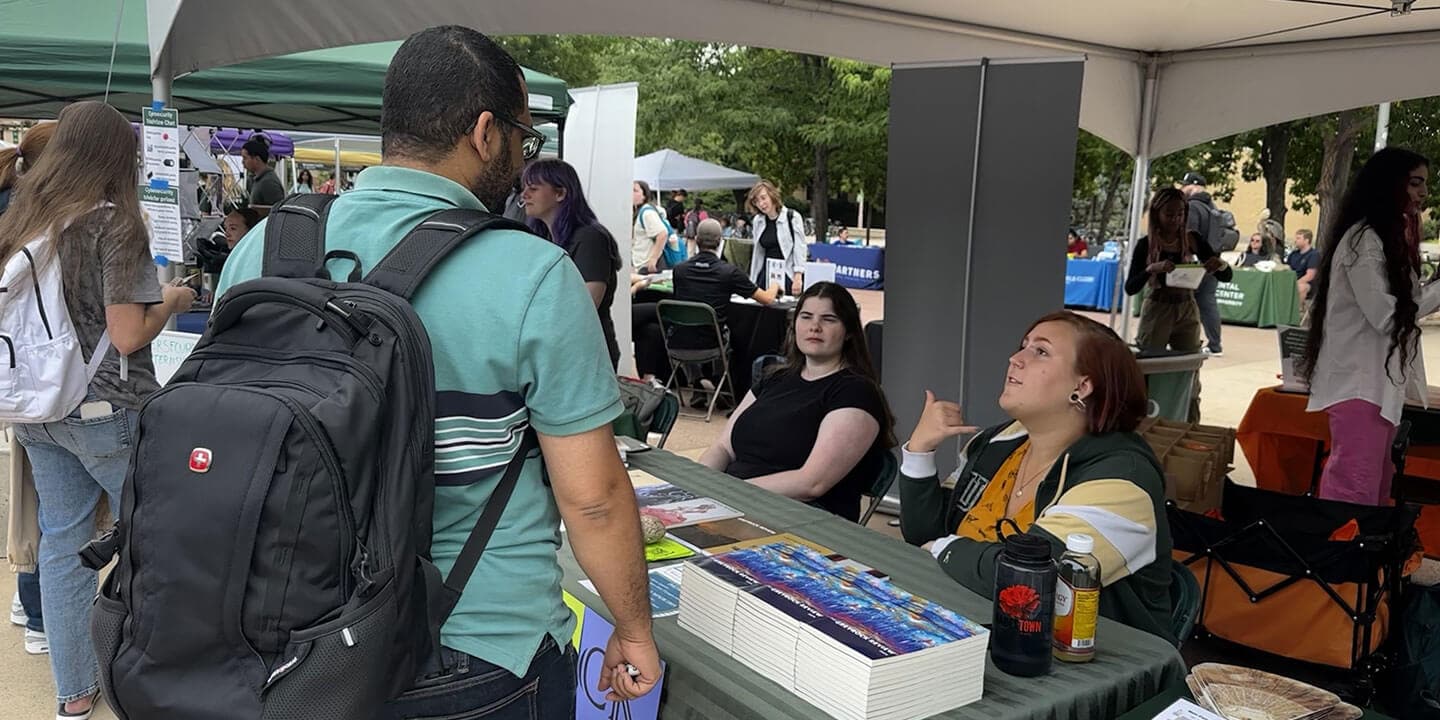
     

  • A college student wearing a backpack speaks with two staff members at a college organization fair.

    How to Build Your Resume Using College Resources

    Mandy Gonzales

    I started college during COVID – when everything was on lockdown and school was completely virtual. Because of that, I never stepped foot on campus for my entire freshman year. Now, as a senior, I have one big piece of advice for students at any stage of their college career: take advantage of all your school’s resources!!

    As a student, you’re paying for way more than just your classes. College is the perfect time to explore your career options and get a head start on building your resume! I wish I had known all of the services that my school offered earlier on, which is why I’m here now to encourage you to get involved on campus and guide you on where to start.

    Get Published!

    No matter your major, getting your work published is a major achievement that will make your resume stand out. Luckily, your college has tons of different avenues to facilitate getting your voice out into the world! Most colleges run undergraduate journals and student media organizations specifically to publish students. Depending on your interests, you could: get your research peer-reviewed and published, join the school newspaper and continuously publish articles, get your poetry/short stories published and read by hundreds, and even more! For most people, this is the easiest path to getting that first publishing credit, so don’t let it pass you by!

    The Writing Center

    But, before you get published, you’ll actually have to get writing! The Writing Center is a great resource for free feedback on all your work. Writing is a skill that will be important in any future endeavor, so don’t miss out on the chance to strengthen it right now! The Writing Center is there to help refine any piece of writing, from essays to poetry. This is the perfect way to learn how to make your writing more effective and to get feedback on anything you’re working on. Need help on coming up with an essay topic? Struggling on a major assignment? Want tips on how to improve your writing overall? Give the Writing Center a visit!

    Travel Opportunities

    Traveling during your studies is one of the best ways to make lasting memories and friendships. Studying abroad is alluring but can often be too expensive or daunting to students. Luckily, many colleges offer other opportunities to explore. One common opportunity is an Alternative Break! These are trips that run during school breaks, are typically held domestically, and center around a social cause, thus providing students with an experience that adds meaning to their studies and can enhance a resume. It’s also the perfect way to meet like-minded people, learn about important issues and new places, and give back to your community.

    The Career Center

    Last, but definitely not least, is the Career Center! This is possibly the most bountiful resource that your college has to help you build your career. Need help making a resume? Want to improve your interviewing skills? Looking to meet and network with new people? Want to learn from alumni? Searching for a job or internship? The Career Center can help you with all of this and more!

    College is the optimal platform to build a career from, but it doesn’t start once you get your degree. It starts now! Your college is there to help you get started while you’re in school– all the resources are there for you to use, so dive in now and get familiar with what your school offers you.

    Do you have a compelling story or student success tips you’d like to see published on the Pearson Students blog?  If you are a college student and interested in writing for us – click here to pitch your idea and get started! 


  • Five college students in a college building walking together and talking.

    College Friendships 101: Get out of your comfort zone!

    Ariyannah Thibeaux

    College freshmen often struggle during their first few weeks on campus because it may be their first time being away from home. It can be an even bigger challenge for students who are shy or introverted. Most of us want to go back home every chance we get or stay in our dorms until we have to go to class. We feel as if we don’t know who we are yet, so we keep going back to the places where we feel ourselves. Whether attending a college near home or eight hours away, we all go through a phase of being afraid to make a friend. But there is no such thing as being too shy to make a long-lasting friendship. Even though it may be awkward at first, I found these three ways to be helpful in making new friends and connections.

    Join a Student Organization

    The first thing I did was try to get more involved on campus. My university has an app that lets you see some of the organizations on campus, and we have a day when the majority of our organizations come out to recruit new members. Attending this event allowed me to explore groups that sparked my interest and to talk to some of the members. I was able to really get to know the people and to see if I could see myself being friends with them or if we had similar interests outside of the organization. By joining one organization I connected with the members and met upperclassmen who gave me advice on how to navigate college.

    Be True to Yourself

    My newfound friends helped me see that I should be unapologetically myself. Everyone likes an authentic person, no matter if they are “quirky.” I didn’t need to change myself to fit in. I began to look for ways to grow and not stagnate while everyone else around me was growing. If I wanted to see growth that is exceptional, I realized I should join organizations that directly impacted students and that directly impacted my community. This was one of the reasons why I knew I would find my home and why I would make more friends.

    Go to Class

    It sounds like basic advice, but the last step is to go to class. Talk to your classmates. Go to professor office hours. Who knows, the study group you join may turn out to be your forever friends.

    These are some tips that I followed in order to become a more “outgoing” person, and a person who is not so shy. This showed me that being shy does not hinder you from making friends. I could make friends and could influence other shy people to get out of their comfort zones and gain a better first-year experience!

    Do you have a compelling story or student success tips you’d like to see published on the Pearson Students blog?  If you are a college student and interested in writing for us – click here to pitch your idea and get started!