Ch. 18 The Cardiovascular System II: The Blood Vessels
Amerman - Human Anatomy & Physiology 2nd Edition
Amerman2nd EditionHuman Anatomy & PhysiologyISBN: 9780136873822Not the one you use?Change textbook
Chapter 18, Problem 9a

Mark the following statements as true or false. If a statement is false, correct it to make a true statement.
The sympathetic nervous system increases blood pressure in the short term by increasing cardiac output and peripheral resistance.

Verified step by step guidance
1
Step 1: Understand the role of the sympathetic nervous system (SNS) in regulating blood pressure. The SNS is part of the autonomic nervous system and is responsible for the 'fight or flight' response, which includes increasing heart rate, cardiac output, and peripheral resistance to elevate blood pressure in the short term.
Step 2: Analyze the statement provided. The statement claims that the sympathetic nervous system increases blood pressure in the short term by increasing cardiac output and peripheral resistance. This aligns with the physiological function of the SNS during stress or emergencies.
Step 3: Determine if the statement is true or false. Based on the physiological role of the SNS, the statement is true because the SNS does increase blood pressure in the short term by increasing both cardiac output (via increased heart rate and stroke volume) and peripheral resistance (via vasoconstriction).
Step 4: If the statement were false, you would need to correct it. For example, if the statement incorrectly claimed that the SNS decreases blood pressure, you would correct it by explaining that the SNS increases blood pressure through mechanisms such as vasoconstriction and increased cardiac activity.
Step 5: Conclude that the statement is true and does not require correction, as it accurately describes the short-term effects of the sympathetic nervous system on blood pressure regulation.

Verified video answer for a similar problem:

This video solution was recommended by our tutors as helpful for the problem above.
Was this helpful?

Key Concepts

Here are the essential concepts you must grasp in order to answer the question correctly.

Sympathetic Nervous System

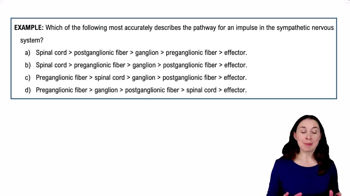
The sympathetic nervous system is a part of the autonomic nervous system that prepares the body for 'fight or flight' responses. It increases heart rate, dilates airways, and redirects blood flow to essential organs, thereby enhancing physical performance and alertness. Understanding its role is crucial for analyzing how it affects cardiovascular functions.
Recommended video:
1:21
Sympathetic Nervous System Example 3

Cardiac Output

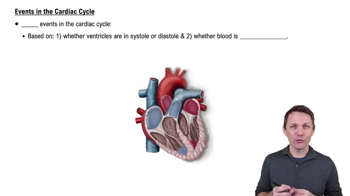
Cardiac output refers to the volume of blood the heart pumps per minute, calculated as the product of heart rate and stroke volume. It is a key determinant of blood pressure and overall circulatory efficiency. An increase in cardiac output typically leads to higher blood pressure, especially during stress or physical activity.
Recommended video:
Guided course
9:44
Events in the Cardiac Cycle

Peripheral Resistance

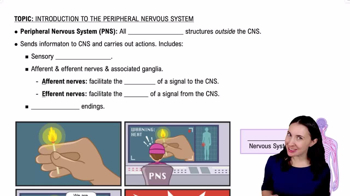
Peripheral resistance is the resistance to blood flow offered by the blood vessels, primarily determined by their diameter. When blood vessels constrict, peripheral resistance increases, leading to higher blood pressure. The sympathetic nervous system influences this resistance through vasoconstriction, which is vital for understanding blood pressure regulation.
Recommended video:
3:33
Peripheral Nervous System