Pearson+ LogoPearson+ Logo
Ch. 11 Introduction to the Nervous System and Nervous Tissue
Amerman - Human Anatomy & Physiology 2nd Edition
Erin C. Amerman2nd EditionHuman Anatomy & PhysiologyISBN: 9780136873822Not the one you use?Change textbook
Chapter 11, Problem L2.1

A drug that blocks Na+ channels in neurons does so not only in the axon but also in the dendrites and cell body. What overall effect would this have on action potential generation?

Verified step by step guidance
1
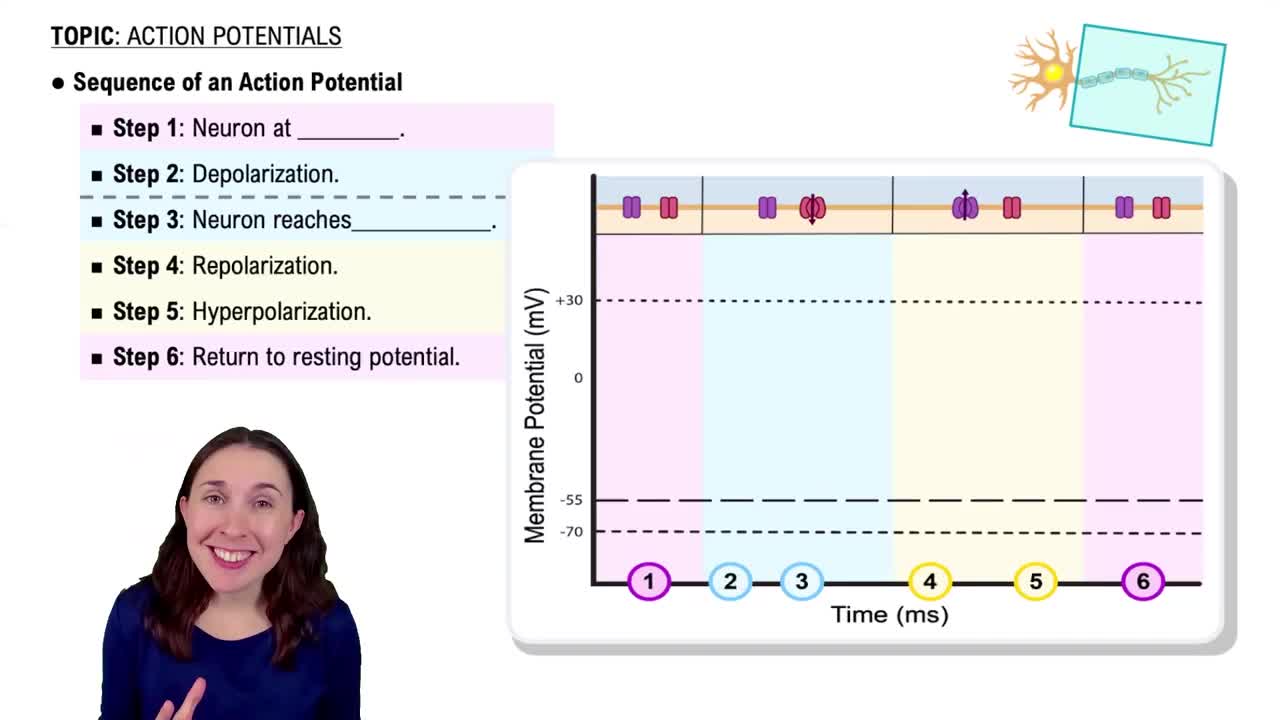
Understand the role of Na+ channels in neurons: Sodium (Na+) channels are essential for the initiation and propagation of action potentials. When these channels open, Na+ ions flow into the neuron, causing depolarization, which is the first step in generating an action potential.
Recognize the locations of Na+ channels: Na+ channels are present in the axon, dendrites, and cell body of a neuron. In the axon, they are critical for propagating the action potential, while in the dendrites and cell body, they help in summing up excitatory and inhibitory inputs to reach the threshold for action potential initiation.
Analyze the effect of blocking Na+ channels in the dendrites and cell body: Blocking Na+ channels in these regions would prevent the depolarization needed to reach the threshold potential. This would inhibit the neuron's ability to integrate incoming signals and generate an action potential at the axon hillock.
Analyze the effect of blocking Na+ channels in the axon: Blocking Na+ channels in the axon would prevent the propagation of the action potential along the axon, effectively stopping the signal from being transmitted to the synaptic terminals.
Conclude the overall effect: Blocking Na+ channels throughout the neuron (dendrites, cell body, and axon) would completely inhibit the generation and propagation of action potentials, rendering the neuron unable to communicate with other cells.

Verified video answer for a similar problem:

This video solution was recommended by our tutors as helpful for the problem above.
Was this helpful?

Key Concepts

Here are the essential concepts you must grasp in order to answer the question correctly.

Action Potential

An action potential is a rapid, temporary change in the membrane potential of a neuron, allowing it to transmit signals. It occurs when a neuron depolarizes, reaching a threshold that opens voltage-gated sodium channels, allowing Na<sup>+</sup> ions to flow into the cell. This process is crucial for neuronal communication and is typically initiated at the axon hillock.
Recommended video:
03:53
Action Potential

Sodium Channels

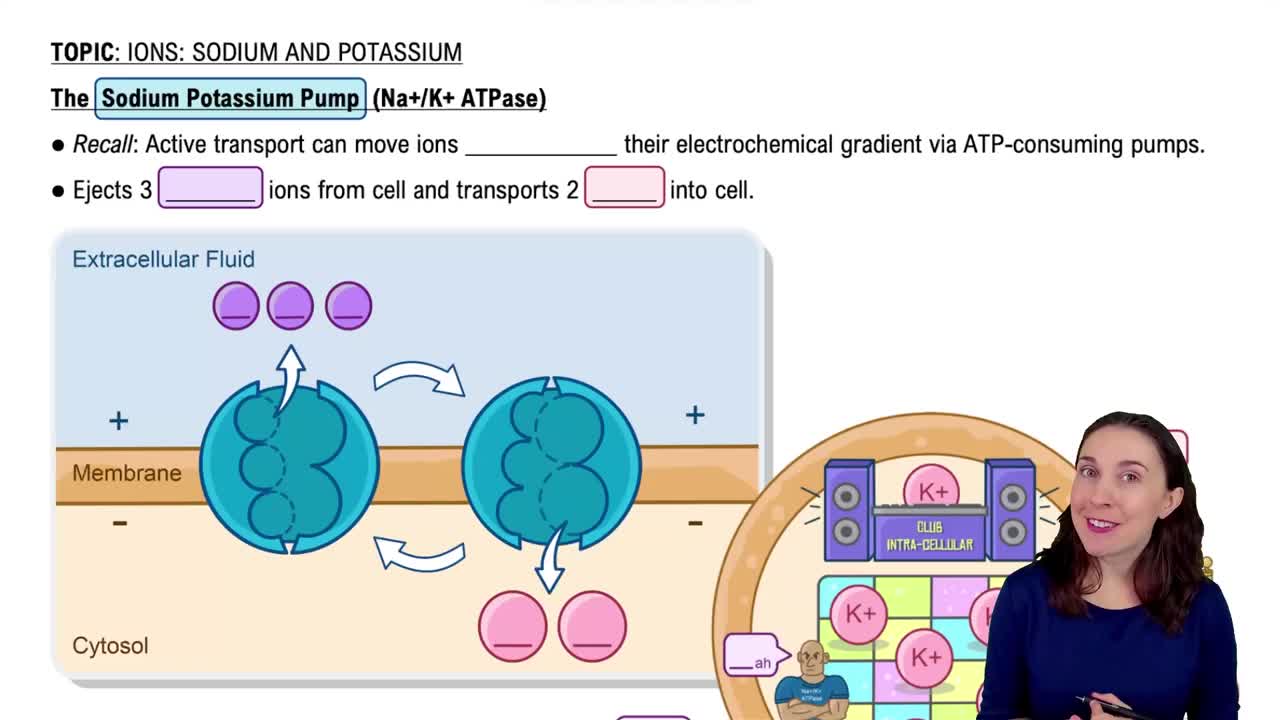
Sodium channels are specialized proteins in the neuronal membrane that facilitate the influx of Na<sup>+</sup> ions during depolarization. Blocking these channels prevents the necessary sodium influx, which is essential for the generation and propagation of action potentials. This blockage can significantly impair neuronal excitability and signal transmission.
Recommended video:
03:40
The Sodium Potassium Pump

Neuronal Structure

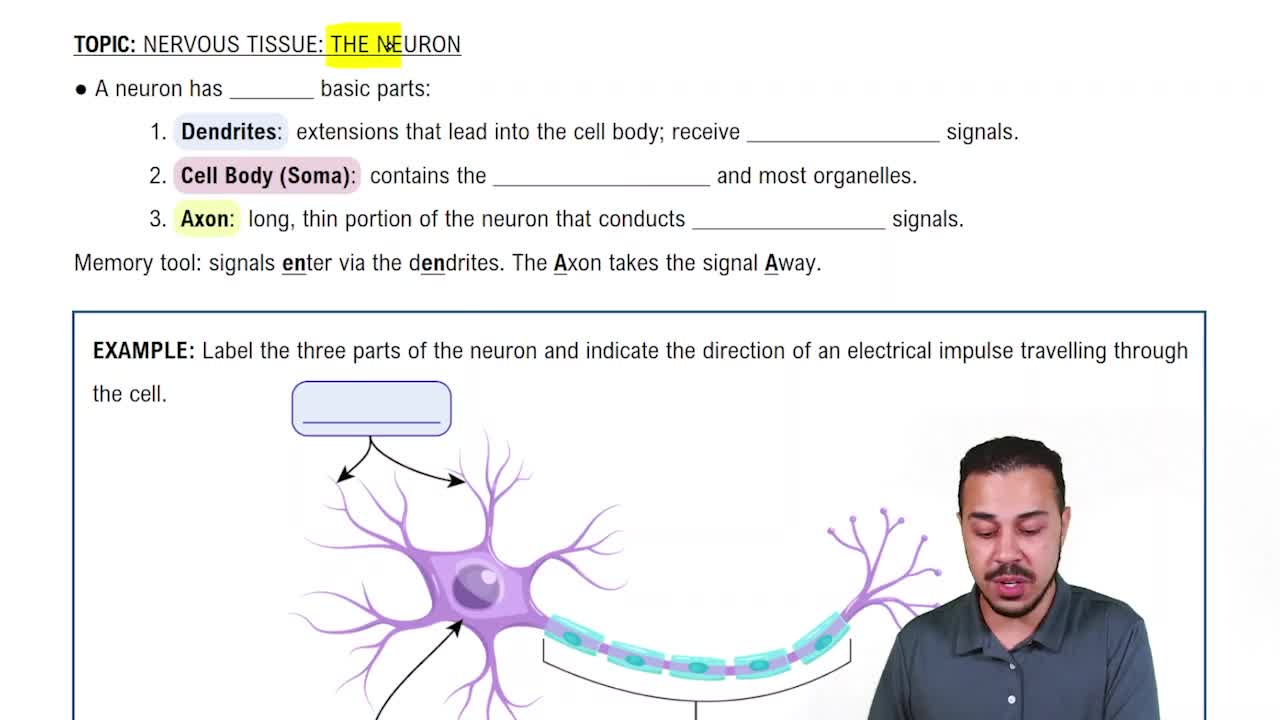
Neurons consist of three main parts: the cell body (soma), dendrites, and axon. Dendrites receive signals from other neurons, while the axon transmits action potentials away from the cell body. The presence of sodium channels in both the axon and dendrites means that blocking these channels affects not only the initiation of action potentials but also the overall excitability and responsiveness of the neuron.
Recommended video: