Pearson+ LogoPearson+ Logo
Ch. 3 The Cell
Amerman - Human Anatomy & Physiology 2nd Edition
Erin C. Amerman2nd EditionHuman Anatomy & PhysiologyISBN: 9780136873822Not the one you use?Change textbook
Chapter 3, Problem 1

Which of the following is not a basic function shared by all cells?
a. Cell metabolism
b. Communication
c. Cell reproduction
d. Cell movement
e. Transport of substances through the cell

Verified step by step guidance
1
Step 1: Begin by understanding the basic functions shared by all cells. These include cell metabolism (chemical reactions within the cell), communication (signaling between cells), cell reproduction (division to produce new cells), and transport of substances (movement of molecules across the cell membrane).
Step 2: Recognize that not all cells perform every function. For example, while many cells can move, not all cells exhibit movement as a basic function. Movement is typically specialized to certain cell types, such as muscle cells or immune cells.
Step 3: Compare the options provided in the question to the list of universally shared functions. Identify which function is specialized and not shared by all cells.
Step 4: Eliminate the options that are clearly universal functions (e.g., metabolism, communication, reproduction, and transport). Focus on the remaining option that is not universally shared.
Step 5: Conclude that the correct answer is the function that is specialized to certain cell types and not a basic function shared by all cells.

Verified video answer for a similar problem:

This video solution was recommended by our tutors as helpful for the problem above.
Was this helpful?

Key Concepts

Here are the essential concepts you must grasp in order to answer the question correctly.

Cell Metabolism

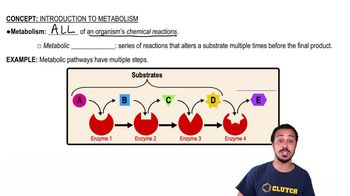
Cell metabolism refers to the biochemical processes that occur within a cell to maintain life. This includes the conversion of nutrients into energy, the synthesis of necessary compounds, and the breakdown of waste products. All cells, regardless of type, engage in metabolic activities to support their functions.
Recommended video:
02:17
Introduction to Metabolism

Cell Communication

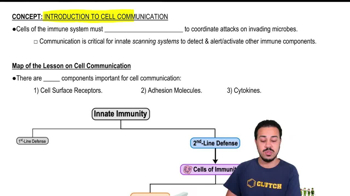
Cell communication involves the mechanisms by which cells interact and respond to their environment and each other. This can include signaling pathways, receptor-ligand interactions, and the exchange of information through chemical signals. Effective communication is essential for coordinating activities and maintaining homeostasis within multicellular organisms.
Recommended video:
2:59
Map of the Lesson on Cell Communication

Cell Reproduction

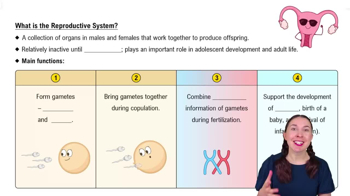
Cell reproduction is the process by which cells divide and replicate to produce new cells. This is a fundamental function for growth, development, and tissue repair. While all cells have the capability to reproduce, the method and frequency can vary significantly between different cell types, making it a less universal function compared to metabolism and communication.
Recommended video:
2:08
What is the Reproductive System?