Ch. 41 - Animal Nutrition
Campbell - Campbell Biology 11th Edition
Urry11th EditionCampbell BiologyISBN: 9789357423311Not the one you use?Change textbook
Chapter 41, Problem 3

Which of the following organs is incorrectly paired with its function?
a. Stomach—protein digestion
b. Large intestine—bile production
c. Small intestine—nutrient absorption
d. Pancreas—enzyme production

Verified step by step guidance
1
Identify the primary function of each organ listed in the options.
Option a: The stomach is primarily responsible for the digestion of proteins. It secretes gastric juices, including pepsin, which breaks down proteins into smaller peptides.
Option b: The large intestine is mainly involved in water absorption and the formation of feces. It does not produce bile; bile is produced by the liver.
Option c: The small intestine is the main site for nutrient absorption. It absorbs nutrients from digested food into the bloodstream.
Option d: The pancreas produces enzymes that aid in the digestion of carbohydrates, proteins, and fats. It also produces insulin and glucagon for blood sugar regulation.

Verified video answer for a similar problem:

This video solution was recommended by our tutors as helpful for the problem above.
Video duration:
2m
Was this helpful?

Key Concepts

Here are the essential concepts you must grasp in order to answer the question correctly.

Digestive System Functions

The digestive system is responsible for breaking down food into nutrients, which the body uses for energy, growth, and cell repair. Each organ within the system has specific functions, such as the stomach for protein digestion, the small intestine for nutrient absorption, and the pancreas for enzyme production. Understanding these functions is crucial for identifying any incorrect pairings.
Recommended video:
Guided course
05:11
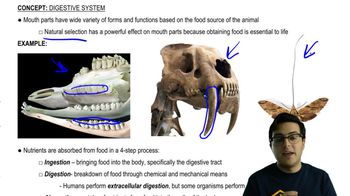
Digestion and Digestive Tracts

Role of the Large Intestine

The large intestine primarily absorbs water and electrolytes from indigestible food matter and compacts waste into feces. It does not produce bile; bile is produced by the liver and stored in the gallbladder. Recognizing the large intestine's role helps in identifying the incorrect pairing in the question.
Recommended video:
Guided course
05:59
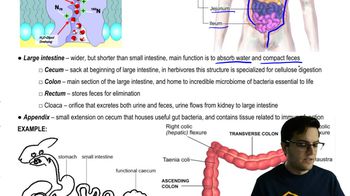
Large Intestine

Bile Production

Bile is a digestive fluid produced by the liver and stored in the gallbladder, not the large intestine. It aids in the digestion and absorption of fats in the small intestine. Understanding where bile is produced and its function is essential for correctly answering questions about digestive organ functions.
Recommended video:
Guided course
04:36
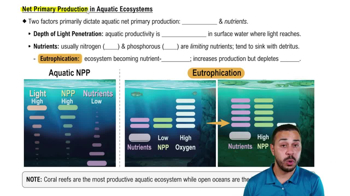
Primary Production in Aquatic Ecosystems