Ch. 41 - Animal Nutrition
Campbell - Campbell Biology 11th Edition
Urry11th EditionCampbell BiologyISBN: 9789357423311Not the one you use?Change textbook
Chapter 41, Problem 1

Fat digestion yields fatty acids and glycerol. Protein digestion yields amino acids. Both digestive processes
a. Occur inside cells in most animals
b. Add a water molecule to break bonds
c. Require a low pH resulting from HCl production
d. Consume ATP

Verified step by step guidance
1
Understand the process of digestion: Digestion is the breakdown of large molecules into smaller ones that can be absorbed by the body. Fat digestion breaks down fats into fatty acids and glycerol, while protein digestion breaks down proteins into amino acids.
Consider the role of water in digestion: Hydrolysis is a key reaction in digestion where water is used to break chemical bonds. This process is common in the digestion of both fats and proteins.
Evaluate the environment required for digestion: Many digestive enzymes function optimally at specific pH levels. For example, the stomach has a low pH due to hydrochloric acid (HCl), which aids in protein digestion.
Assess the energy requirements: ATP is the energy currency of the cell, but digestion itself is primarily a chemical process that does not directly consume ATP. Instead, ATP is used in cellular processes that follow digestion, such as absorption and transport.
Determine where digestion occurs: Digestion primarily occurs in the digestive tract, not inside cells. Enzymes secreted by organs like the stomach and pancreas facilitate this process outside of cells.

Verified video answer for a similar problem:

This video solution was recommended by our tutors as helpful for the problem above.
Video duration:
2m
Was this helpful?

Key Concepts

Here are the essential concepts you must grasp in order to answer the question correctly.

Hydrolysis in Digestion

Hydrolysis is a chemical process that involves the addition of water to break down complex molecules into simpler ones. In digestion, enzymes catalyze the hydrolysis of fats into fatty acids and glycerol, and proteins into amino acids. This process is essential for nutrient absorption and occurs in the digestive tract of animals.
Recommended video:
Guided course
05:11
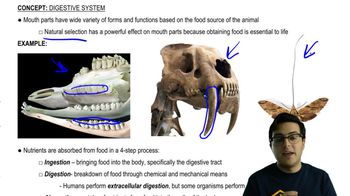
Digestion and Digestive Tracts

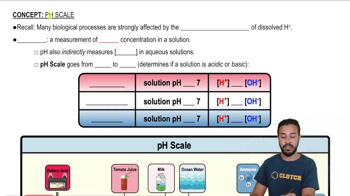
Role of pH in Digestion

The pH level in the digestive system is crucial for enzyme activity. For instance, the stomach maintains a low pH due to hydrochloric acid (HCl) production, which activates pepsinogen to pepsin for protein digestion. However, not all digestive processes require a low pH; for example, fat digestion primarily occurs in the small intestine where the pH is neutral to slightly alkaline.
Recommended video:

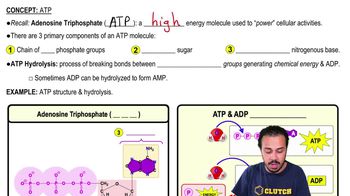
ATP in Cellular Processes

Adenosine triphosphate (ATP) is the energy currency of the cell, used in various cellular processes. While ATP is crucial for active transport and biosynthetic reactions, the digestion of macromolecules like fats and proteins primarily relies on enzymatic hydrolysis, which does not directly consume ATP. Instead, ATP is used in the absorption and transport of digested nutrients across cell membranes.
Recommended video: