Pearson+ LogoPearson+ Logo
Ch. 44 - Osmoregulation and Excretion
Campbell - Campbell Biology 11th Edition
Urry11th EditionCampbell BiologyISBN: 9789357423311Not the one you use?Change textbook
Chapter 44, Problem 1

Unlike an earthworm's metanephridia, a mammalian nephron
a. Is intimately associated with a capillary network.
b. Functions in both osmoregulation and excretion.
c. Receives filtrate from blood instead of coelomic fluid.
d. Has a transport epithelium.

Verified step by step guidance
1
Understand the function of a mammalian nephron: It is the functional unit of the kidney, responsible for filtering blood, reabsorbing necessary substances, and excreting waste as urine.
Compare the nephron to the earthworm's metanephridia: Metanephridia are excretory structures in earthworms that filter coelomic fluid, not blood.
Identify the key differences: A mammalian nephron receives filtrate directly from the blood, whereas metanephridia receive it from coelomic fluid.
Consider the role of the capillary network: The nephron is closely associated with a capillary network, specifically the glomerulus, which is crucial for filtering blood.
Evaluate the options: Analyze each option to determine which one highlights a unique feature of the mammalian nephron compared to the earthworm's metanephridia.

Verified video answer for a similar problem:

This video solution was recommended by our tutors as helpful for the problem above.
Video duration:
26s
Was this helpful?

Key Concepts

Here are the essential concepts you must grasp in order to answer the question correctly.

Nephron Structure and Function

The nephron is the functional unit of the mammalian kidney, responsible for filtering blood, reabsorbing essential nutrients, and excreting waste. It consists of a glomerulus, where blood filtration occurs, and a tubular system that processes the filtrate. This structure is closely associated with a capillary network, facilitating efficient exchange and regulation of substances.
Recommended video:
Guided course
06:04
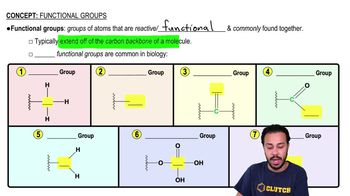
Functional Groups

Osmoregulation and Excretion

Osmoregulation is the process by which organisms maintain fluid balance and concentration of solutes, while excretion involves the removal of metabolic waste. In mammals, the nephron plays a dual role in both processes, adjusting the composition of urine to regulate water and electrolyte balance, and eliminating waste products like urea from the bloodstream.
Recommended video:
Guided course
07:16
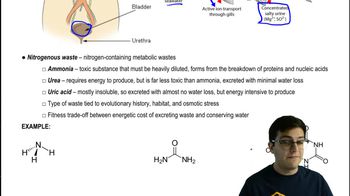
Osmoregulation and Nitrogenous Waste

Transport Epithelium

Transport epithelium refers to specialized cells that facilitate the movement of substances across cellular membranes. In the nephron, these cells line the tubules and are crucial for selective reabsorption and secretion, allowing the kidney to fine-tune the composition of blood and urine. This selective transport is vital for maintaining homeostasis in the body.
Recommended video:
Guided course
02:37
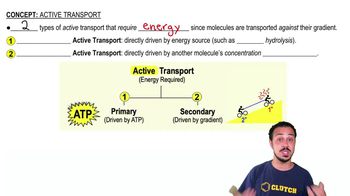
Active Transport