Ch. 4 - Extensions of Mendelian Genetics
Klug - Concepts of Genetics  12th Edition
Klug12th EditionConcepts of Genetics ISBN: 9780135564776Not the one you use?Change textbook
Chapter 4, Problem 17e

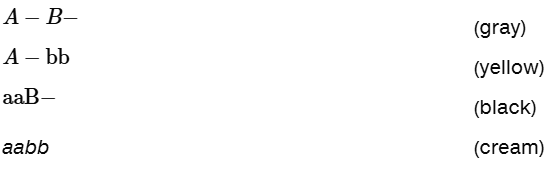
In rats, the following genotypes of two independently assorting autosomal genes determine coat color:
Genotype and phenotype combinations for coat color in rats, showing gray, yellow, black, and cream colors.
A third gene pair on a separate autosome determines whether or not any color will be produced. The CC and Cc genotypes allow color according to the expression of the A and B alleles. However, the cc genotype results in albino rats regardless of the A and B alleles present. Determine the F₁ phenotypic ratio of the following crosses:
AABbCc×AABbcc

Verified step by step guidance
1
Identify the genotypes of the parents: AABbCc and AABbcc. Note that the A and B genes determine coat color, while the C gene determines whether color is expressed (C_ allows color, cc results in albino).
Determine the possible gametes for each parent. For AABbCc, the gametes are ABC, ABc, AbC, and Abc. For AABbcc, the gametes are ABc and Abc.
Set up a Punnett square to combine the gametes from both parents. This will allow you to determine the genotypes of the offspring.
Analyze the offspring genotypes to determine their phenotypes. Remember: CC or Cc allows color expression, while cc results in albino. For color, A—B— is gray, A—bb is yellow, aaB— is black, and aabb is cream.
Count the number of offspring for each phenotype and calculate the phenotypic ratio. Include albino as a separate category since cc overrides the A and B genes.

Verified video answer for a similar problem:

This video solution was recommended by our tutors as helpful for the problem above.
Video duration:
2m
Was this helpful?

Key Concepts

Here are the essential concepts you must grasp in order to answer the question correctly.

Independent Assortment

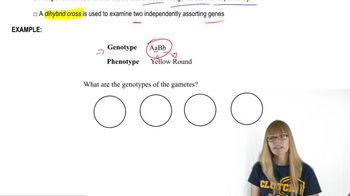
Independent assortment is a fundamental principle of genetics stating that alleles for different traits segregate independently of one another during gamete formation. This means that the inheritance of one trait will not affect the inheritance of another, allowing for a variety of combinations in offspring. In the context of the question, the A and B genes assort independently from the C gene, which is crucial for determining the phenotypic ratios.
Recommended video:
Guided course
04:58
Gamete Genetics and Independent Assortment

Punnett Square

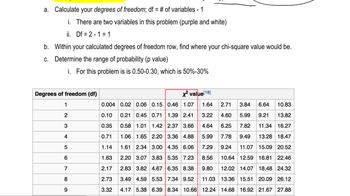
A Punnett square is a diagram used to predict the genotypes and phenotypes of offspring from a genetic cross. It organizes the possible combinations of alleles from each parent, allowing for a visual representation of genetic variation. In this case, the Punnett square helps to determine the phenotypic ratios resulting from the cross between AABbCc and AABbcc, illustrating how different combinations of alleles can lead to various coat colors in rats.
Recommended video:
Guided course
18:27
Chi Square Analysis

Epistasis

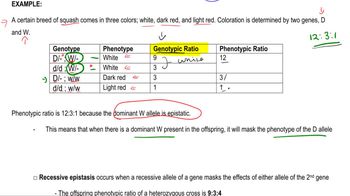
Epistasis refers to the interaction between genes where the expression of one gene can mask or modify the expression of another gene. In this scenario, the C gene determines whether color will be produced at all, with the cc genotype resulting in albino rats regardless of the A and B alleles. Understanding epistasis is essential for accurately predicting the phenotypic outcomes of the genetic crosses presented in the question.
Recommended video:
Guided course
13:08
Epistatic Genes
Related Practice
Textbook Question

Given the inheritance pattern of coat color in rats described in Problem 17, predict the genotype and phenotype of the parents who produced the following offspring: 27/64 gray:

16/64 albino: 9/64 yellow: 9/64 black: 3/64 cream

457
views
Textbook Question

Given the inheritance pattern of coat color in rats described in Problem 17, predict the genotype and phenotype of the parents who produced the following offspring:

9/16 gray: 3/16 yellow: 4/16 albino

561
views
Textbook Question

In rats, the following genotypes of two independently assorting autosomal genes determine coat color:

A third gene pair on a separate autosome determines whether or not any color will be produced. The CC and Cc genotypes allow color according to the expression of the A and B alleles. However, the cc genotype results in albino rats regardless of the A and B alleles present. Determine the F₁ phenotypic ratio of the following crosses:

AAbbCC×aaBBcc

593
views
Textbook Question

Given the inheritance pattern of coat color in rats described in Problem 17, predict the genotype and phenotype of the parents who produced the following offspring:

9/16 gray: 3/16 yellow: 3/16 black: 1/16 cream

535
views
Textbook Question

In rats, the following genotypes of two independently assorting autosomal genes determine coat color:

A third gene pair on a separate autosome determines whether or not any color will be produced. The CC and Cc genotypes allow color according to the expression of the A and B alleles. However, the cc genotype results in albino rats regardless of the A and B alleles present. Determine the F₁ phenotypic ratio of the following crosses:

AaBbCc×AaBbcc

472
views
Textbook Question

In rats, the following genotypes of two independently assorting autosomal genes determine coat color:

A third gene pair on a separate autosome determines whether or not any color will be produced. The CC and Cc genotypes allow color according to the expression of the A and B alleles. However, the cc genotype results in albino rats regardless of the A and B alleles present. Determine the F₁ phenotypic ratio of the following crosses: AaBBCc×AaBBCc

760
views