Pearson+ LogoPearson+ Logo
Ch. 1 - Introduction to Genetics
Klug - Concepts of Genetics  12th Edition
Klug12th EditionConcepts of Genetics ISBN: 9780135564776Not the one you use?Change textbook
Chapter 1, Problem 16

Why do you think discoveries in genetics have been recognized with so many Nobel Prizes?

Verified step by step guidance
1
Step 1: Understand the significance of genetics as a fundamental biological science that explains how traits are inherited from one generation to the next, influencing all living organisms.
Step 2: Recognize that discoveries in genetics have provided critical insights into the molecular basis of life, such as the structure of DNA, gene function, and genetic regulation, which have broad implications for medicine, agriculture, and biotechnology.
Step 3: Consider how these breakthroughs have led to practical applications, including genetic engineering, gene therapy, and personalized medicine, which have transformed healthcare and improved human well-being.
Step 4: Acknowledge that the Nobel Prize often honors pioneering work that opens new fields or fundamentally changes scientific understanding, and genetics has repeatedly done so by revealing the mechanisms of heredity and molecular biology.
Step 5: Reflect on the collaborative and interdisciplinary nature of genetics research, which combines biology, chemistry, physics, and technology, leading to innovative discoveries that have had profound scientific and societal impacts worthy of Nobel recognition.

Verified video answer for a similar problem:

This video solution was recommended by our tutors as helpful for the problem above.
Video duration:
2m
Was this helpful?

Key Concepts

Here are the essential concepts you must grasp in order to answer the question correctly.

Fundamental Role of Genetics in Biology

Genetics is central to understanding how traits are inherited and how organisms develop and function. Discoveries in genetics reveal the molecular basis of life, influencing many biological fields and medical research, which underscores their profound scientific importance.
Recommended video:
Guided course
03:25
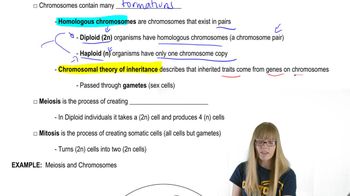
Chromosomal Fundamentals

Impact on Medicine and Biotechnology

Genetic discoveries have revolutionized medicine by enabling diagnosis, treatment, and prevention of genetic diseases. Advances like gene editing and genetic engineering have vast applications in biotechnology, agriculture, and healthcare, highlighting their transformative societal impact.
Recommended video:
Guided course
06:51
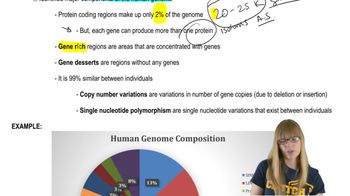
Human Genome Composition

Innovation and Breakthroughs in Research Techniques

Many Nobel-winning genetics discoveries involve novel methods such as DNA sequencing, recombinant DNA technology, and CRISPR. These innovations have opened new research avenues, allowing scientists to explore life at the molecular level with unprecedented precision.
Recommended video:
Guided course
09:46
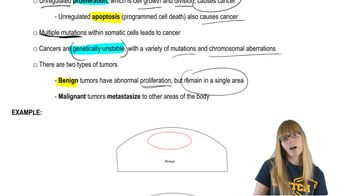
Cancer Characteristics
Related Practice
Textbook Question

We all carry about 20,000 genes in our genome. So far, patents have been issued for more than 6000 of these genes. Do you think that companies or individuals should be able to patent human genes? Why or why not?

950
views
Textbook Question

How has the use of model organisms advanced our knowledge of the genes that control human diseases?

1059
views
Textbook Question

If you knew that a devastating late-onset inherited disease runs in your family (in other words, a disease that does not appear until later in life) and you could be tested for it at the age of 20, would you want to know whether you are a carrier? Would your answer be likely to change when you reach age 40?

765
views
Textbook Question

The Age of Genetics was created by remarkable advances in the use of biotechnology to manipulate plant and animal genomes. Given that the world population reached 7.5 billion people in 2017 and is expected to reach 9.7 billion in 2050, some scientists have proposed that only the worldwide introduction of genetically modified (GM) foods will increase crop yields enough to meet future nutritional demands. Pest resistance, herbicide, cold, drought, and salinity tolerance, along with increased nutrition, are seen as positive attributes of GM foods. However, others caution that unintended harm to other organisms, reduced effectiveness to pesticides, gene transfer to nontarget species, allergenicity, and as yet unknown effects on human health are potential concerns regarding GM foods. If you were in a position to control the introduction of a GM primary food product (rice, for example), what criteria would you establish before allowing such introduction?

644
views