Pearson+ LogoPearson+ Logo
Ch. 1 - Introduction to Genetics
Klug - Concepts of Genetics  12th Edition
Klug12th EditionConcepts of Genetics ISBN: 9780135564776Not the one you use?Change textbook
Chapter 1, Problem 15

If you knew that a devastating late-onset inherited disease runs in your family (in other words, a disease that does not appear until later in life) and you could be tested for it at the age of 20, would you want to know whether you are a carrier? Would your answer be likely to change when you reach age 40?

Verified step by step guidance
1
Understand the nature of late-onset inherited diseases: these are genetic conditions that manifest symptoms later in life, often after reproductive age, which means individuals can carry the mutation without early symptoms.
Consider the psychological and practical implications of knowing your carrier status at age 20, such as anxiety, lifestyle changes, and planning for the future, even though symptoms have not yet appeared.
Reflect on how the knowledge might influence medical decisions, surveillance, or preventive measures that could be taken before symptoms arise.
Evaluate how your perspective might change by age 40, when symptoms might start to appear or when the risk becomes more immediate, potentially making the information more actionable or urgent.
Think about the ethical and personal factors involved in genetic testing, including privacy, family planning, and the impact on relatives who might also be at risk.

Verified video answer for a similar problem:

This video solution was recommended by our tutors as helpful for the problem above.
Video duration:
48s
Was this helpful?

Key Concepts

Here are the essential concepts you must grasp in order to answer the question correctly.

Genetic Testing and Carrier Status

Genetic testing identifies whether an individual carries specific gene mutations linked to inherited diseases. Being a carrier means having one copy of a mutated gene that may or may not cause symptoms but can be passed to offspring. Understanding carrier status helps in assessing personal health risks and making informed reproductive decisions.
Recommended video:
Guided course
11:35
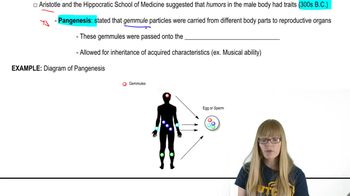
History of Genetics

Late-Onset Genetic Diseases

Late-onset diseases manifest symptoms later in life, often after reproductive age, such as Huntington’s disease. Knowing about such conditions early can influence life planning, psychological well-being, and medical monitoring. The delayed onset raises ethical and emotional considerations about when and whether to learn one’s genetic status.
Recommended video:
Guided course
09:03
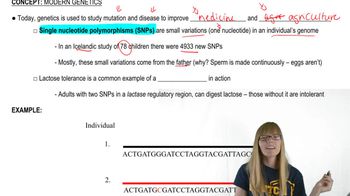
Modern Genetics

Psychological and Ethical Implications of Genetic Information

Learning about one’s genetic risks can cause anxiety, affect life choices, and impact family dynamics. Ethical issues include the right to know or not know, potential discrimination, and privacy concerns. Decisions about testing often change over time as individuals’ perspectives and life circumstances evolve.
Recommended video:
Guided course
09:03
Modern Genetics
Related Practice
Textbook Question

Summarize the arguments for and against patenting genetically modified organisms.

1080
views
Textbook Question

We all carry about 20,000 genes in our genome. So far, patents have been issued for more than 6000 of these genes. Do you think that companies or individuals should be able to patent human genes? Why or why not?

950
views
Textbook Question

How has the use of model organisms advanced our knowledge of the genes that control human diseases?

1059
views
Textbook Question

Why do you think discoveries in genetics have been recognized with so many Nobel Prizes?

952
views
Textbook Question

The Age of Genetics was created by remarkable advances in the use of biotechnology to manipulate plant and animal genomes. Given that the world population reached 7.5 billion people in 2017 and is expected to reach 9.7 billion in 2050, some scientists have proposed that only the worldwide introduction of genetically modified (GM) foods will increase crop yields enough to meet future nutritional demands. Pest resistance, herbicide, cold, drought, and salinity tolerance, along with increased nutrition, are seen as positive attributes of GM foods. However, others caution that unintended harm to other organisms, reduced effectiveness to pesticides, gene transfer to nontarget species, allergenicity, and as yet unknown effects on human health are potential concerns regarding GM foods. If you were in a position to control the introduction of a GM primary food product (rice, for example), what criteria would you establish before allowing such introduction?

644
views