Pearson+ LogoPearson+ Logo
Ch. 18 - Post-transcriptional Regulation in Eukaryotes
Klug - Concepts of Genetics  12th Edition
Klug12th EditionConcepts of Genetics ISBN: 9780135564776Not the one you use?Change textbook
Chapter 18, Problem 31

Explain how the expression of a single gene can be quickly, efficiently, and specifically shut down at the transcriptional, posttranscriptional, and posttranslational stages through the coordinated expression of a transcriptional repressor, an miRNA, and a ubiquitin ligase.

Verified step by step guidance
1
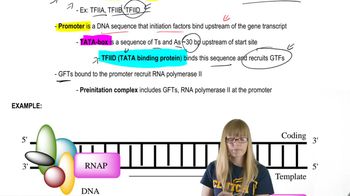
At the transcriptional level, a transcriptional repressor protein binds to specific DNA sequences near the target gene's promoter region, preventing RNA polymerase from initiating transcription. This effectively shuts down the production of the gene's mRNA by blocking the gene's expression at its source.
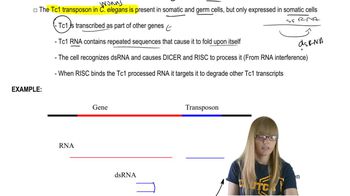
At the posttranscriptional level, an miRNA (microRNA) molecule binds complementary sequences on the target mRNA transcript. This binding either promotes degradation of the mRNA or inhibits its translation by ribosomes, reducing the amount of protein produced from the mRNA without altering the DNA.
At the posttranslational level, a ubiquitin ligase enzyme attaches ubiquitin molecules to the target protein, marking it for degradation by the proteasome. This process rapidly removes the protein product after it is made, ensuring that any residual protein is efficiently eliminated.
The coordinated expression of these three regulators allows for a multi-layered control system: the transcriptional repressor prevents new mRNA synthesis, the miRNA reduces existing mRNA stability or translation, and the ubiquitin ligase degrades existing protein. This ensures a quick, efficient, and specific shutdown of the gene's expression at multiple stages.
Together, these mechanisms provide tight regulation by targeting the gene expression pathway at different points, allowing the cell to respond rapidly to environmental or developmental signals by silencing the gene precisely and effectively.

Verified video answer for a similar problem:

This video solution was recommended by our tutors as helpful for the problem above.
Video duration:
2m
Was this helpful?

Key Concepts

Here are the essential concepts you must grasp in order to answer the question correctly.

Transcriptional Repression

Transcriptional repressors are proteins that bind to specific DNA sequences near a gene's promoter to inhibit the initiation of transcription. By blocking RNA polymerase or recruiting chromatin-modifying complexes, they prevent mRNA synthesis, effectively shutting down gene expression at the transcriptional level.
Recommended video:
Guided course
09:16
Eukaryotic Transcription

Posttranscriptional Regulation by miRNA

MicroRNAs (miRNAs) are small non-coding RNAs that bind complementary sequences on target mRNAs, leading to mRNA degradation or translational repression. This mechanism allows rapid and specific downregulation of gene expression after transcription, controlling protein production efficiently.
Recommended video:

Posttranslational Regulation via Ubiquitin Ligase

Ubiquitin ligases tag specific proteins with ubiquitin molecules, marking them for degradation by the proteasome. This posttranslational control quickly removes existing proteins, ensuring precise and timely shutdown of gene function at the protein level.
Recommended video:
Guided course
03:51
GAL Regulation