Pearson+ LogoPearson+ Logo
Ch. 19 - Epigenetics
Klug - Concepts of Genetics  12th Edition
Klug12th EditionConcepts of Genetics ISBN: 9780135564776Not the one you use?Change textbook
Chapter 19, Problem 1c

How does an environmental factor like stress generate a response that is transmitted from generation to generation?

Verified step by step guidance
1
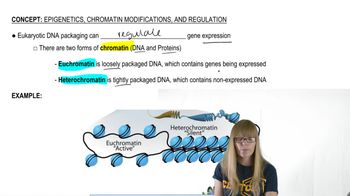
Understand the concept of epigenetics: Epigenetics refers to heritable changes in gene expression that do not involve alterations to the DNA sequence itself. These changes are often mediated by chemical modifications to DNA or histones, such as methylation or acetylation.
Explore how environmental factors influence epigenetic modifications: Environmental factors like stress can lead to changes in the epigenetic landscape. For example, stress may trigger the addition of methyl groups to specific regions of DNA (DNA methylation), which can silence or activate certain genes.
Examine the mechanism of transmission: Epigenetic modifications can be passed from one generation to the next through germ cells (sperm or egg). If stress-induced epigenetic changes occur in germ cells, they may be inherited by offspring, affecting gene expression in subsequent generations.
Consider the role of histone modifications: Stress can also lead to changes in histone proteins, which help package DNA. Modifications like acetylation or deacetylation of histones can alter chromatin structure, influencing gene accessibility and expression. These changes can also be transmitted through germ cells.
Review examples of transgenerational epigenetic inheritance: Research has shown that stress experienced by one generation can lead to observable phenotypic changes in subsequent generations. For instance, stress-induced epigenetic changes in genes related to stress response or metabolism may persist across generations, demonstrating the impact of environmental factors on heritable gene regulation.

Verified video answer for a similar problem:

This video solution was recommended by our tutors as helpful for the problem above.
Video duration:
2m
Was this helpful?

Key Concepts

Here are the essential concepts you must grasp in order to answer the question correctly.

Epigenetics

Epigenetics refers to the study of heritable changes in gene expression that do not involve alterations to the underlying DNA sequence. These changes can be influenced by various factors, including environmental stimuli, and can affect how genes are turned on or off. Epigenetic modifications, such as DNA methylation and histone modification, play a crucial role in regulating gene activity and can have lasting effects across generations.
Recommended video:

Gene Expression Regulation

Gene expression regulation involves the processes that control the timing and amount of gene expression in cells. This regulation can occur at multiple levels, including transcription, RNA processing, and translation. Environmental factors, such as stress, can trigger epigenetic changes that alter gene expression patterns, leading to physiological responses that may be inherited by subsequent generations.
Recommended video:
Guided course
02:09
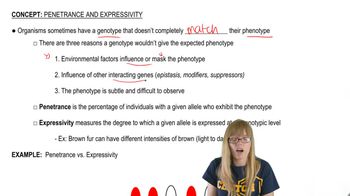
Penetrance and Expressivity

Transgenerational Inheritance

Transgenerational inheritance refers to the transmission of traits or responses from one generation to the next, beyond the direct genetic information encoded in DNA. In the context of epigenetics, this can occur when epigenetic modifications induced by environmental factors, like stress, are passed down to offspring. This phenomenon suggests that experiences and environmental exposures can shape the genetic expression of future generations, impacting their health and development.
Recommended video:
Guided course
05:13
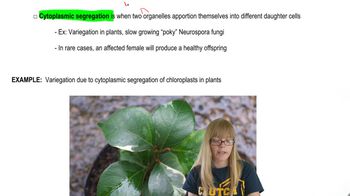
Organelle Inheritance