Pearson+ LogoPearson+ Logo
Ch. 21 - Genomic Analysis
Klug - Concepts of Genetics  12th Edition
Klug12th EditionConcepts of Genetics ISBN: 9780135564776Not the one you use?Change textbook
Chapter 21, Problem 2

Write a short essay that explains how recombinant DNA techniques were used to identify and study genes compared to how modern genomic techniques have revolutionized the cloning and analysis of genes.

Verified step by step guidance
1
Begin by explaining the basics of recombinant DNA technology, which involves cutting DNA from different sources using restriction enzymes and then joining these fragments together using DNA ligase to create recombinant molecules.
Describe how recombinant DNA techniques allowed scientists to isolate specific genes by inserting DNA fragments into vectors (like plasmids) and introducing them into host cells, enabling gene cloning and functional studies.
Explain the limitations of early recombinant DNA methods, such as the time-consuming process of cloning individual genes and the reliance on prior knowledge of gene sequences or functions.
Introduce modern genomic techniques, such as high-throughput DNA sequencing, CRISPR gene editing, and bioinformatics tools, which allow rapid identification, cloning, and analysis of genes on a genome-wide scale without needing to clone each gene individually.
Conclude by highlighting how these modern methods have revolutionized genetics by enabling comprehensive studies of gene function, regulation, and interactions, accelerating research and applications in medicine, agriculture, and biotechnology.

Verified video answer for a similar problem:

This video solution was recommended by our tutors as helpful for the problem above.
Video duration:
1m
Was this helpful?

Key Concepts

Here are the essential concepts you must grasp in order to answer the question correctly.

Recombinant DNA Techniques

Recombinant DNA techniques involve cutting and joining DNA fragments from different sources using enzymes like restriction endonucleases and ligases. These methods allow scientists to isolate, clone, and study specific genes by inserting them into vectors such as plasmids, which can be propagated in host cells. This approach was foundational for gene identification and functional analysis before the advent of high-throughput technologies.
Recommended video:
Guided course
03:51
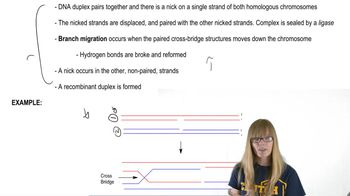
Recombination after Single Strand Breaks

Modern Genomic Techniques

Modern genomic techniques include high-throughput sequencing, CRISPR gene editing, and bioinformatics tools that enable rapid, large-scale analysis of entire genomes. These methods allow for precise gene cloning, functional annotation, and manipulation with greater speed and accuracy than traditional recombinant DNA methods. They have transformed gene study by providing comprehensive data and enabling genome-wide investigations.
Recommended video:
Guided course
09:03
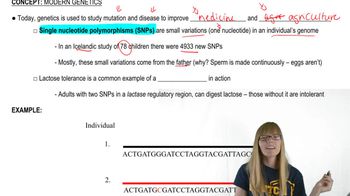
Modern Genetics

Comparison of Traditional and Modern Approaches

Traditional recombinant DNA methods focus on individual genes and require labor-intensive cloning and analysis, while modern genomic techniques allow simultaneous study of thousands of genes. The shift from targeted cloning to whole-genome analysis has accelerated gene discovery, functional studies, and applications in medicine and biotechnology. Understanding this evolution highlights the impact of technological advances on genetic research.
Recommended video:
Guided course
09:03
Modern Genetics