Pearson+ LogoPearson+ Logo
Ch. 22 - Applications of Genetic Engineering and Biotechnology
Klug - Concepts of Genetics  12th Edition
Klug12th EditionConcepts of Genetics ISBN: 9780135564776Not the one you use?Change textbook
Chapter 22, Problem 16

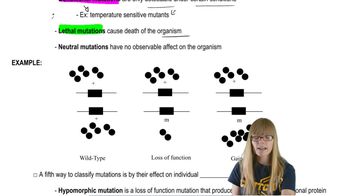
Dominant mutations can be categorized according to whether they increase or decrease the overall activity of a gene or gene product. Although a loss-of-function mutation (a mutation that inactivates the gene product) is usually recessive, for some genes, one dose of the normal gene product, encoded by the normal allele, is not sufficient to produce a normal phenotype. In this case, a loss-of-function mutation in the gene will be dominant, and the gene is said to be haploinsufficient. A second category of dominant mutation is the gain-of-function mutation, which results in a new activity or increased activity or expression of a gene or gene product. The gene therapy technique currently being used in clinical trials involves the 'addition' to somatic cells of a normal copy of a gene. In other words, a normal copy of the gene is inserted into the genome of the mutant somatic cell, but the mutated copy of the gene is not removed or replaced. Will this strategy work for either of the two aforementioned types of dominant mutations?

Verified step by step guidance
1
Understand the two types of dominant mutations described in the problem: haploinsufficiency (loss-of-function mutation where one normal allele is insufficient for a normal phenotype) and gain-of-function mutation (mutation that increases or alters the activity of the gene product).
Consider the gene therapy strategy mentioned: adding a normal copy of the gene to somatic cells without removing or replacing the mutated copy. This means the mutant allele remains present in the genome.
For haploinsufficient mutations, analyze whether adding a normal copy of the gene would restore the phenotype. Since haploinsufficiency arises from insufficient gene product, adding a normal copy could potentially increase the gene product to a sufficient level, thereby restoring the normal phenotype.
For gain-of-function mutations, evaluate whether adding a normal copy of the gene would counteract the effects of the mutant allele. Gain-of-function mutations typically result in a dominant phenotype due to the abnormal activity of the mutant allele, and simply adding a normal copy would not negate the effects of the mutant allele.
Conclude that the gene therapy strategy might work for haploinsufficient mutations but is unlikely to be effective for gain-of-function mutations, as the latter requires a different approach, such as silencing or removing the mutant allele.

Verified video answer for a similar problem:

This video solution was recommended by our tutors as helpful for the problem above.
Video duration:
6m
Was this helpful?

Key Concepts

Here are the essential concepts you must grasp in order to answer the question correctly.

Haploinsufficiency

Haploinsufficiency occurs when a single functional copy of a gene is insufficient to maintain normal function, leading to a dominant phenotype. In this scenario, a loss-of-function mutation in one allele results in a phenotype that is expressed even in the presence of a normal allele. This concept is crucial for understanding how certain genetic disorders can manifest despite having one normal gene copy.
Recommended video:
Guided course
10:48
Mutations and Phenotypes

Gain-of-Function Mutations

Gain-of-function mutations lead to an increase in the activity or expression of a gene product, often resulting in a dominant phenotype. These mutations can create new functions or enhance existing ones, which can contribute to various diseases, including cancers. Understanding this concept is essential for analyzing how certain mutations can lead to abnormal cellular behaviors.
Recommended video:
Guided course
08:26
Functional Genomics

Gene Therapy

Gene therapy involves introducing a normal copy of a gene into somatic cells to compensate for a mutated gene, aiming to restore normal function. This technique is particularly relevant for conditions caused by loss-of-function mutations. However, its effectiveness can vary depending on whether the mutation is haploinsufficient or a gain-of-function mutation, as the underlying mechanisms of these mutations influence treatment outcomes.
Recommended video:
Guided course
09:12
Transgenic Organisms and Gene Therapy
Related Practice
Textbook Question

Describe how the team from the J. Craig Venter Institute created a synthetic genome. How did the team demonstrate that the genome converted the recipient strain of bacteria into a different strain?

545
views
Textbook Question

Consider ethical issues associated with creating a synthetic human genome. Are there specific applications for a synthetic human genome that you support? Is creating a synthetic genome enhanced with genes for certain kinds of traits one of those applications?

520
views
Textbook Question

The family of a sixth-grade boy in Palo Alto, California, was informed by school administrators that he would have to transfer out of his middle school because they believed his mutation of the CFTR gene, which does not produce any symptoms associated with cystic fibrosis, posed a risk to other students at the school who have cystic fibrosis. After missing 11 days of school, a settlement was reached to have the boy return to school. What ethical problems might you associate with this example?

500
views
Textbook Question

In 2013 the actress Angelina Jolie elected to have prophylactic double-mastectomy surgery to prevent breast cancer based on a positive test for mutation of the BRCA1 gene. What are some potential positive and negative consequences of this high-profile example of acting on the results of a genetic test?

783
views
Textbook Question

The National Institutes of Health created the Genetic Testing Registry (GTR) to increase transparency by publicly sharing information about the utility of their tests, research for the general public, patients, health-care workers, genetic counselors, insurance companies, and others. The Registry is intended to provide better information to patients, but companies involved in genetic testing are not required to participate. Should company participation be mandatory? Why or why not? Explain your answers.

550
views
Textbook Question

Should the FDA regulate direct-to-consumer genetic tests, or should these tests be available as a 'buyer beware' product?

584
views