
In 2013 the actress Angelina Jolie elected to have prophylactic double-mastectomy surgery to prevent breast cancer based on a positive test for mutation of the BRCA1 gene. What are some potential positive and negative consequences of this high-profile example of acting on the results of a genetic test?

Klug 12th Edition
Ch. 22 - Applications of Genetic Engineering and Biotechnology
Problem 20Would you have your genome sequenced, if the price was affordable? Why or why not? If you answered yes, would you make your genome sequence publicly available? How might such information be misused?
Verified step by step guidance
Verified video answer for a similar problem:
Key Concepts
Genomic Sequencing
Privacy and Ethical Considerations
Potential Misuse of Genetic Information
The National Institutes of Health created the Genetic Testing Registry (GTR) to increase transparency by publicly sharing information about the utility of their tests, research for the general public, patients, health-care workers, genetic counselors, insurance companies, and others. The Registry is intended to provide better information to patients, but companies involved in genetic testing are not required to participate. Should company participation be mandatory? Why or why not? Explain your answers.
Should the FDA regulate direct-to-consumer genetic tests, or should these tests be available as a 'buyer beware' product?
Following the tragic shooting of 20 children at a school in Newtown, Connecticut, in 2012, Connecticut's state medical examiner requested a full genetic analysis of the killer's genome. What do you think investigators might be looking for? What might they expect to find? Might this analysis lead to an oversimplified analysis of the cause of the tragedy?
Private companies are offering personal DNA sequencing along with interpretation. What services do they offer? Do you think that these services should be regulated, and if so, in what way? Investigate one such company, 23andMe, at http://www.23andMe.com, before answering these questions.
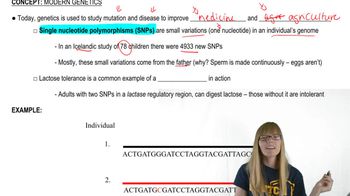
Yeager, M., et al. [(2007) Nature Genetics 39:645–649] and Sladek, R., et al. [(2007) Nature 445:881–885] have used single-nucleotide polymorphisms (SNPs) in genome-wide association studies (GWAS) to identify novel risk loci for prostate cancer and Type 2 diabetes, respectively. Each study suggests that disease-risk genes can be identified that significantly contribute to the disease state. Given your understanding of such complex diseases, what would you determine as reasonable factors to consider when interpreting the results of GWAS?