What reactive chemical groups are found at the 5' and 3' carbons of nucleotides? What is the name of the bond formed when nucleotides are joined in a single strand? Is this bond covalent or noncovalent?
Ch. 1 - The Molecular Basis of Heredity, Variation, and Evolution

Sanders3rd EditionGenetic Analysis: An Integrated ApproachISBN: 9780135564172Not the one you use?Change textbook
All textbooks
Sanders 3rd Edition
Ch. 1 - The Molecular Basis of Heredity, Variation, and Evolution
Problem 14e
Sanders 3rd Edition
Ch. 1 - The Molecular Basis of Heredity, Variation, and Evolution
Problem 14eChapter 1, Problem 14e
Briefly describe the contribution each of the following people made to the development of genetics or genetic analysis.
Rudolph Virchow
Verified step by step guidance1
Rudolph Virchow was a German physician, anthropologist, and biologist who made significant contributions to cell theory, which is foundational to genetics.
He proposed the concept of 'Omnis cellula e cellula,' which means 'All cells come from pre-existing cells.' This idea emphasized the continuity of life through cellular division.
Virchow's work laid the groundwork for understanding how genetic material is passed from one generation of cells to the next during cell division.
His contributions helped establish the importance of studying cells to understand heredity and the mechanisms of genetic inheritance.
Virchow's insights were instrumental in shaping the field of cytogenetics, which combines the study of cells and chromosomes to understand genetic processes.

Verified video answer for a similar problem:
This video solution was recommended by our tutors as helpful for the problem above.
Video duration:
2mWas this helpful?
Key Concepts
Here are the essential concepts you must grasp in order to answer the question correctly.
Cell Theory
Rudolph Virchow is known for his contribution to the development of the Cell Theory, which states that all living organisms are composed of cells, and that all cells arise from pre-existing cells. This concept laid the groundwork for understanding the cellular basis of life and the role of cells in heredity and genetic transmission.
Recommended video:
Guided course
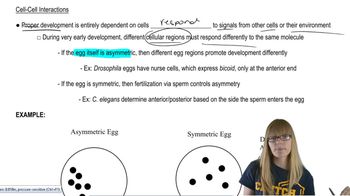
Cell-cell interactions
Pathological Anatomy
Virchow is also recognized for founding the field of pathological anatomy, which examines the structural changes in cells and tissues caused by disease. His work emphasized the importance of cellular changes in understanding genetic disorders and diseases, linking pathology with genetics.
Recommended video:
Guided course
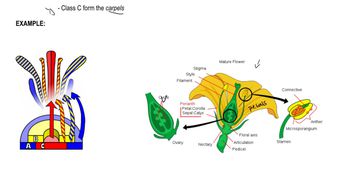
Plant HOX genes
Omnis cellula e cellula
Virchow famously stated 'Omnis cellula e cellula,' meaning 'every cell originates from another cell.' This principle not only reinforced the idea of cellular reproduction but also highlighted the continuity of genetic material across generations, which is fundamental to the study of genetics.
Recommended video:
Guided course
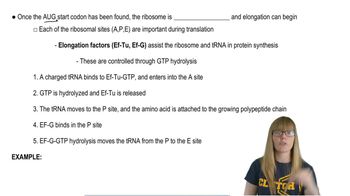
Translation Elongation
Related Practice
Textbook Question
761
views
Textbook Question
If thymine makes up 21% of the DNA nucleotides in the genome of a plant species, what are the percentages of the other nucleotides in the genome?
786
views
Textbook Question
Briefly describe the contribution each of the following people made to the development of genetics or genetic analysis.
Robert Hooke
723
views
Textbook Question
Briefly describe the contribution each of the following people made to the development of genetics or genetic analysis.
Rosalind Franklin:
851
views
Textbook Question
Briefly describe the contribution each of the following people made to the development of genetics or genetic analysis.
Edmund B. Wilson
638
views
Textbook Question
Briefly describe the contribution each of the following people made to the development of genetics or genetic analysis.
William Bateson:
749
views