Pearson+ LogoPearson+ Logo
Ch. 11 - Gene Mutation, DNA Repair, and Homologous Recombination
Sanders - Genetic Analysis: An Integrated Approach 3rd Edition
Sanders3rd EditionGenetic Analysis: An Integrated ApproachISBN: 9780135564172Not the one you use?Change textbook
Chapter 11, Problem 23

The fluctuation test performed by Luria and Delbrück is consistent with the random mutation hypothesis. Briefly describe their experiment and identify how the results match the prediction of the random mutation hypothesis. What would have to be different about the experimental results for them to agree with the prediction of the adaptive mutation hypothesis?

Verified step by step guidance
1
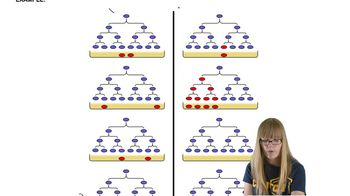
Luria and Delbrück's experiment involved growing bacteria in a medium and then exposing them to a virus (bacteriophage) to see if any bacteria developed resistance.
They used multiple small cultures of bacteria and exposed each to the virus, then counted the number of resistant colonies that appeared.
According to the random mutation hypothesis, mutations occur spontaneously and randomly, so the number of resistant colonies should vary widely between cultures.
The results showed a high variance in the number of resistant colonies across different cultures, supporting the random mutation hypothesis.
For the results to support the adaptive mutation hypothesis, the number of resistant colonies would need to be similar across all cultures, indicating mutations occurred in response to the virus exposure.

Verified video answer for a similar problem:

This video solution was recommended by our tutors as helpful for the problem above.
Video duration:
4m
Was this helpful?

Key Concepts

Here are the essential concepts you must grasp in order to answer the question correctly.

Random Mutation Hypothesis

The random mutation hypothesis posits that mutations occur randomly and independently of an organism's exposure to environmental pressures. This means that genetic changes arise without any foresight or adaptation to specific challenges, such as antibiotic resistance. In the context of Luria and Delbrück's experiment, this hypothesis predicts that the number of resistant mutants in a bacterial population would vary widely, reflecting the randomness of mutation events.
Recommended video:
Guided course
09:49
Point Mutations

Luria and Delbrück Experiment

Luria and Delbrück conducted a series of experiments using E. coli to test the random mutation hypothesis. They exposed bacterial cultures to a bacteriophage and observed the emergence of resistant mutants. Their results showed a significant variation in the number of resistant colonies across different cultures, supporting the idea that mutations occurred before exposure to the phage, rather than as a direct response to it.
Recommended video:
Guided course
08:06
Mendel's Experiments

Adaptive Mutation Hypothesis

The adaptive mutation hypothesis suggests that mutations can occur in response to environmental stressors, allowing organisms to adapt more effectively to their surroundings. If Luria and Delbrück's results had shown a consistent pattern of resistance that correlated with exposure to the bacteriophage, it would indicate that mutations were not random but rather a directed response to the selective pressure, thus supporting the adaptive mutation hypothesis.
Recommended video:
Guided course
09:52
Spontaneous Mutations
Related Practice
Textbook Question

The two DNA and polypeptide sequences shown are for alleles at a hypothetical locus that produce different polypeptides, both five amino acids long. In each case, the lower DNA strand is the template strand:

Based on DNA and polypeptide sequences alone, is there any way to determine which allele is dominant and which is recessive? Why or why not?

589
views
Textbook Question

Many human genes are known to have homologs in the mouse genome. One approach to investigating human hereditary disease is to produce mutations of the mouse homologs of human genes by methods that can precisely target specific nucleotides for mutation.

Numerous studies of mutations of the mouse homologs of human genes have yielded valuable information about how gene mutations influence the human disease process. In general terms, describe how and why creating mutations of the mouse homologs can give information about human hereditary disease processes.

734
views
Textbook Question

Many human genes are known to have homologs in the mouse genome. One approach to investigating human hereditary disease is to produce mutations of the mouse homologs of human genes by methods that can precisely target specific nucleotides for mutation.

Despite the homologies that exist between human and mouse genes, some attempts to study human hereditary disease processes by inducing mutations in mouse genes indicate there is little to be learned about human disease in this way. In general terms, describe how and why the study of mouse gene mutations might fail to produce useful information about human disease processes.

590
views
Textbook Question
In this chapter, three features of genes or of DNA sequence that contribute to the occurrence of mutational hotspots were described. Identify those three features and briefly describe why they are associated with mutational hotspots.
671
views
Textbook Question
Briefly compare the production of DNA double-strand breaks in bacteria versus the double-strand breaks that precede homologous recombination.
703
views
Textbook Question
During mismatch repair, why is it necessary to distinguish between the template strand and the newly made daughter strand? Describe how this is accomplished.
698
views