Pearson+ LogoPearson+ Logo
Ch.13 Carbohydrates
Timberlake - Chemistry: An Introduction to General, Organic, and Biological Chemistry 13th Edition
Timberlake13th EditionChemistry: An Introduction to General, Organic, and Biological ChemistryISBN: 9780134421353Not the one you use?Change textbook
Chapter 13, Problem 55a

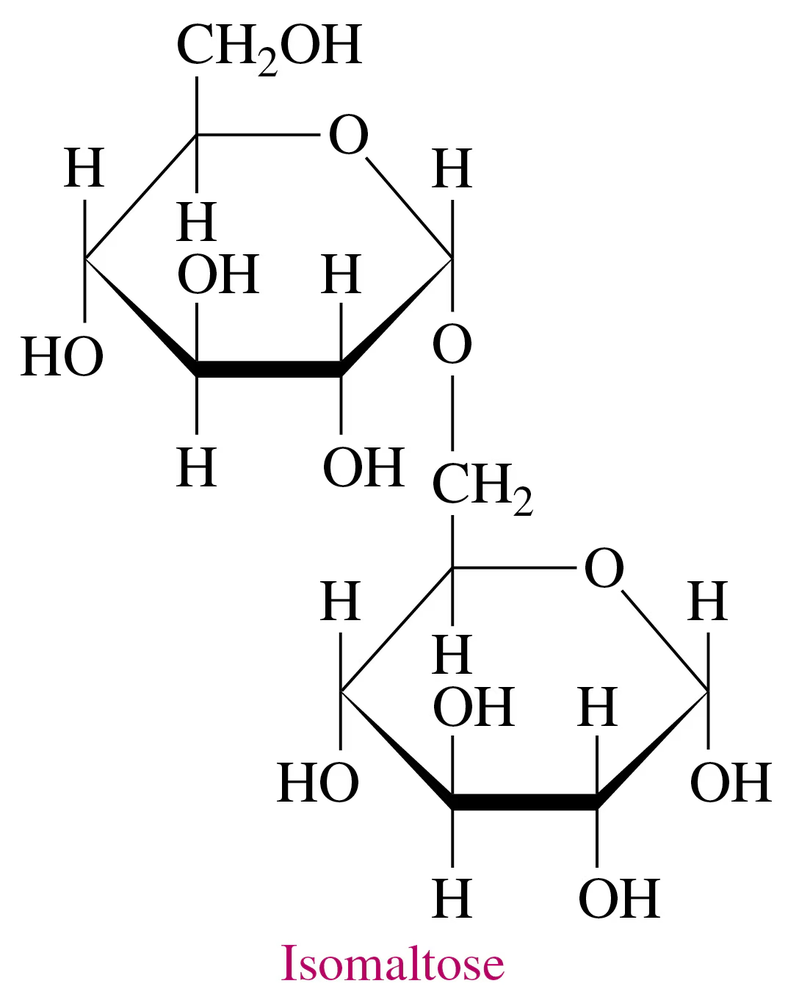
Isomaltose, obtained from the breakdown of starch, has the following Haworth structure: 
Haworth structure of isomaltose, a disaccharide formed from starch breakdown, labeled below the diagram.
a. Is isomaltose a mono-, di-, or polysaccharide?

Verified step by step guidance
1
Step 1: Understand the classification of carbohydrates. Carbohydrates are classified as monosaccharides (single sugar units), disaccharides (two sugar units linked together), or polysaccharides (many sugar units linked together).
Step 2: Analyze the structure of isomaltose. The Haworth structure provided shows two sugar rings connected by a glycosidic bond. This indicates that isomaltose is composed of two monosaccharide units.
Step 3: Identify the type of glycosidic bond. In isomaltose, the two monosaccharides are linked by an α-(1→6) glycosidic bond, which is a common linkage in disaccharides derived from starch breakdown.
Step 4: Conclude the classification. Since isomaltose consists of exactly two monosaccharide units, it is classified as a disaccharide.
Step 5: Note the biological context. Isomaltose is a product of starch hydrolysis and plays a role in carbohydrate metabolism, further confirming its classification as a disaccharide.

Verified video answer for a similar problem:

This video solution was recommended by our tutors as helpful for the problem above.
Video duration:
34s
Was this helpful?

Key Concepts

Here are the essential concepts you must grasp in order to answer the question correctly.

Carbohydrate Classification

Carbohydrates are classified into three main categories: monosaccharides, disaccharides, and polysaccharides. Monosaccharides are single sugar units, disaccharides consist of two monosaccharides linked together, and polysaccharides are long chains of monosaccharide units. Understanding this classification is essential for identifying the type of carbohydrate in question.
Recommended video:
Guided course
1:29
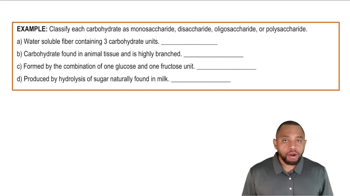
Classification of Carbohydrates Example 1

Structure of Isomaltose

Isomaltose is a disaccharide formed from two glucose units linked by an α(1→6) glycosidic bond. This specific linkage distinguishes it from other disaccharides, such as sucrose or maltose, which have different glycosidic bonds. Recognizing the structure of isomaltose helps in determining its classification as a carbohydrate.
Recommended video:
Guided course
1:01
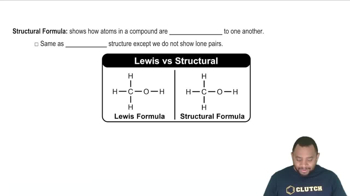
Structural Formula Concept 2

Haworth Projection

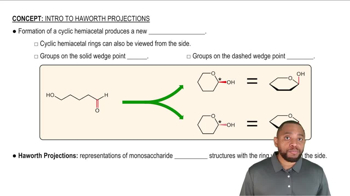
The Haworth projection is a way of representing the cyclic structure of carbohydrates, showing how the atoms are arranged in a ring form. This representation is crucial for visualizing the stereochemistry of sugars, including their anomeric carbon and hydroxyl groups. Understanding Haworth projections aids in comprehending the structural characteristics of carbohydrates like isomaltose.
Recommended video:
Guided course
2:18
Intro to Haworth Projections Concept 1