
Students blog

Explore the latest trends, tips, and experiences in college life in this blog written by fellow students.

Explore posts in other areas.

PreK-12Higher EducationProfessional

  • A large group of people gathered outdoors on a college campus at night before a speech or gathering is about to occur.

    Embracing Change & Finding Your Place on Campus

    Jonny Koeninger

    I love my school: the town, the weather, and the people. It all feels like a home away from home. However, that hasn’t always been the case.

    A Big Leap to a Big School

    As an incoming first-year student, I was aware of what a huge leap it was in my life, and the town I can now see myself living in forever felt far less comfortable back then. I came to Auburn from out of state without a single friend to a school larger than thirty of my high schools combined.

    Ultimately, a big, competitive school was the right choice for me. That’s not to say a small school isn’t the right option for others—that was my original choice until I made a last-minute leap to a big one. This post is about my experience getting involved at a big school where getting involved is competitive.

    Facing My First Rejection

    As a competitive high school snare drummer, it was my dream to bring my love for drumming to an awesome band like Auburn’s. I worked day in and day out to learn the music and technique. But I simply wasn’t ready for the line, and I got cut toward the end of auditions. In that moment, I realized I wouldn’t have the type of musical support system that had gotten me through high school to ease my transition to college.

    I checked Auburn’s involvement website. I bookmarked everything that interested me and, for the most part, put it out of my mind until after orientation.

    The Search for Connection

    Attending orientation did little to calm my nerves. What if I didn’t make friends, connections, or lifelong memories? Those thoughts ran through my head, and they didn’t ease up in the first few months of school.

    That’s when I decided to go all in on finding what I loved to do on campus. I tried everything from mock trial to jazz band.

    To my chagrin, I kept getting rejected by the places where I thought I had a guaranteed spot. The only organization that extended me an offer was student media, and I had no idea what being a news anchor entailed.

    The Turning Point

    Even with no background in media, I went all in on what I could do. I anchored and worked hard at reporting. By the end of the semester, I had real work to show for it.

    Additionally, I stayed involved with my church and tried to meet as many people as I could. Still, I didn’t quite feel at home yet.

    Christmas break arrived, and I couldn’t wait to go home. But when I returned to school, it suddenly felt different. I had come to love it more than I realized by unknowingly investing in all that I could.

    Love Your School, and It Will Love You Back

    If you love your school, your work, and your life, they will love you back. And that’s all up to you. Thankfully, you’re at a time in your life when you can choose what that looks like for the first time.

    Pursue what you love, and don’t get discouraged when you fall. You don’t have to give up something you love just because you fall once. I never gave up drumming, and now I’m in two bands just for fun.

    That love pays off.

    Do you have a compelling story or student success tips you’d like to see published on the Pearson Students blog?  If you are a college student and interested in writing for us – click here to pitch your idea and get started! 

     

  • A fluffy, tabby cat is wearing a colorful harness attached to a blue leash and is sitting in a bed of colorful pansies.

    The Joys of Fostering a Senior Cat in College

    Megan Morimoto

    My housemate and I made one of our best decisions when we fostered Ana, a seventeen-year-old female cat. We specifically chose an older cat because she had less energy than a kitten and spent most of her days sleeping. This was ideal for our busy schedules. We found comfort in knowing she was content in a quiet environment.

    Although Ana had several medical problems, she provided companionship. She also taught me to slow down and gave me a new sense of responsibility.

    Companionship in a New City

    Moving to college was a big adjustment, and being far from my family and pets made it harder. I craved the unique companionship that only a fur-baby could give. I started volunteering at my college’s local animal shelter to get my fur-fix, but it still wasn’t enough.

    Then I looked into fostering. Because I live in a small apartment, I specifically researched fostering cats. That’s how I welcomed Ana into my home. Every time I came home, her cute little meows greeted me and instantly put a smile on my face.

    She loved cuddling up next to me or sitting in my lap. Whenever I felt stressed or overwhelmed, Ana was there to listen. Her presence was a great comfort. Studies show that spending time with animals can release oxytocin, a “feel-good” hormone, and lower stress.

    A Reminder to Slow Down

    As a college student, I felt like I was always on the go. I had to be at this meeting, finish that project, and cram in some studying all in a single day. Running around trying to fit everything into my schedule was not sustainable in the long term.

    When we brought Ana home, her slow-paced approach to life was a breath of fresh air. She was a constant reminder to slow down and appreciate the moment before it passes. I often found myself looking forward to the “next step” in life, but Ana took everything day by day and lived in the present.

    A New Sense of Responsibility

    Having a cat added new chores to my plate, but it felt good to care for something bigger than myself. My daily routine had to include cleaning her litter box, feeding her, and playing with her when she had the energy.

    This change forced me to plan my days more strategically and intentionally. I needed to wake up earlier to care for her before I left for the day. I also had to use my time between classes more wisely so that when I got home, I had more time to spend with her.

    Though Ana is no longer with us, I will carry the lessons she taught me for the rest of my life. She showed me the power of quiet companionship, the importance of slowing down, and the purpose that comes from responsibility. Fostering a senior cat didn't just change her final years; it fundamentally shaped my college experience.

    Do you have a compelling story or student success tips you’d like to see published on the Pearson Students blog?  If you are a college student and interested in writing for us – click here to pitch your idea and get started! 

     

  • A group of sorority sisters wearing pink shirts and either white skirts or pants gathered together in front of a sorority house.

    Rethinking the College Timeline

    McKenna Vallejo

    I came into college with half of a bachelor’s degree, planning to graduate in three years by taking twelve credit hours each semester. Sounds easy, right? In reality, I had a rough time adjusting to difficult courses, and I changed my major and path twice.

    The Weight of a Rigid Plan

    I had a concrete plan: stay for three years, take the Dental Admission Test after two years, and go to dental school in the fall after my graduation. It wasn’t until recently that I accepted I could not do it. This was the best decision of my college career so far.

    Like many college students, I believed that changing my goals was a sign of weakness or outright failure. The truth is that the goals I had set took a toll on me. I resented my course load and the thought of missing out on a year of what was supposed to be the greatest era of my life.

    My grades started slipping, which, for a former straight-A student, was hurtful and confusing. I had arranged my life around studying and was now falling short.

    Giving Myself Grace

    Eventually, I figured out the solution: I needed to push back my goals and give myself grace. I realized certain things were inhibiting my learning, and it is nearly impossible to be successful if you keep up the same habits that are hurting your happiness.

    Knowing I couldn’t maintain the pace, I decided to take a step back. I contacted my advisor, and together we planned to extend my degree by one more semester.

    I could finally look at my schedule with a smile instead of intense fear. I was able to tell my friends that I could stick around for another semester, be more involved in my sorority, and have time for things other than studying and work.

    Embracing a New Momentum

    I would be lying if I said this decision did not terrify me. Truthfully, adding a semester felt like a failure.

    However, no one around me made me feel bad about this decision; they pushed me in the direction that would benefit me mentally. This meant postponing everything I had worked so hard for in high school and allowing myself to build a new timeline.

    Your Life, Your Timeline

    All I have learned from this is that life is meant to be lived on your timeline. Just because there is a conventional path does not mean it is right for you. Do what makes you happy, and when you find yourself hurting, make a change that will benefit you.

    It is nearly impossible to feel successful when the pressure you put on yourself is suffocating. Take a deep breath and consider what you want. After all, the only person who can live your life is you.

    Do you have a compelling story or student success tips you’d like to see published on the Pearson Students blog?  If you are a college student and interested in writing for us – click here to pitch your idea and get started! 

     

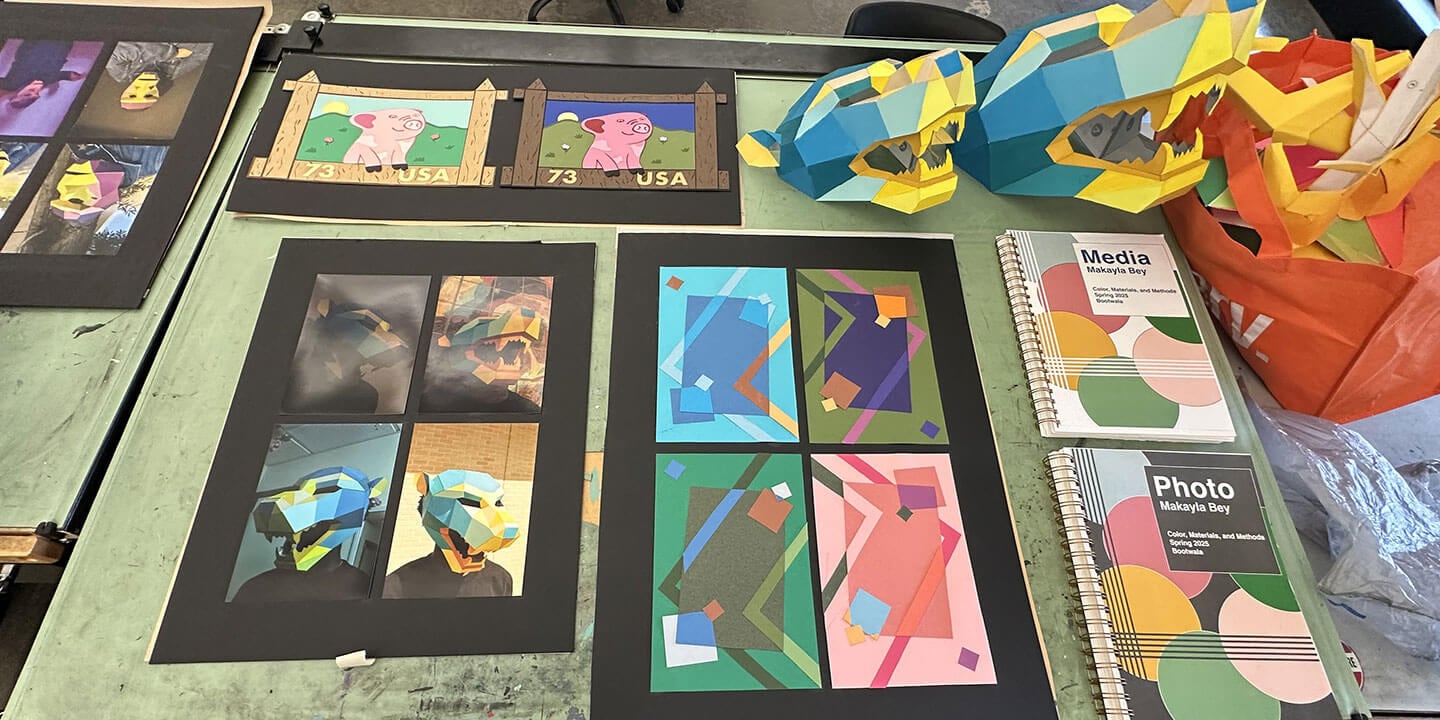
  • A student’s colorful art portfolio is displayed on a table most likely in an art studio or classroom.

    Life as an Art Student

    Makayla Bey

    In college, there is a wide variety of schools within a single university. Each has its own majors, stereotypes, challenges, traditions, and norms.

    However, we rarely hear about the unique quirks woven deep within each school. As a sophomore art student, I want to move beyond the stereotypes of art school and share a few unique qualities I’ve learned about my school.

    Long Classes and Critiques

    The first thing I noticed about the art school was how long the classes are. Typically, a studio art class at my university is three hours long. This time is used for working on projects in the studio, collaborating with classmates, observing art demonstrations, and much more.

    Another common practice in the art school is holding class critiques. These are days when we present our projects to the class and explain the process, any challenges, the meaning of the work, and other details. In return, we receive feedback from peers and professors that helps refine our techniques, strategies, and artistic presentation skills.

    A Living Studio

    In the art community, displaying artwork is just as important as the process of creating it. It is very common to see flyers for student-run gallery shows all over the walls. There are gallery rooms located throughout the building that are open for students to display their work for a few weeks at a time.

    It is inspiring to see these exhibitions while walking to class. Another thing you commonly see around my art school, in particular, is graffiti. Although it’s not typically legal to vandalize a building, art students are encouraged to use the entire building as a studio.

    Students are usually allowed to work on projects around the building during or outside of class. Marks and messes left from past projects in the hallways are turned into artwork through an unspoken collaboration. This gives students the freedom to create through improvisation and provides a safe space to express themselves, no matter how messy it gets.

    Curriculum and Creative Clutter

    As an art student, I follow a curriculum designed to expose me to multiple art mediums and different ways of creating. For example, everyone has to take the fundamental courses in each art medium within the school. This allows students to build a portfolio of artwork needed for the midway review system, known as the Block Review at my school.

    What happens to all those random art supplies and projects students collect over time that they may never use again? My school has lengthened the life cycle of these items through pop-up events where students can sell old projects and supplies. They can also donate scrap materials and tools to the art center.

    The Big Picture

    Long classes, critiques, and creative messes are just a few of the qualities that define life in art school. It’s more than just learning to draw or paint; it’s about being immersed in the world of art.

    This perspective has taught me to find creativity in the everyday, practice creative problem-solving, and constantly refine my techniques. Ultimately, art school is a space that encourages students to make their mark, and I can’t wait to see what else it has to offer.

    Do you have a compelling story or student success tips you’d like to see published on the Pearson Students blog?  If you are a college student and interested in writing for us – click here to pitch your idea and get started! 
     

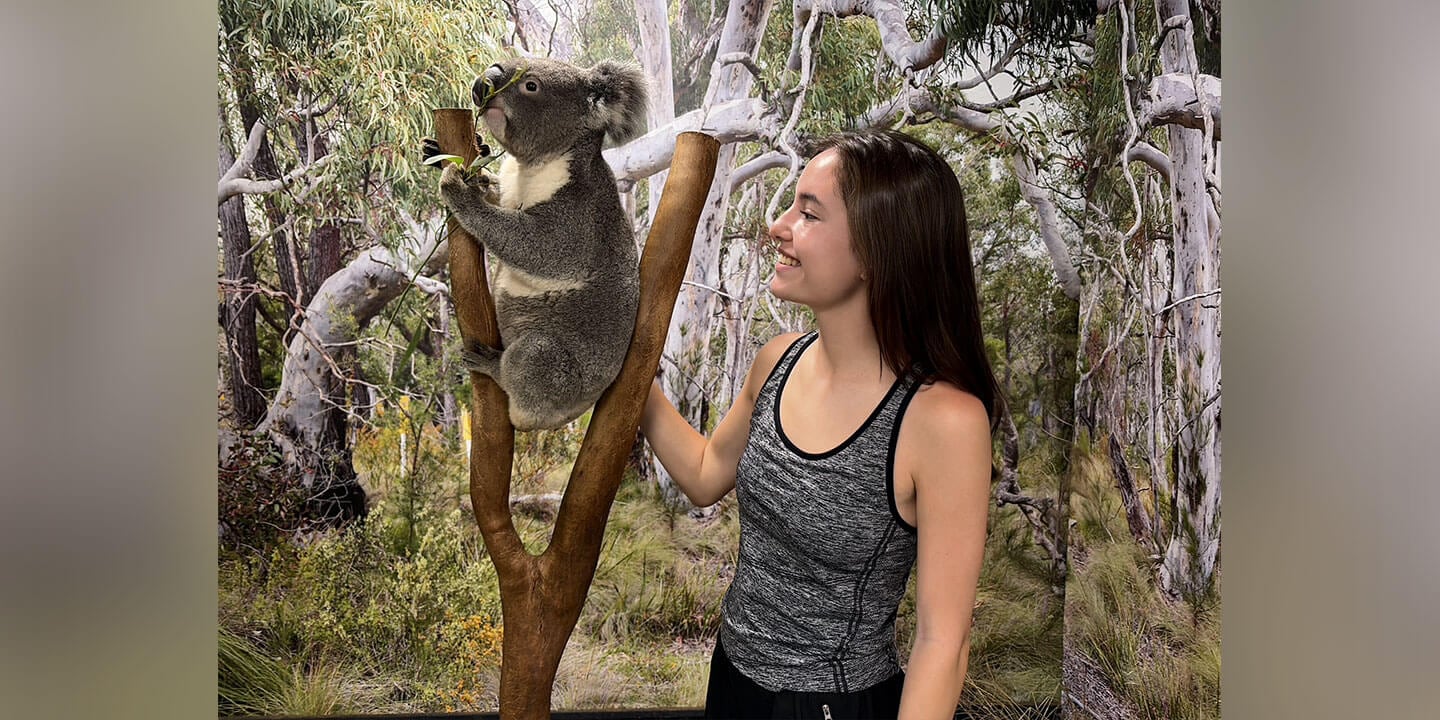
  • The blog author, Madeline, is wearing a gray athletic tank top and smiling at a koala perched on a tree branch in a wooded area.

    Up Close with Animals Down Under

    Madeline Beavis

    Australia, the land Down Under, is known for its unique and often terrifying wildlife, from giant spiders and snakes to creatures seemingly from a survival documentary. But alongside those fear-inducing legends, Australia is also home to some of the cutest animals on Earth. Wallabies, koalas, and brilliantly colored birds prove that not everything in Australia is trying to kill you; some of them just want to nap in a tree or hop by your side.

    Traveling to Australia allowed me to see wildlife in living, personal environments, not just in pictures or behind glass. These encounters reshaped how I think about animals and the growing connection between humans and their habitats.

    Close Encounters at Featherdale

    Just outside Sydney, I visited Featherdale Wildlife Park. I saw wallabies hopping freely and koalas sleeping twenty-two hours a day in eucalyptus trees (a full-time student’s dream)! Being just a few feet from these animals made them feel less like distant symbols of Australia and more like individual living beings.

    What struck me most was learning about Featherdale's origins. It opened as a wildlife park but later expanded into a hospital and rehabilitation center for injured animals when human settlement began expanding into the area. Roads and housing pushed into natural habitats, leaving many animals vulnerable to cars and displacement.

    The sanctuary still plays a role in caring for animals that can no longer survive in the wild. This is both inspiring and unsettling, as it exists because nature has been disrupted.

    Immersed in Color at Kuranda

    Later in my trip, near Cairns, I visited Kuranda Birdworld, where brightly colored birds flew freely through lush greenery. Unlike zoos in the United States, where animals are often viewed through glass or fencing, this experience felt immersive. Birds not only landed on branches inches away, but they also got comfortable on your arms and shoulders for a snack!

    Seeing them up close made their beauty impossible to ignore, but it also made their fragility more real. Many bird species depend on rainforests that are shrinking due to land-use changes like deforestation and development. The remaining forest faces additional challenges from climate change.

    Sanctuaries: A Place of Refuge

    What tied these experiences together was the realization that human presence can bring both positive impact and negative consequences. Sanctuaries like Featherdale and Birdworld exist because habitats have been disrupted, yet they also educate visitors and support animal welfare.

    Watching a wallaby graze or a parrot glide through the air made me appreciate their uniqueness. I also realized how easily they could disappear without support. More than half of the forests and woodlands that existed in New South Wales have been cleared in the past 300 years [1]. Across Australia, large swaths of wildlife habitat continue to be lost.

    Lessons on Another Continent

    Australia’s wildlife left a lasting impression on me not only as a traveler but also as a student. Experiences like these reminded me that learning does not happen only in lecture halls or through textbooks.

    Seeing environmental topics firsthand helped me understand concepts like animal welfare and sustainability. It showed me that global topics are not distant or abstract but are real and happening around us every day.

    Although this was a personal trip, it still applies to opportunities like study abroad and global learning. Exposure to different ecosystems, cultures, and perspectives can deepen a student's understanding of the world and its complexities. Seeing these animals in person reminded me of our shared responsibility to care for all wildlife and the places they call home.

    [1] Michelle Ward, David Lindenmayer, and James Watson. “More than half of NSW’s forests and woodlands are gone as ongoing logging increases extinction risks, study shows.” August 5, 2024. https://science.anu.edu.au/news-events/news/more-half-nsws-forests-and-woodlands-are-gone-ongoing-logging-increases-extinction.

    Do you have a compelling story or student success tips you’d like to see published on the Pearson Students blog?  If you are a college student and interested in writing for us – click here to pitch your idea and get started! 
     

  • Scene shows a hand with a blue pen writing notes in a spiral bound notebook.

    It’s Okay Not to Have Your Career Figured Out Yet

    Rachel Lanspery

    My “Perfect” Plan

    When I first started college, I thought I had everything planned out. I entered as a biology major on the pre-dental track, fully expecting that I would one day become a dentist. It felt like a solid, respectable path, one that made sense not just to me but to the people around me.

    At the time, I believed that having a clear plan meant I was ahead.

    Expectation vs. Reality

    As time went on, I started to question whether that path was actually right for me. Through my classes and experiences, I realized that while I could succeed in biology, it didn’t excite me the way I hoped it would.

    I found myself more drawn to creativity, communication, and understanding how people think. These interests didn’t quite align with the career I had originally chosen.

    Admitting the mismatch between my expectations and my experience was difficult. It felt like I was stepping away from a plan I had already invested time and energy into.

    A Change of Direction

    Eventually, I made the decision to change my major to public relations and advertising, with a minor in psychology. It wasn’t an easy switch, and it definitely didn’t feel like a “perfectly planned” move. Still, it was the first time I felt genuinely aligned with what I was studying.

    Instead of forcing myself into a path that didn’t fit, I gave myself the space to explore something that did.

    The Freedom of Not Knowing

    That experience taught me an important lesson: not having everything figured out isn’t a setback; it’s part of the process.

    There’s a lot of pressure in college to have your future mapped out early. But the reality is that most people are still figuring things out as they go.

    Interests change. Priorities shift. And sometimes, the path you thought was right for you turns out not to be. That doesn’t mean you’ve failed; it means you’ve learned something valuable about yourself.

    Career Paths are Rarely Linear

    Changing direction can feel intimidating, especially when it means starting over in some ways. But it also opens the door to opportunities you might not have discovered otherwise. If I had stayed on the pre-dental track just because it was my original plan, I might never have explored my interest in advertising or realized how much I enjoy it.

    It’s also important to remember that career paths are rarely linear. Many people end up in fields completely different from what they originally studied. What matters more than sticking to one plan is being willing to adapt, learn, and grow along the way.

    Your Journey, Your Pace

    Looking back, I’m grateful that I didn’t have everything figured out from the start. Not knowing forced me to reflect, take risks, and ultimately choose a path that felt right for me, not just one that looked good on paper.

    If you’re feeling uncertain about your future, you’re not alone. It’s okay to change your mind. It’s okay to take a different path. And it’s definitely okay not to have everything figured out yet.

    Do you have a compelling story or student success tips you’d like to see published on the Pearson Students blog?  If you are a college student and interested in writing for us – click here to pitch your idea and get started! 

     

  • A peaceful scene of beach houses at sunset with tall grasses in the foreground.

    Finding Calm in College with Yoga

    Anna Landrum

    For many, college can be a very stressful time, leaving students feeling overwhelmed and burned out. When I first moved to college, I began experiencing mental health struggles due to the many associated life changes. Then, to fulfill my physical activity requirement, I signed up for a yoga class.

    Yoga is an ancient practice originating in India that combines breathing, physical poses, and meditation. I quickly fell in love with the practice, and as the semester progressed, I began to discover its benefits. Yoga is a helpful practice that can improve a college student's mental and physical health.

    A Tool for Mental Wellness

    Yoga can be a powerful tool to improve mental health. College students often juggle school, work, a social life, and so much more, which can cause stress and anxiety. Yoga’s components of mindfulness and controlled breathing help reduce these feelings.

    Research has found that yoga lowers cortisol, the body’s main stress hormone [1]. A 2020 study by researchers at NYU’s School of Medicine found that yoga can help reduce symptoms of generalized anxiety disorder [2].

    Studies using MRI scans show increased thickness in the hippocampus and cerebral cortex among regular yoga practitioners [3]. These brain areas are responsible for learning, memory, and information processing, and strengthening them may help students who struggle with focus.

    A Boost for Physical Health

    Yoga is also a great way for college students to look after their physical health. Through its physical poses, students can improve flexibility, build muscle strength, improve posture, and even gain better balance and coordination. Yoga can also help improve heart health by increasing blood circulation and lowering the risk of heart disease.

    Additionally, yoga can help college students who struggle with insomnia. A Harvard Health article reports that practicing yoga regularly may reduce symptoms of insomnia [4].

    How to Start Your Practice

    Starting a yoga practice may seem overwhelming. However, there are plenty of ways for college students to learn and begin.

    YouTube is a great resource for beginners. Students can find a variety of classes, from gentle to power yoga, taught by great teachers for free.

    Many university recreation centers offer yoga classes that are already included in tuition. Some universities even have yoga clubs where students can meet others interested in the practice. Students can also research local yoga centers in their area, as some offer student discounts or pay-what-you-can classes.

    Finding Your Balance

    While college can be a stressful time, yoga can help students take care of their mental and physical well-being. What begins as a simple class requirement can become a powerful tool for navigating the pressures of student life. Ultimately, yoga offers a way to find balance, not just on the mat, but in your academic and personal life as well.

    [1] https://lifestylemedicine.stanford.edu/how-exercise-balances-cortisol-levels/

    [2] https://www.sciencedaily.com/releases/2020/08/200812144124.htm

    [3] https://link.springer.com/chapter/10.1007/978-981-16-6913-2_13

    [4] https://www.health.harvard.edu/exercise-and-fitness/yoga-tai-chi-walking-and-running-may-help-with-insomnia

    Do you have a compelling story or student success tips you’d like to see published on the Pearson Students blog?  If you are a college student and interested in writing for us – click here to pitch your idea and get started! 

     

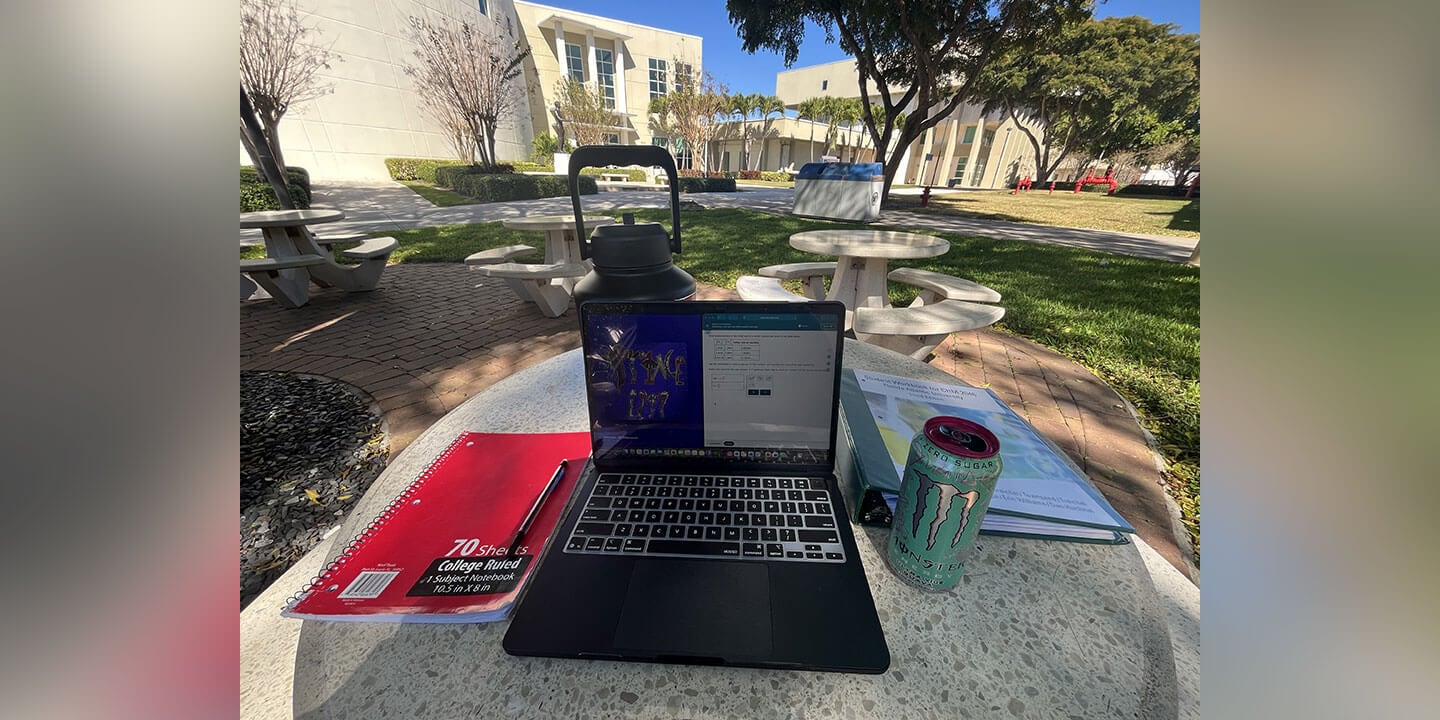
  • An outdoor study scene showing a laptop set up on a cement table surrounded by a notebook, binder, energy drink, and a water bottle on a college campus

    Turning Academic Setbacks into Opportunities for Growth

    Silas King

    College can be one of the most exciting times in life, but it can also be extremely challenging. Students juggle demanding coursework, strict deadlines, high expectations, and life-altering decisions; it’s understandable when a college student faces an academic setback.

    Whether it’s failing an exam, struggling in a difficult class, or feeling overwhelmed, these moments can feel discouraging. However, many students don’t realize that these setbacks are not signs of failure, but opportunities to grow.

    Shift Your Perspective

    Experiencing a poor grade can be frustrating, especially when you’ve put a lot of effort into something. Instead of viewing it as a reflection of your abilities and getting down on yourself, view it as feedback.

    A bad score can highlight areas where your understanding is lacking. It can also show where your study strategies might need adjustment. Reflecting on what went wrong and why can turn a negative experience into a valuable learning moment.

    To bounce back, you must shift your mindset. Avoid being overly critical of yourself. One test, assignment, or class grade does not define your intelligence or future.

    Instead, focus on what you can control. Create an improvement plan. This could mean dedicating more time to studying, seeking a tutor, or trying new learning techniques.

    Prepare Proactively

    Preparation is an important factor when facing challenging coursework. Instead of waiting until you fall behind, take a proactive approach.

    Review course materials regularly, stay organized, and break large tasks into manageable pieces. Developing a consistent study routine can make a significant difference.

    I’ve made the mistake of cramming the night before an exam too many times. Spacing out your studying over several days will improve retention of the material and reduce stress.

    Use Your Resources

    Another way to overcome academic challenges is to use the resources available. Many students, including me, hesitate to ask for assistance, but professors, teaching assistants, and tutoring centers are there for a reason. Attending office hours or joining study groups can provide clarity on difficult concepts and offer different perspectives.

    Adjust Your Study Habits

    Adjusting study habits can also lead to better outcomes. If your current approach to studying isn’t working, trying something new may help.

    For me, it was changing my study setting. Finding new areas to do my work gave me a change of pace, and different settings made studying less boring.

    You can also adjust your study habits with active learning strategies. Try working through problems, writing summaries, or teaching the material to someone else, which is more effective than just rereading notes.

    Build Resilience

    The most important lesson from academic setbacks is resilience. Learning to handle disappointment, adapt, and move forward is a skill that extends beyond the classroom. It allows you to grow as an individual.

    Life will always present challenges, and developing the ability to persevere is essential for long-term success. Maintaining a positive outlook is crucial.

    It’s easy to feel like a single failure is the end of the world, but it’s just a small part of your journey. Every successful person has faced setbacks; their response is what makes the difference. Reframing challenges as opportunities to learn and grow can reduce stress and build confidence in your ability to improve.

    Academic setbacks are not obstacles to success; they are stepping stones. Embrace them, learn from them, and use them to become a better version of yourself.

    Do you have a compelling story or student success tips you’d like to see published on the Pearson Students blog?  If you are a college student and interested in writing for us – click here to pitch your idea and get started! 
     

  • An almost deserted college campus at sunset with two people walking down a campus path.

    Savoring Senior Year

    Cara Murdock

    The college experience comes with high expectations, but I was skeptical at first. It was hard to imagine it topping my high school experience, where I had wonderful friendships, volleyball, gymnastics, and teachers who made classes enjoyable. I was sad to leave my home, family, and friends.

    If only they could see me now! Four years later, I feel the exact same way about leaving college, but to an even greater extent.

    The Gift of Time

    College has taught me so much about myself and who I want to be. It granted me the freedom to make my own choices. I was able to sign up for activities I was interested in and take classes I truly cared about.

    College also gave me the gift of time—more free time than I might ever have again. I have taken this opportunity to fill my schedule with as many activities and events as possible. Now that college is ending, the question I’m asked most often is how to best soak in senior year.

    Memories in the Making

    With just two months left, I find myself trying to fill every opening in my schedule. Between classes, I am scheduling coffee dates or lunch with friends. I have even gotten involved in all the spring intramurals: sand volleyball, softball, and tennis. I am even attending meetings for clubs that I wanted to join but never previously found the time for.

    Though I have enjoyed these planned activities, I’ve had a realization. The casual roommate time before bed, chatting on the stairs while we get ready, is what I will miss most. The best memories were made in those moments with friends when it just happened.

    Savoring the Final Weeks

    To enjoy these last couple of months to the fullest, I am going to try to be as present as I can be. I plan to have more nights in with my friends where we play cards, sit around, and just make each other laugh.

    I also plan to do the bucket list activities I haven’t gotten to yet, like visiting a neighboring city for the day and checking out the Rocky Steps.

    My final advice is this: spend time with your best friends, make a bucket list if you haven’t already, and check off every last item!

    Do you have a compelling story or student success tips you’d like to see published on the Pearson Students blog?  If you are a college student and interested in writing for us – click here to pitch your idea and get started!