The inferior portion of the sternum is the_____ . The superior portion of the sternum is the_____, and it articulates with the______ and the first rib.
Verified step by step guidance
1
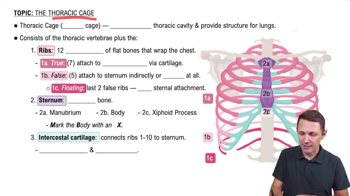
Step 1: Understand the anatomy of the sternum, which is a flat bone located in the center of the chest. It is divided into three main parts: the superior portion (manubrium), the middle portion (body), and the inferior portion (xiphoid process).
Step 2: Identify the inferior portion of the sternum. This is the xiphoid process, a small, cartilaginous structure that may ossify later in life.
Step 3: Identify the superior portion of the sternum. This is the manubrium, a broad, flat structure that forms the upper part of the sternum.
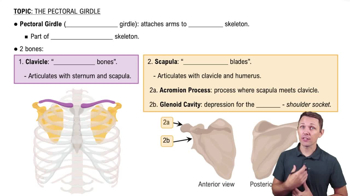
Step 4: Determine what the manubrium articulates with. The manubrium connects to the clavicles (collarbones) at the sternoclavicular joints and also articulates with the first rib and part of the second rib.
Step 5: Combine the information to understand the relationships between the parts of the sternum and their articulations with other bones, ensuring clarity in anatomical terminology.
Verified video answer for a similar problem:
This video solution was recommended by our tutors as helpful for the problem above
Play a video:
Was this helpful?
Key Concepts
Here are the essential concepts you must grasp in order to answer the question correctly.
Sternum Anatomy
The sternum, or breastbone, is a flat bone located in the center of the chest. It consists of three main parts: the manubrium (superior portion), the body (middle portion), and the xiphoid process (inferior portion). Understanding the anatomy of the sternum is crucial for identifying its parts and their functions in the thoracic skeleton.
Articulation refers to the connection between bones at a joint. In the context of the sternum, the manubrium articulates with the clavicles (collarbones) and the first rib, forming important joints that contribute to the stability and movement of the upper body. This concept is essential for understanding how the sternum interacts with surrounding structures.
The rib cage is a bony structure that protects vital organs in the thoracic cavity, including the heart and lungs. It is composed of the ribs, sternum, and thoracic vertebrae. The relationship between the sternum and the ribs is significant for respiratory mechanics and overall chest stability, making it a key concept in understanding thoracic anatomy.