Pearson+ LogoPearson+ Logo
Ch. 9 The Muscular System
Amerman - Human Anatomy & Physiology 2nd Edition
Erin C. Amerman2nd EditionHuman Anatomy & PhysiologyISBN: 9780136873822Not the one you use?Change textbook
Chapter 9, Problem 15

Which of the following muscles flexes the thigh, but also laterally flexes the vertebral column when its origin and insertion switch?
a. Sartorius muscle
b. Psoas major muscle
c. Iliacus muscle
d. Rectus abdominis muscle

Verified step by step guidance
1
Step 1: Begin by identifying the primary function of each muscle listed in the options. For example, the sartorius muscle is involved in flexing the thigh and rotating it laterally, while the rectus abdominis muscle is primarily responsible for flexing the vertebral column.
Step 2: Focus on the psoas major muscle. Understand that this muscle originates from the lumbar vertebrae and inserts onto the femur. It plays a role in flexing the thigh at the hip joint and can also flex the vertebral column laterally when its origin and insertion switch roles.
Step 3: Compare the psoas major muscle's dual function to the other muscles listed. The iliacus muscle, for instance, works closely with the psoas major to flex the thigh but does not contribute to lateral flexion of the vertebral column.
Step 4: Eliminate options that do not match the description provided in the question. For example, the rectus abdominis muscle flexes the vertebral column but does not flex the thigh, and the sartorius muscle does not laterally flex the vertebral column.
Step 5: Conclude that the psoas major muscle is the correct answer based on its unique ability to flex the thigh and laterally flex the vertebral column when its origin and insertion switch roles.

Verified video answer for a similar problem:

This video solution was recommended by our tutors as helpful for the problem above.
Was this helpful?

Key Concepts

Here are the essential concepts you must grasp in order to answer the question correctly.

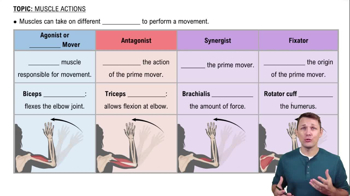
Muscle Function and Actions

Understanding muscle function is crucial in anatomy and physiology. Muscles can perform multiple actions depending on their origin and insertion points. For instance, a muscle may primarily flex a joint but can also assist in other movements, such as lateral flexion of the vertebral column, when its attachment points are altered.
Recommended video:
Guided course
5:41
Muscle Actions

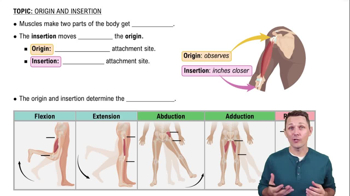
Origin and Insertion of Muscles

The origin and insertion of a muscle are key to understanding its movement capabilities. The origin is the fixed attachment point, while the insertion is the movable attachment. When the roles of these points are reversed, the muscle can perform different actions, which is essential for analyzing complex movements like those involving the thigh and vertebral column.
Recommended video:
Guided course
5:39
Origin and Insertion

Specific Muscles Involved

Familiarity with specific muscles and their functions is vital for answering the question. The psoas major, for example, is known for its role in flexing the thigh and can also contribute to lateral flexion of the spine when its origin and insertion are switched. Recognizing the unique actions of each muscle listed in the options helps in identifying the correct answer.
Recommended video:
Guided course
2:00
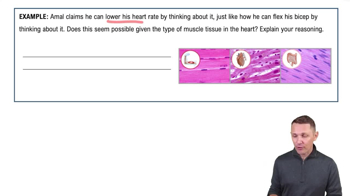
Introduction to Muscles and Muscle Tissue Example 1