
Ch. 20 - DNA Tools and Biotechnology
Chapter 20, Problem 5

DNA technology has many medical applications. Which of the following is not done routinely at present?
a. Production of hormones for treating diabetes and dwarfism
b. Analysis of gene expression for more informed cancer treatments
c. Gene editing by the CRISPR-Cas9 system in viable human embryos to correct genetic diseases
d. Prenatal identification of genetic disease alleles

Verified step by step guidance
1
Understand the context of DNA technology in medicine, which includes various applications such as hormone production, gene expression analysis, gene editing, and prenatal genetic testing.
Review the current medical applications of DNA technology: (a) Hormone production using recombinant DNA technology is routinely done to produce insulin for diabetes and growth hormone for dwarfism. (b) Gene expression analysis is used to tailor cancer treatments based on the genetic profile of tumors.
Consider the ethical and technical challenges associated with each option. Gene editing in viable human embryos (option c) involves significant ethical concerns and is not widely accepted or practiced routinely.
Evaluate the feasibility and routine nature of prenatal genetic testing (option d), which is commonly used to identify genetic diseases before birth through techniques like amniocentesis and chorionic villus sampling.
Identify the option that is not routinely practiced due to ethical, technical, or regulatory reasons, focusing on the current state of medical applications of DNA technology.

Verified video answer for a similar problem:

This video solution was recommended by our tutors as helpful for the problem above.
Video duration:
1m
Was this helpful?

Key Concepts

Here are the essential concepts you must grasp in order to answer the question correctly.

DNA Technology

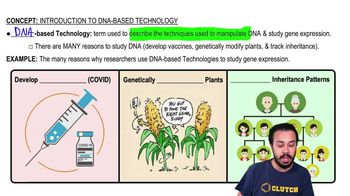
DNA technology involves the manipulation and application of genetic material to develop medical and scientific advancements. It includes techniques like gene cloning, sequencing, and editing, which are used to produce hormones, analyze gene expression, and identify genetic diseases. Understanding DNA technology is crucial for comprehending its medical applications and limitations.
Recommended video:
Guided course
02:30
Introduction to DNA-Based Technology

CRISPR-Cas9 Gene Editing

CRISPR-Cas9 is a revolutionary gene-editing tool that allows precise modifications to DNA sequences. It has potential applications in correcting genetic diseases, but ethical and safety concerns limit its use, especially in viable human embryos. Currently, CRISPR-Cas9 is not routinely used for editing human embryos due to these challenges.
Recommended video:
Guided course
05:02
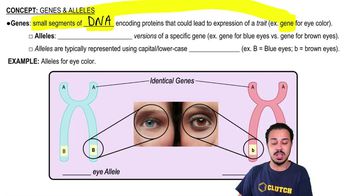
Genes & Alleles

Prenatal Genetic Testing

Prenatal genetic testing involves screening embryos or fetuses for genetic diseases before birth. Techniques like amniocentesis and chorionic villus sampling are used to identify disease alleles, helping parents make informed decisions. This process is routinely performed to detect genetic disorders early, contrasting with the less common practice of gene editing in embryos.
Recommended video:
Related Practice
Textbook Question

Which of the following tools of DNA technology is incorrectly paired with its use?

a. Electrophoresis — Separation of DNA fragments

b. DNA ligase — Cutting DNA, creating sticky ends of restriction fragments

c. DNA polymerase — Polymerase chain reaction to amplify sections of DNA

d. Reverse transcriptase — Production of cDNA from mRNA

1124
views
Textbook Question

Plants are more readily manipulated by genetic engineering than are animals because

a. Plant genes do not contain introns.

b. More vectors are available for transferring recombinant DNA into plant cells.

c. A somatic plant cell can often give rise to a complete plant.

d. Plant cells have larger nuclei.

2059
views
Textbook Question

A paleontologist has recovered a bit of tissue from the 400-year-old preserved skin of an extinct dodo (a bird). To compare a specific region of the DNA from a sample with DNA from living birds, which of the following would be most useful for increasing the amount of dodo DNA available for testing?

a. SNP analysis

b. Polymerase chain reaction (PCR)

c. Electroporation

d. Gel electrophoresis

1674
views
Textbook Question

Which of the following is not true of cDNA produced using human brain tissue as the starting material?

a. It can be amplified by the polymerase chain reaction.

b. It was produced from pre-mRNA using reverse transcriptase.

c. It can be labeled and used as a probe to detect genes expressed in the brain.

d. It lacks the introns of the pre-mRNA.

1571
views
Textbook Question

Expression of a cloned eukaryotic gene in a bacterial cell involves many challenges. The use of mRNA and reverse transcriptase is part of a strategy to solve the problem of

a. Post-transcriptional processing.

b. Post-translational processing.

c. Nucleic acid hybridization.

d. Restriction fragment ligation.

1861
views
Textbook Question

Which of the following sequences in double-stranded DNA is most likely to be recognized as a cutting site for a restriction enzyme?

a. AAGG TTCC

b. GGCC CCGG

c. ACCA TGGT

d. AAAA TTTT

1403
views