Pearson+ LogoPearson+ Logo
Ch. 27 - Bacteria and Archaea
Campbell - Campbell Biology 11th Edition
Urry11th EditionCampbell BiologyISBN: 9789357423311Not the one you use?Change textbook
Chapter 27, Problem 5

Bacteria perform the following ecological roles. Which role typically does not involve symbiosis?
a. Skin commensalist
b. Decomposer
c. Gut mutualist
d. Pathogen

Verified step by step guidance
1
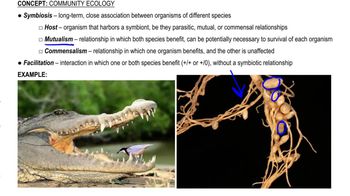
Understand the concept of symbiosis: Symbiosis refers to a close and long-term biological interaction between two different biological organisms. It can be mutualistic, commensalistic, or parasitic.
Identify the roles listed in the problem: The roles are skin commensalist, decomposer, gut mutualist, and pathogen.
Analyze each role: Determine if each role involves symbiosis. A skin commensalist lives on the skin without harming the host, which is a form of symbiosis. A gut mutualist benefits both the host and the bacteria, which is mutualistic symbiosis. A pathogen harms the host, which is parasitic symbiosis.
Consider the role of decomposers: Decomposers break down dead organic matter, recycling nutrients back into the ecosystem. This process typically occurs independently of a host organism, thus not involving symbiosis.
Conclude which role does not involve symbiosis: Based on the analysis, decomposers typically do not engage in symbiotic relationships as they act independently of living hosts.

Verified video answer for a similar problem:

This video solution was recommended by our tutors as helpful for the problem above.
Video duration:
1m
Was this helpful?

Key Concepts

Here are the essential concepts you must grasp in order to answer the question correctly.

Symbiosis

Symbiosis refers to a close and long-term biological interaction between two different biological organisms. It can be mutualistic, commensalistic, or parasitic, where both, one, or neither organism benefits, respectively. Understanding symbiosis is crucial to differentiate roles that involve direct interactions between organisms.
Recommended video:

Decomposer

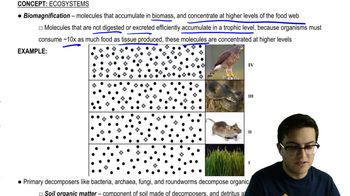
Decomposers are organisms, such as bacteria and fungi, that break down dead or decaying organisms, recycling nutrients back into the ecosystem. This role typically does not involve symbiosis, as decomposers act independently to process organic matter, unlike symbiotic relationships that require interaction with living hosts.
Recommended video:
Guided course
02:25
Biomagnification and Decomposers

Pathogen

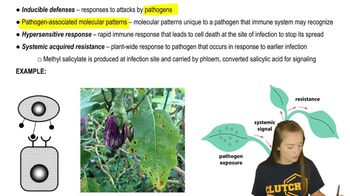
Pathogens are organisms that cause disease in their host, often through parasitic relationships. While pathogens can be considered a form of symbiosis due to their interaction with hosts, they differ from mutualistic or commensalistic relationships as they harm the host, highlighting the diverse nature of symbiotic interactions.
Recommended video:
Guided course
08:59
Pathogen Defenses