
Pearson+ LogoPearson+ Logo
Ch. 29 - Plant Diversity I: How Plants Colonized Land
Campbell - Campbell Biology 11th Edition
Urry11th EditionCampbell BiologyISBN: 9789357423311Not the one you use?Change textbook
Chapter 29, Problem 2

Which of the following characteristics of plants is absent in their closest relatives, the charophyte algae?
a. Chlorophyll b
b. Cellulose in cell walls
c. Sexual reproduction
d. Alternation of multicellular generations

Verified step by step guidance
1
Identify the key characteristics of charophyte algae, which are the closest relatives to plants. Charophytes share many features with plants, but there are distinct differences.
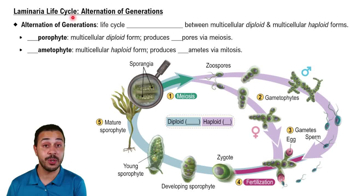
Understand the concept of alternation of generations. This is a life cycle that includes both a multicellular diploid phase (sporophyte) and a multicellular haploid phase (gametophyte).
Recognize that charophyte algae do not exhibit alternation of multicellular generations. They primarily exist in a haploid state and do not have a multicellular diploid phase.
Compare the characteristics listed in the problem: chlorophyll b, cellulose in cell walls, sexual reproduction, and alternation of multicellular generations.
Determine which characteristic is unique to plants and absent in charophyte algae. The alternation of multicellular generations is a key feature of plants that is not present in charophyte algae.

Verified video answer for a similar problem:

This video solution was recommended by our tutors as helpful for the problem above.
Video duration:
2m
Was this helpful?

Key Concepts

Here are the essential concepts you must grasp in order to answer the question correctly.

Alternation of Multicellular Generations

Alternation of multicellular generations is a life cycle characteristic in plants where they alternate between two distinct forms: the gametophyte and the sporophyte. The gametophyte is haploid and produces gametes, while the sporophyte is diploid and produces spores. This cycle is crucial for plant reproduction and is absent in charophyte algae, which do not exhibit this alternation.
Recommended video:
Guided course
04:09
Laminaria Life Cycle: Alternation of Generations

Charophyte Algae

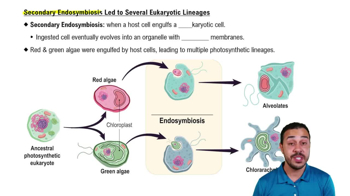
Charophyte algae are a group of green algae considered the closest relatives to land plants. They share several features with plants, such as chlorophyll b and cellulose in their cell walls. However, they lack certain plant-specific characteristics, such as the alternation of multicellular generations, which distinguishes land plants from charophytes.
Recommended video:
Guided course
02:37
Secondary Endosymbiosis Led to Several Eukaryotic Lineages

Cellulose in Cell Walls

Cellulose is a polysaccharide that forms the primary structural component of plant cell walls, providing rigidity and strength. Both plants and charophyte algae possess cellulose in their cell walls, which is a shared trait that supports their structural integrity. This characteristic is not unique to plants, as it is also found in charophyte algae.
Recommended video:
Guided course
03:44
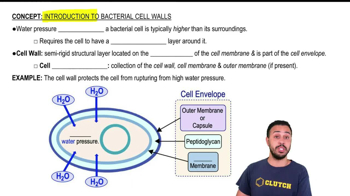
Introduction to Bacterial Cell Walls