Pearson+ LogoPearson+ Logo
Ch. 31 - Fungi
Campbell - Campbell Biology 11th Edition
Urry11th EditionCampbell BiologyISBN: 9789357423311Not the one you use?Change textbook
Chapter 31, Problem 1

All fungi are
a. Symbiotic
b. Heterotrophic
c. Flagellated
d. Decomposers

Verified step by step guidance
1
Begin by understanding the characteristics of fungi. Fungi are a diverse group of organisms that include yeasts, molds, and mushrooms.
Consider the term 'heterotrophic.' Fungi are heterotrophic, meaning they obtain their nutrients by absorbing organic matter from their environment, rather than producing it themselves like autotrophs.
Evaluate the term 'symbiotic.' While some fungi form symbiotic relationships (e.g., mycorrhizae with plants), not all fungi are symbiotic.
Examine the term 'flagellated.' Most fungi do not have flagella; flagella are more common in certain protists and some animal cells.
Consider the term 'decomposers.' Many fungi play a crucial role in ecosystems as decomposers, breaking down dead organic material and recycling nutrients.

Verified video answer for a similar problem:

This video solution was recommended by our tutors as helpful for the problem above.
Video duration:
33s
Was this helpful?

Key Concepts

Here are the essential concepts you must grasp in order to answer the question correctly.

Heterotrophic Organisms

Heterotrophic organisms obtain their energy by consuming organic matter, as they cannot produce their own food. Fungi are heterotrophic, relying on external sources of carbon, such as decomposing organic material, to sustain themselves. This distinguishes them from autotrophs, like plants, which synthesize their own food through photosynthesis.
Recommended video:
Guided course
06:52
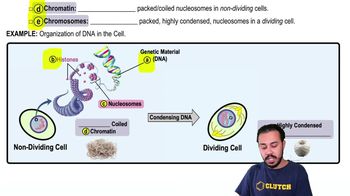
Organization of DNA in the Cell

Symbiotic Relationships

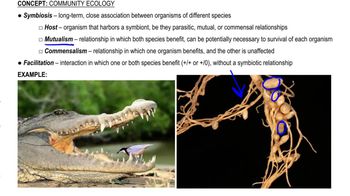
Symbiosis refers to a close and long-term biological interaction between two different biological organisms. Fungi often engage in symbiotic relationships, such as mycorrhizal associations with plant roots, where both parties benefit. However, not all fungi are symbiotic; some are free-living decomposers, breaking down dead organic matter independently.
Recommended video:

Decomposers in Ecosystems

Decomposers are organisms that break down dead or decaying organisms, recycling nutrients back into the ecosystem. Fungi play a crucial role as decomposers, breaking down complex organic substances into simpler compounds, which are then available for use by other organisms. This process is vital for nutrient cycling and maintaining ecosystem health.
Recommended video:
Guided course
02:25
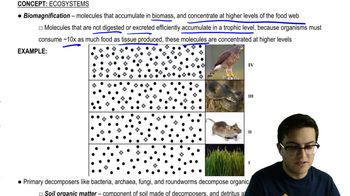
Biomagnification and Decomposers