Pearson+ LogoPearson+ Logo
Ch. 35 - Vascular Plant Structure, Growth, and Development
Campbell - Campbell Biology 11th Edition
Urry11th EditionCampbell BiologyISBN: 9789357423311Not the one you use?Change textbook
Chapter 35, Problem 1

Most of the growth of a plant body is the result of
a. Cell differentiation
b. Morphogenesis
c. Cell division
d. Cell elongation

Verified step by step guidance
1
Understand the key processes involved in plant growth: cell division, cell elongation, cell differentiation, and morphogenesis.
Cell division is the process by which a cell divides into two new daughter cells. This is crucial for growth as it increases the number of cells.
Cell elongation refers to the process where cells increase in size, contributing to the growth of plant tissues.
Cell differentiation is the process by which cells become specialized in structure and function, forming different types of tissues.
Morphogenesis involves the development of the form and structure of the plant body, but it is not directly responsible for the increase in size.

Verified video answer for a similar problem:

This video solution was recommended by our tutors as helpful for the problem above.
Video duration:
32s
Was this helpful?

Key Concepts

Here are the essential concepts you must grasp in order to answer the question correctly.

Cell Division

Cell division is the process by which a parent cell divides into two or more daughter cells. In plants, this occurs primarily in the meristematic tissues, allowing for growth and the formation of new cells. It is a fundamental mechanism for increasing the number of cells, contributing significantly to the growth of the plant body.
Recommended video:
Guided course
03:19
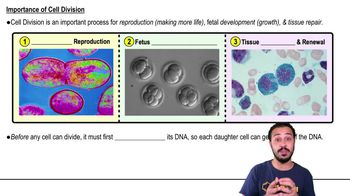
Importance of Cell Division

Cell Elongation

Cell elongation refers to the process where cells increase in size, primarily in length. This occurs after cell division and is crucial for plant growth, as it allows the plant to expand and reach greater heights. Hormones like auxins play a significant role in promoting cell elongation, influencing the overall growth pattern of the plant.
Recommended video:
Guided course
04:01
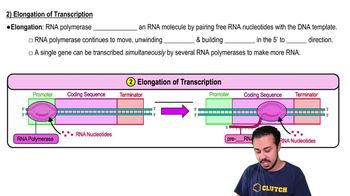
1) Elongation of Transcription

Morphogenesis

Morphogenesis is the biological process that causes an organism to develop its shape. In plants, it involves the spatial distribution of cells and tissues, leading to the formation of structures like leaves, stems, and roots. While essential for shaping the plant, morphogenesis is more about form than growth, distinguishing it from processes directly increasing plant size.
Recommended video:
Guided course
12:48
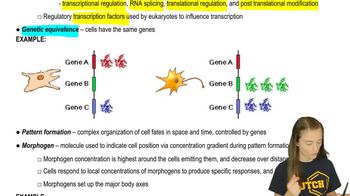
Differential Expression, Morphogens, and Pattern Formation