
Pearson+ LogoPearson+ Logo
Ch. 45 - Animal Movement
Freeman - Biological Science 8th Edition
Freeman8th EditionBiological ScienceISBN: 9780138276263Not the one you use?Change textbook
Chapter 45, Problem 6

Rigor mortis is the stiffening of a body after death that occurs when myosin binds to actin but cannot unbind. What prevents myosin from unbinding?

Verified step by step guidance
1
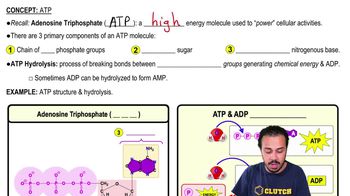
Understand the role of ATP: ATP (adenosine triphosphate) is necessary for muscle contraction and relaxation. During life, ATP binds to myosin, causing it to release from actin filaments.
Recognize the effect of death on ATP production: After death, cellular respiration ceases, leading to a depletion of ATP within the muscle cells.
Identify the consequence of ATP depletion: Without ATP, myosin heads that are attached to actin during the last contraction remain bound. This is because ATP is required to detach myosin from actin.
Link to rigor mortis: The continued attachment of myosin to actin without the presence of ATP results in the stiffening of muscles, a condition known as rigor mortis.
Understand the timeline: Rigor mortis typically begins within a few hours after death and can last up to 72 hours, depending on various factors such as ambient temperature and the condition of the body prior to death.

Verified video answer for a similar problem:

This video solution was recommended by our tutors as helpful for the problem above.
Video duration:
3m
Was this helpful?

Key Concepts

Here are the essential concepts you must grasp in order to answer the question correctly.

Muscle Contraction Mechanism

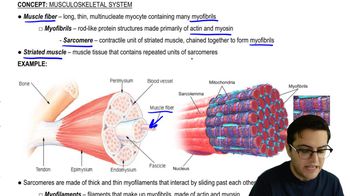
Muscle contraction occurs through the sliding filament theory, where myosin heads bind to actin filaments, forming cross-bridges. This process requires ATP, which provides the energy for myosin to pull actin and subsequently release. In rigor mortis, the lack of ATP prevents myosin from detaching from actin, leading to sustained muscle contraction and stiffness.
Recommended video:
Guided course
02:40
Muscle Fibers and Sarcomeres

Role of ATP in Muscle Function

Adenosine triphosphate (ATP) is crucial for muscle function, as it supplies the energy needed for muscle contraction and relaxation. During contraction, ATP is hydrolyzed to ADP and inorganic phosphate, allowing myosin to release from actin. After death, ATP production ceases, resulting in myosin remaining bound to actin, which is a key factor in the development of rigor mortis.
Recommended video:

Biochemical Changes Post-Mortem

After death, the body undergoes various biochemical changes, including the depletion of ATP and the accumulation of calcium ions. The lack of ATP prevents muscle fibers from relaxing, while increased calcium levels promote continued binding of myosin to actin. These changes contribute to the onset of rigor mortis, which typically begins a few hours after death and can last for several days.
Recommended video:
Guided course
04:26
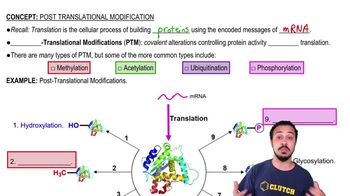
Post-Translational Modification
Related Practice
Textbook Question

In muscle cells, myosin molecules continue moving along actin molecules as long as:

a. ATP is present and troponin is not bound to Ca²⁺.

b. ADP is present and tropomyosin is released from intracellular stores.

c. ADP is present and the intracellular acetylcholine level is high.

d. ATP is present and the intracellular Ca²⁺ concentration is high.

1223
views
Textbook Question

Which of the following is critical to the function of most exoskeletons, endoskeletons, and hydrostatic skeletons?

a. Muscles interact with the skeleton in antagonistic groups.

b. Muscles attach to each of these types of skeletons via tendons.

c. Muscles extend joints by pushing skeletal elements.

d. Segments of the body or limbs are extended when paired muscles relax in unison.

666
views
Textbook Question

How did data on sarcomere structure inspire the sliding-filament model of muscle contraction?

Explain why the observation that muscle cells contain many mitochondria and extensive smooth endoplasmic reticulum turned out to be logical once the molecular mechanism of muscular contraction was understood.

682
views
Textbook Question

In 2023, Tigist Assefa of Ethiopia set a new record with a time of 2 hours, 11 minutes, and 53 seconds. Scientists, trainers, and athletes alike have wondered about the extent to which muscle structure and function contribute to success in athletes such as Assefa. What makes elite distance runners so good? Are their muscles somehow different from those of less successful athletes and non-athletes? Compare and contrast the structure and function of the three types of skeletal muscle fibers.

252
views
Textbook Question

In 2023, Tigist Assefa of Ethiopia set a new record with a time of 2 hours, 11 minutes, and 53 seconds. Scientists, trainers, and athletes alike have wondered about the extent to which muscle structure and function contribute to success in athletes such as Assefa. What makes elite distance runners so good? Are their muscles somehow different from those of less successful athletes and non-athletes? Predict who would likely have a greater proportion of fast glycolytic fibers in their gastrocnemius (calf) muscle—an elite distance runner or an elite sprinter. Explain.

186
views
Textbook Question

In 2023, Tigist Assefa of Ethiopia set a new record with a time of 2 hours, 11 minutes, and 53 seconds. Scientists, trainers, and athletes alike have wondered about the extent to which muscle structure and function contribute to success in athletes such as Assefa. What makes elite distance runners so good? Are their muscles somehow different from those of less successful athletes and non-athletes? Predict the effect of training for a marathon on the number of muscle cells in the gastrocnemius. Explain.

179
views