Ch. 48 - The Immune System in Animals

Freeman8th EditionBiological ScienceISBN: 9780138276263
Not the one you use?Change textbookSelect a different textbook
Table of contents
- Ch. 1 - Biology: The Study of Life13
- Ch. 2 - Water and Carbon: The Chemical Basis of Life14
- Ch.3 - Protein Structure and Function10
- Ch.4 - Nucleic Acids and the RNA World10
- Ch. 5 - An Introduction to Carbohydrates10
- Ch. 6 - Lipids, Membranes, and the First Cells11
- Ch. 7 - Inside the Cell10
- Ch. 8 - Energy and Enzymes: An Introduction to Metabolism10
- Ch. 9 - Cellular Respiration and Fermentation11
- Ch. 10 - Photosynthesis12
- Ch. 11 - Cell-Cell Interactions12
- Ch. 12 - The Cell Cycle8
- Ch. 13 - Meiosis12
- Ch. 14 - Mendel and the Gene23
- Ch. 15 - DNA and the Gene: Synthesis and Repair15
- Ch. 16 - How Genes Work16
- Ch. 17 - Transcription, RNA Processing, and Translation16
- Ch. 18 - Control of Gene Expression in Bacteria16
- Ch. 19 - Control of Gene Expression in Eukaryotes12
- Ch. 20 - The Molecular Revolution: Biotechnology, Genomics, and New Frontiers15
- Ch. 21 - Genes, Development, and Evolution12
- Ch. 22 - Evolution by Natural Selection16
- Ch. 23 - Evolutionary Processes13
- Ch. 24 - Speciation15
- Ch. 25 - Phylogenies and the History of Life13
- Ch. 26 - Bacteria and Archaea15
- Ch. 27 - Diversification of Eukaryotes16
- Ch. 28 - Green Algae and Land Plants16
- Ch. 29 - Fungi18
- Ch. 30 - An Introduction to Animals9
- Ch. 31 - Protostome Animals15
- Ch. 32 - Deuterostome Animals17
- Ch. 33 - Viruses16
- Ch. 34 - Plant Form and Function16
- Ch. 35 - Water and Sugar Transport in Plants16
- Ch. 36 - Plant Nutrition13
- Ch. 37 - Plant Sensory Systems, Signals, and Responses16
- Ch. 38 - Flowering Plant Reproduction and Development16
- Ch. 39 - Animal Form and Function17
- Ch. 40 - Water and Electrolyte Balance in Animals16
- Ch. 41 - Animal Nutrition16
- Ch. 42 - Gas Exchange and Circulation16
- Ch. 43 - Animal Nervous Systems16
- Ch. 44 - Animal Sensory Systems16
- Ch. 45 - Animal Movement11
- Ch. 46 - Chemical Signals in Animals16
- Ch. 47 - Animal Reproduction and Development16
- Ch. 48 - The Immune System in Animals16
- Ch. 49 - An Introduction to Ecology15
- Ch. 50 - Behavioral Ecology16
- Ch. 51 - Population Ecology16
- Ch. 52 - Community Ecology20
- Ch. 53 - Ecosystems and Global Ecology17
- Ch. 54 - Biodiversity and Conservation Ecology18

Chapter 48, Problem 16
Compared with non-replicating mRNA vaccines, a smaller dose of self-amplifying RNA is needed to induce a protective immune response. What are possible advantages of being able to use a smaller dose of a vaccine during a pandemic?
 Verified step by step guidance
1
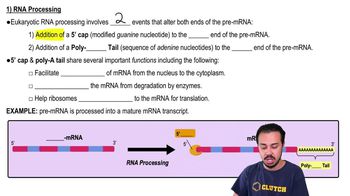
Identify the type of vaccine being discussed: Self-amplifying RNA vaccines are a type of mRNA vaccine that includes additional sequences encoding the viral replication machinery, which allows for in vivo amplification of the RNA.
Understand the implication of dose size: A smaller dose means that each administration of the vaccine requires less of the actual vaccine formulation. This can be crucial in terms of production and distribution.
Consider production capacity: With a smaller dose per person, more doses can be produced with the same amount of starting material. This can increase the total number of individuals that can be vaccinated within a shorter time frame.
Evaluate distribution logistics: Smaller doses can lead to smaller and lighter packaging, which can simplify the logistics of distribution, especially in areas with limited access to healthcare facilities.
Assess the impact on vaccine accessibility: By increasing the number of doses available and simplifying distribution, more people can be vaccinated quickly, which is particularly important during a pandemic to control the spread of the virus.
Key Concepts
Here are the essential concepts you must grasp in order to answer the question correctly.
Self-Amplifying RNA Vaccines
Self-amplifying RNA vaccines are designed to replicate within the host cells after administration. This means that a smaller initial dose can lead to a larger amount of antigen being produced, which can enhance the immune response. This technology allows for a more efficient use of the vaccine, potentially leading to quicker and broader immunity.
Recommended video:
 04:19
04:19
1) RNA Processing
Dose Optimization in Vaccination
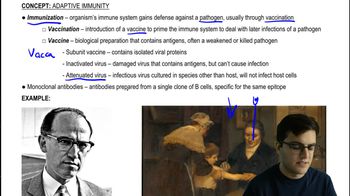
Using a smaller dose of a vaccine can optimize resource allocation, especially during a pandemic when vaccine supplies may be limited. A reduced dose can allow for more individuals to be vaccinated, increasing overall population immunity and helping to control the spread of the disease more effectively.
Recommended video:
 07:51
07:51Immunization and Autoimmunity
Immune Response and Efficacy
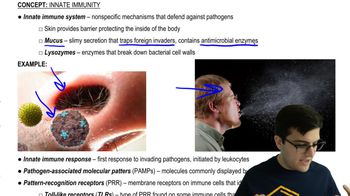
The immune response refers to the body's defense mechanism against pathogens, which can be influenced by the type and amount of vaccine administered. A smaller dose of a self-amplifying RNA vaccine can still elicit a strong immune response, potentially leading to effective protection with fewer side effects and lower production costs, which is crucial during health crises.
Recommended video:
 05:20
05:20Innate Immune Response
Related Practice