For the lac genotypes shown in the following table, predict whether the structural genes (Z) are constitutive, permanently repressed, or inducible in the presence of lactose. Genotype Constitutive Repressed Inducible I⁺O⁺Z⁺ x I⁻O⁺Z⁺ I⁻OᶜZ⁺ I⁻OᶜZ⁺/F'O⁺ I⁺OᶜZ⁺/F'O⁺ IˢO⁺Z⁺ IˢO⁺Z⁺/F'I⁺
Table of contents
- 1. Introduction to Genetics51m
- 2. Mendel's Laws of Inheritance3h 37m
- 3. Extensions to Mendelian Inheritance2h 41m
- 4. Genetic Mapping and Linkage2h 28m
- 5. Genetics of Bacteria and Viruses1h 21m
- 6. Chromosomal Variation1h 48m
- 7. DNA and Chromosome Structure56m
- 8. DNA Replication1h 10m
- 9. Mitosis and Meiosis1h 34m
- 10. Transcription1h 0m
- 11. Translation58m
- 12. Gene Regulation in Prokaryotes1h 19m
- 13. Gene Regulation in Eukaryotes44m
- 14. Genetic Control of Development44m
- 15. Genomes and Genomics1h 50m
- 16. Transposable Elements47m
- 17. Mutation, Repair, and Recombination1h 6m
- 18. Molecular Genetic Tools19m
- 19. Cancer Genetics29m
- 20. Quantitative Genetics1h 26m
- 21. Population Genetics50m
- 22. Evolutionary Genetics29m
12. Gene Regulation in Prokaryotes
Lac Operon
Problem 8
Textbook Question
Describe the experimental rationale that allowed the lac repressor to be isolated.
Verified step by step guidance1
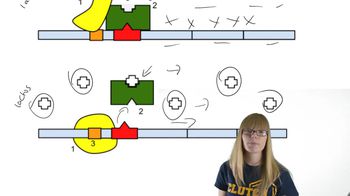
Understand the biological context: The lac repressor is a protein that regulates the lac operon in bacteria by binding to the operator region and preventing transcription in the absence of lactose.
Recognize the experimental goal: Scientists aimed to isolate the lac repressor protein to study its properties and understand how it controls gene expression.
Identify the key experimental approach: Researchers used a DNA fragment containing the lac operator sequence as a 'bait' to specifically bind the lac repressor protein from a mixture of cellular proteins.
Explain the binding assay: By incubating bacterial extracts with the operator DNA and then separating bound from unbound proteins, the lac repressor could be selectively isolated due to its specific affinity for the operator sequence.
Highlight the use of mutants and inducers: Mutant strains lacking the repressor or using inducers like IPTG helped confirm the identity of the isolated protein by showing changes in binding behavior, thus validating the experimental rationale.
Verified video answer for a similar problem:This video solution was recommended by our tutors as helpful for the problem above
Video duration:
2mPlay a video:
Was this helpful?
Key Concepts
Here are the essential concepts you must grasp in order to answer the question correctly.
Lac Operon Regulation
The lac operon is a set of genes involved in lactose metabolism in E. coli, regulated by the lac repressor protein. Understanding how the repressor binds to the operator region to inhibit transcription is fundamental to grasping the experimental rationale for its isolation.
Recommended video:
Guided course
Lac Operon Regulation
Protein-DNA Binding Specificity
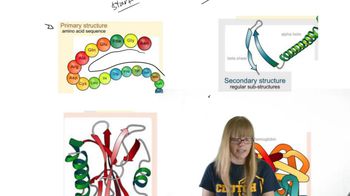
The lac repressor specifically binds to the operator DNA sequence, preventing RNA polymerase from transcribing the operon. This specific interaction was exploited experimentally to isolate the repressor by using DNA affinity techniques.
Recommended video:
Guided course
Proteins
Affinity Chromatography and Experimental Design
The isolation of the lac repressor involved using operator DNA attached to a solid matrix to capture the repressor protein from cell extracts. This approach, based on affinity chromatography principles, allowed selective purification of the repressor by exploiting its DNA-binding property.
Recommended video:
Guided course
Transformation
Related Videos
Related Practice
Textbook Question
1416
views
