Ch. 16 - Regulation of Gene Expression in Bacteria
Klug - Concepts of Genetics  12th Edition
Klug12th EditionConcepts of Genetics ISBN: 9780135564776Not the one you use?Change textbook
Chapter 16, Problem 11

Erythritol, a natural sugar abundant in fruits and fermenting foods, is about 65 percent as sweet as table sugar and has about 95 percent fewer calories. It is 'tooth friendly' and generally devoid of negative side effects as a human consumable product. Pathogenic Brucella strains that catabolize erythritol contain four closely spaced genes, all involved in erythritol metabolism. One of the four genes (eryD) encodes a product that represses the expression of the other three genes. Erythritol catabolism is stimulated by erythritol. Present a simple regulatory model to account for the regulation of erythritol catabolism in Brucella. Does this system appear to be under inducible or repressible control?

Verified step by step guidance
1
Identify the key components of the regulatory system: the four genes involved in erythritol metabolism, including eryD, which encodes a repressor protein that inhibits the expression of the other three genes.
Understand the role of erythritol as an effector molecule that stimulates erythritol catabolism, suggesting it interacts with the repressor to modulate gene expression.
Construct a model where, in the absence of erythritol, the EryD repressor binds to the operator region of the other three genes, preventing their transcription and thus blocking erythritol catabolism.
Describe how the presence of erythritol leads to its binding to the EryD repressor, causing a conformational change that reduces the repressor's affinity for the operator, thereby allowing transcription of the catabolic genes.
Classify the system as inducible control because the presence of the substrate (erythritol) induces the expression of the catabolic genes by inactivating the repressor.

Verified video answer for a similar problem:

This video solution was recommended by our tutors as helpful for the problem above.
Video duration:
2m
Was this helpful?

Key Concepts

Here are the essential concepts you must grasp in order to answer the question correctly.

Gene Regulation in Prokaryotes

Gene regulation in prokaryotes involves mechanisms that control the expression of genes in response to environmental signals. Regulatory proteins, such as repressors and activators, bind to DNA to inhibit or promote transcription. This allows bacteria to conserve energy by producing enzymes only when needed, adapting quickly to changes like the presence of specific substrates.
Recommended video:
Guided course
10:14
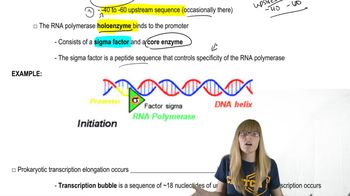
Prokaryotic Transcription

Inducible vs. Repressible Operons

Inducible operons are typically off and are turned on (induced) in the presence of a substrate, while repressible operons are usually on and turned off (repressed) when the end product is abundant. Inducible systems respond to the presence of a substrate to activate gene expression, whereas repressible systems respond to excess product to inhibit gene expression.
Recommended video:
Guided course
04:29
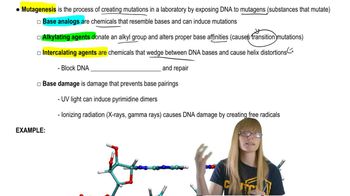
Induced Mutations

Negative Feedback and Repressor Proteins

Repressor proteins bind to operator regions to block transcription, preventing gene expression. Negative feedback occurs when the product of a pathway inhibits its own synthesis by activating a repressor. In the erythritol system, the repressor (EryD) inhibits other genes unless erythritol is present to relieve repression, illustrating a classic negative control mechanism.
Recommended video: