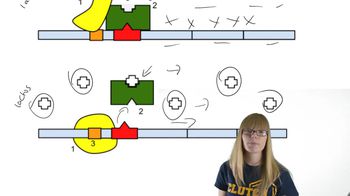
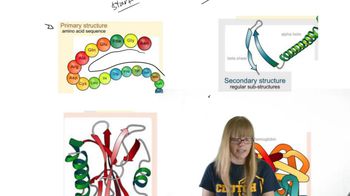
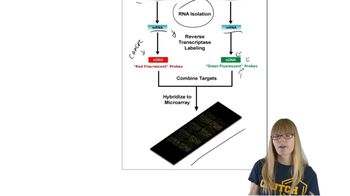
The locations of numerous lacI⁻ and lacIˢ mutations have been determined within the DNA sequence of the lacI gene. Among these, lacI⁻ mutations were found to occur in the 5′-upstream region of the gene, while lacIˢ mutations were found to occur farther downstream in the gene. Are the locations of the two types of mutations within the gene consistent with what is known about the function of the repressor that is the product of the lacI gene?

Predict the effect on the inducibility of the lac operon of a mutation that disrupts the function of:
(a) The CRP gene, which encodes the CAP protein
(b) The CAP-binding site within the promoter.
Verified step by step guidance
Verified video answer for a similar problem:
Key Concepts
Lac Operon Regulation
Role of CAP (Catabolite Activator Protein)
CAP-Binding Site Function
Describe the experimental rationale that allowed the lac repressor to be isolated.
What properties demonstrate that the lac repressor is a protein? Describe the evidence that it indeed serves as a repressor within the operon system.
Erythritol, a natural sugar abundant in fruits and fermenting foods, is about 65 percent as sweet as table sugar and has about 95 percent fewer calories. It is 'tooth friendly' and generally devoid of negative side effects as a human consumable product. Pathogenic Brucella strains that catabolize erythritol contain four closely spaced genes, all involved in erythritol metabolism. One of the four genes (eryD) encodes a product that represses the expression of the other three genes. Erythritol catabolism is stimulated by erythritol. Present a simple regulatory model to account for the regulation of erythritol catabolism in Brucella. Does this system appear to be under inducible or repressible control?
Describe the role of attenuation in the regulation of tryptophan biosynthesis.
