How do we know whether the genetic structure of a population is static or dynamic?
Table of contents
- 1. Introduction to Genetics51m
- 2. Mendel's Laws of Inheritance3h 37m
- 3. Extensions to Mendelian Inheritance2h 41m
- 4. Genetic Mapping and Linkage2h 28m
- 5. Genetics of Bacteria and Viruses1h 21m
- 6. Chromosomal Variation1h 48m
- 7. DNA and Chromosome Structure56m
- 8. DNA Replication1h 10m
- 9. Mitosis and Meiosis1h 34m
- 10. Transcription1h 0m
- 11. Translation58m
- 12. Gene Regulation in Prokaryotes1h 19m
- 13. Gene Regulation in Eukaryotes44m
- 14. Genetic Control of Development44m
- 15. Genomes and Genomics1h 50m
- 16. Transposable Elements47m
- 17. Mutation, Repair, and Recombination1h 6m
- 18. Molecular Genetic Tools19m
- 19. Cancer Genetics29m
- 20. Quantitative Genetics1h 26m
- 21. Population Genetics50m
- 22. Evolutionary Genetics29m
21. Population Genetics
Allelic Frequency Changes
Problem 2
Textbook Question
Write a short essay describing the roles of mutation, migration, and selection in bringing about speciation.
Verified step by step guidance1
Begin by defining speciation as the evolutionary process by which populations evolve to become distinct species, emphasizing the importance of genetic differences accumulating over time.
Explain the role of mutation as the original source of genetic variation, introducing new alleles into a population's gene pool, which can lead to differences between populations if mutations are unique or beneficial.
Describe migration (gene flow) as the movement of individuals and their genes between populations, which can either introduce new genetic material or homogenize populations, affecting the divergence necessary for speciation.
Discuss natural selection as the process by which certain alleles increase in frequency because they confer a reproductive or survival advantage, driving populations to adapt to different environments and potentially leading to reproductive isolation.
Conclude by integrating these concepts, showing how mutation provides variation, migration influences gene flow, and selection acts on variation, together facilitating the genetic divergence that underlies speciation.
Verified video answer for a similar problem:This video solution was recommended by our tutors as helpful for the problem above
Video duration:
4mPlay a video:
Was this helpful?
Key Concepts
Here are the essential concepts you must grasp in order to answer the question correctly.
Mutation
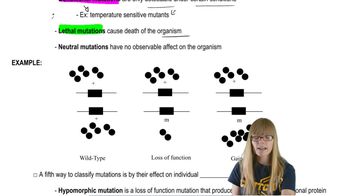
Mutation refers to changes in the DNA sequence that introduce new genetic variations within a population. These random alterations can create novel traits that may affect an organism’s fitness, providing raw material for evolution and potentially leading to speciation over time.
Recommended video:
Guided course
Mutations and Phenotypes
Migration (Gene Flow)
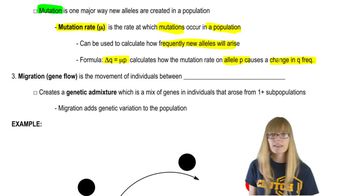
Migration, or gene flow, is the movement of individuals and their genes between populations. It can introduce new alleles to a population or homogenize genetic differences, influencing genetic diversity and either promoting or hindering speciation depending on the level of gene exchange.
Recommended video:
Guided course
New Alleles and Migration
Natural Selection
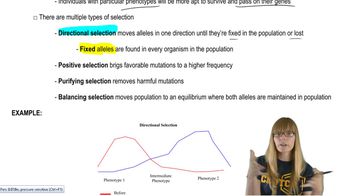
Natural selection is the process where individuals with advantageous traits have higher survival and reproduction rates. This differential success shapes allele frequencies in populations, driving adaptation to environments and potentially leading to reproductive isolation and speciation.
Recommended video:
Guided course
Natural Selection
Related Videos
Related Practice
Textbook Question
531
views
