Write a short essay describing how epigenetic changes in cancer cells contribute to the development and maintenance of cancers.
Verified step by step guidance
1
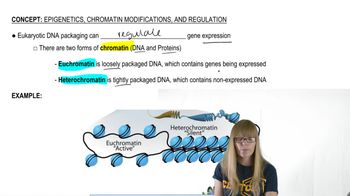
Begin by defining epigenetics: Explain that epigenetics refers to heritable changes in gene expression that do not involve alterations to the DNA sequence itself. These changes are often mediated by mechanisms such as DNA methylation, histone modification, and non-coding RNA activity.
Describe how epigenetic changes can lead to cancer: Discuss how abnormal epigenetic modifications can silence tumor suppressor genes or activate oncogenes. For example, hypermethylation of promoter regions in tumor suppressor genes can prevent their expression, while hypomethylation in oncogene regions can lead to their overexpression.
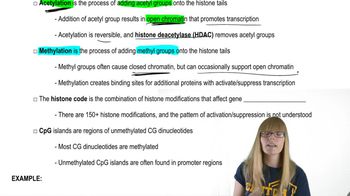
Explain the role of histone modifications: Highlight how changes in histone acetylation or methylation can alter chromatin structure, making certain regions of DNA more or less accessible for transcription. This can disrupt normal cellular processes and contribute to uncontrolled cell growth in cancer.
Discuss the maintenance of cancer through epigenetic changes: Explain how cancer cells can use epigenetic mechanisms to adapt to their environment, resist therapies, and maintain their malignant state. For instance, epigenetic plasticity allows cancer cells to switch between different states, aiding in metastasis and survival under stress conditions.
Conclude with therapeutic implications: Briefly mention how understanding epigenetic changes in cancer has led to the development of epigenetic therapies, such as drugs targeting DNA methylation (e.g., azacitidine) or histone deacetylases (HDAC inhibitors), which aim to reverse these abnormal modifications and restore normal gene expression.
Verified video answer for a similar problem:
This video solution was recommended by our tutors as helpful for the problem above
Video duration:
2m
Play a video:
Was this helpful?
Key Concepts
Here are the essential concepts you must grasp in order to answer the question correctly.
Epigenetics
Epigenetics refers to the study of heritable changes in gene expression that do not involve alterations to the underlying DNA sequence. These changes can be influenced by various factors, including environmental stimuli, lifestyle, and developmental stages. In cancer, epigenetic modifications can lead to the activation of oncogenes or the silencing of tumor suppressor genes, contributing to tumorigenesis.
DNA methylation is a key epigenetic mechanism that involves the addition of a methyl group to the DNA molecule, typically at cytosine bases. This modification can repress gene expression and is often found in cancer cells, where abnormal methylation patterns can silence genes that normally prevent tumor growth. Understanding these patterns is crucial for identifying potential biomarkers and therapeutic targets in cancer treatment.
Histone modification involves the chemical alteration of histone proteins around which DNA is wrapped, influencing chromatin structure and gene accessibility. Common modifications include acetylation, methylation, and phosphorylation, which can either promote or inhibit gene expression. In cancer, abnormal histone modifications can lead to the dysregulation of genes involved in cell cycle control and apoptosis, thereby supporting cancer cell survival and proliferation.