DNA sequencing has provided data to indicate that cancer cells may contain tens of thousands of somatic mutations, only some of which confer a growth advantage to a cancer cell. How do scientists describe and categorize these recently discovered populations of mutations in cancer cells?
Table of contents
- 1. Introduction to Genetics51m
- 2. Mendel's Laws of Inheritance3h 37m
- 3. Extensions to Mendelian Inheritance2h 41m
- 4. Genetic Mapping and Linkage2h 28m
- 5. Genetics of Bacteria and Viruses1h 21m
- 6. Chromosomal Variation1h 48m
- 7. DNA and Chromosome Structure56m
- 8. DNA Replication1h 10m
- 9. Mitosis and Meiosis1h 34m
- 10. Transcription1h 0m
- 11. Translation58m
- 12. Gene Regulation in Prokaryotes1h 19m
- 13. Gene Regulation in Eukaryotes44m
- 14. Genetic Control of Development44m
- 15. Genomes and Genomics1h 50m
- 16. Transposable Elements47m
- 17. Mutation, Repair, and Recombination1h 6m
- 18. Molecular Genetic Tools19m
- 19. Cancer Genetics29m
- 20. Quantitative Genetics1h 26m
- 21. Population Genetics50m
- 22. Evolutionary Genetics29m
19. Cancer Genetics
Overview of Cancer
Problem 21
Textbook Question
Radiotherapy (treatment with ionizing radiation) is one of the most effective current cancer treatments. It works by damaging DNA and other cellular components. In which ways could radiotherapy control or cure cancer, and why does radiotherapy often have significant side effects?
Verified step by step guidance1
Understand that radiotherapy controls or cures cancer primarily by causing damage to the DNA of cancer cells, leading to cell death or preventing their ability to divide and proliferate.
Recognize that ionizing radiation induces DNA double-strand breaks and other types of damage, which, if unrepaired or misrepaired, trigger apoptosis (programmed cell death) or senescence in cancer cells.
Consider that radiotherapy targets rapidly dividing cells, which is a characteristic of many cancer cells, making them more susceptible to DNA damage compared to most normal cells.
Acknowledge that significant side effects occur because radiotherapy can also damage normal, healthy cells in the surrounding tissues, especially those that also divide rapidly, such as cells in the skin, gastrointestinal tract, and bone marrow.
Note that the extent of side effects depends on factors like radiation dose, treatment area, and individual patient sensitivity, which explains why side effects can vary widely among patients.
Verified video answer for a similar problem:This video solution was recommended by our tutors as helpful for the problem above
Video duration:
2mPlay a video:
Was this helpful?
Key Concepts
Here are the essential concepts you must grasp in order to answer the question correctly.
Mechanism of DNA Damage by Ionizing Radiation
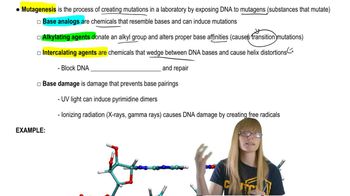
Ionizing radiation used in radiotherapy causes breaks in DNA strands, especially double-strand breaks, which can lead to cell death or malfunction. Cancer cells, which divide rapidly, are more susceptible to this damage, leading to their destruction or growth inhibition.
Recommended video:
Guided course
Induced Mutations
Selective Targeting of Cancer Cells
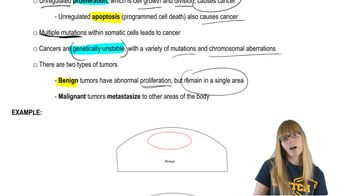
Radiotherapy aims to target cancer cells more than normal cells by exploiting differences like rapid division and impaired DNA repair in tumors. However, some normal cells near the tumor are also affected, which limits the dose and effectiveness.
Recommended video:
Guided course
Cancer Characteristics
Side Effects Due to Damage of Normal Cells
Radiotherapy can harm healthy tissues surrounding the tumor, causing side effects such as inflammation, fatigue, and tissue damage. These effects arise because normal cells also experience DNA and cellular damage, especially in rapidly dividing tissues like skin and mucosa.
Recommended video:
Guided course
Maternal Effect
Watch next
Master Cancer Characteristics with a bite sized video explanation from Kylia
Start learningRelated Videos
Related Practice
Textbook Question
701
views