
Textbook Question
Define and compare the four levels of protein organization.
755
views

 Verified step by step guidance
 06:36
06:36
 09:49
09:49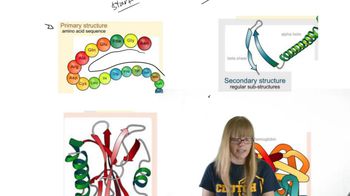 05:05
05:05Define and compare the four levels of protein organization.
Several amino acid substitutions in the α and β chains of human hemoglobin are shown in the following table.
Using the code table, determine how many of them can occur as a result of a single-nucleotide change.
HbS results in anemia and resistance to malaria, whereas in those with HbA, the parasite Plasmodium falciparum is able to invade red blood cells and cause malaria. Predict whether those with HbC are likely to be anemic and whether they would be resistant to malaria.
Contrast the contributions of Pauling and Ingram to our understanding of the genetic basis for sickle-cell anemia.
Using sickle-cell anemia as an example, describe what is meant by a molecular or genetic disease. What are the similarities and dissimilarities between this type of a disorder and a disease caused by an invading microorganism?