Pearson+ LogoPearson+ Logo
Ch. 2 - Mitosis and Meiosis
Klug - Concepts of Genetics  12th Edition
Klug12th EditionConcepts of Genetics ISBN: 9780135564776Not the one you use?Change textbook
Chapter 2, Problem 1b

How do we know that DNA replication occurs during interphase, not early in mitosis?

Verified step by step guidance
1
Understand the question: The problem asks us to explain how scientists determined that DNA replication occurs during interphase and not during early mitosis. This involves understanding the experimental evidence and reasoning behind this conclusion.
Step 1: Recall the phases of the cell cycle. The cell cycle consists of interphase (G1, S, and G2 phases) and the mitotic phase (prophase, metaphase, anaphase, and telophase). DNA replication specifically occurs during the S phase of interphase.
Step 2: Review experimental evidence. Scientists used radioactive labeling experiments, such as incorporating tritiated thymidine (a radioactive form of thymine) into newly synthesized DNA. Cells were then observed under autoradiography to determine when DNA synthesis occurred.
Step 3: Analyze the results of these experiments. The radioactive labeling was detected in cells during interphase, specifically in the S phase, but not during mitosis. This provided direct evidence that DNA replication occurs before mitosis begins.
Step 4: Consider the reasoning. For mitosis to proceed correctly, the DNA must already be replicated so that each daughter cell receives an identical set of chromosomes. This functional requirement aligns with the experimental evidence that DNA replication is completed during interphase.

Verified video answer for a similar problem:

This video solution was recommended by our tutors as helpful for the problem above.
Video duration:
1m
Was this helpful?

Key Concepts

Here are the essential concepts you must grasp in order to answer the question correctly.

DNA Replication

DNA replication is the process by which a cell duplicates its DNA before cell division. This occurs during the S phase of interphase, ensuring that each daughter cell receives an identical set of chromosomes. Understanding the timing of DNA replication is crucial for distinguishing between interphase and mitotic phases.
Recommended video:
Guided course
11:59
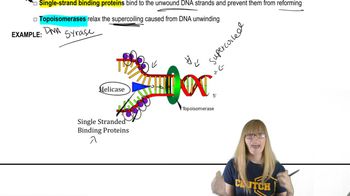
Steps to DNA Replication

Interphase

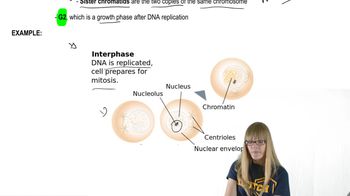
Interphase is the phase of the cell cycle where the cell prepares for division, consisting of G1, S, and G2 phases. During interphase, the cell grows, synthesizes proteins, and replicates its DNA. Recognizing interphase as the stage for DNA replication helps clarify why replication does not occur during mitosis.
Recommended video:
Guided course
09:46
Mitosis Steps

Mitosis

Mitosis is the process of cell division that results in two genetically identical daughter cells. It is divided into several stages: prophase, metaphase, anaphase, and telophase. Understanding that mitosis follows DNA replication in interphase is essential for grasping the overall cell cycle and the timing of genetic material distribution.
Recommended video:
Guided course
09:46
Mitosis Steps