Pearson+ LogoPearson+ Logo
Ch. 22 - Applications of Genetic Engineering and Biotechnology
Klug - Concepts of Genetics  12th Edition
Klug12th EditionConcepts of Genetics ISBN: 9780135564776Not the one you use?Change textbook
Chapter 22, Problem 24b

In 2010, a U.S. District Judge ruled to invalidate Myriad Genetics' patents on the BRCA1 and BRCA2 genes. Judge Sweet noted that since the genes are part of the natural world, they are not patentable. Myriad Genetics also holds patents on the development of a direct-to-consumer test for the BRCA1 and BRCA2 genes.
J. Craig Venter has filed a patent application for his 'first-ever human-made life form.' This patent is designed to cover the genome of M. genitalium. Would your ruling for Venter's 'organism' be different from the judge's ruling on patenting of the BRCA1 and BRCA2 genes?

Verified step by step guidance
1
Understand the key difference between the BRCA1 and BRCA2 genes and the genome of M. genitalium. The BRCA1 and BRCA2 genes are naturally occurring sequences in humans, while the genome of M. genitalium in this case is described as 'human-made,' implying it was artificially synthesized or engineered.
Review the legal and ethical principles surrounding patent law. In general, naturally occurring substances, such as genes found in nature, are not patentable. However, inventions or creations that are not naturally occurring, such as synthetic or engineered organisms, may be eligible for patents.
Consider the implications of Judge Sweet's ruling. The decision to invalidate Myriad Genetics' patents was based on the principle that genes found in nature cannot be patented because they are discoveries, not inventions. This principle would not necessarily apply to a synthetic genome, as it is not naturally occurring.
Evaluate the criteria for patent eligibility. For Venter's 'human-made life form,' the genome must meet the requirements of being novel, non-obvious, and useful. If the genome of M. genitalium was entirely synthesized and meets these criteria, it could be considered patentable.
Conclude by comparing the two cases. The BRCA1 and BRCA2 genes are part of the natural world and were ruled unpatentable, while Venter's synthetic genome, being an artificial creation, could potentially be ruled patentable under current patent laws. The ruling would likely differ based on the distinction between natural and synthetic entities.

Verified video answer for a similar problem:

This video solution was recommended by our tutors as helpful for the problem above.
Video duration:
34s
Was this helpful?

Key Concepts

Here are the essential concepts you must grasp in order to answer the question correctly.

Gene Patenting

Gene patenting refers to the legal ability to claim ownership over specific genes and their sequences. The controversy arises from the balance between incentivizing innovation in genetic research and the ethical implications of owning parts of the human genome. The ruling against Myriad Genetics highlighted that naturally occurring genes cannot be patented, as they exist in nature and are not inventions.
Recommended video:
Guided course
09:09
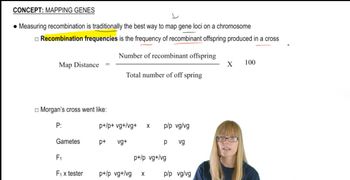
Mapping Genes

Synthetic Biology

Synthetic biology is an interdisciplinary field that involves designing and constructing new biological parts, devices, and systems. It also includes the modification of existing natural biological systems for useful purposes. The patent application by J. Craig Venter for a human-made organism represents a significant aspect of synthetic biology, where the creation of novel life forms raises questions about ownership and the nature of biological inventions.
Recommended video:
Guided course
07:10
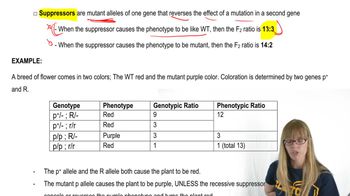
Other Gene Interactions

Natural vs. Artificial Distinction

The distinction between natural and artificial is crucial in patent law, particularly in genetics. Natural entities, such as genes found in the human body, are generally not patentable, while artificial creations, like genetically engineered organisms, may be eligible for patents. This distinction influences legal rulings and ethical considerations regarding what constitutes an invention versus a discovery in the realm of genetics.
Recommended video:
Guided course
04:15
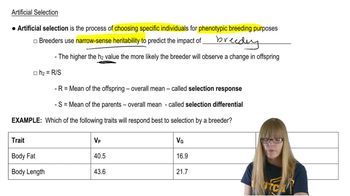
Artificial Selection
Related Practice
Textbook Question

Private companies are offering personal DNA sequencing along with interpretation. What services do they offer? Do you think that these services should be regulated, and if so, in what way? Investigate one such company, 23andMe, at http://www.23andMe.com, before answering these questions.

573
views
Textbook Question

Yeager, M., et al. [(2007) Nature Genetics 39:645–649] and Sladek, R., et al. [(2007) Nature 445:881–885] have used single-nucleotide polymorphisms (SNPs) in genome-wide association studies (GWAS) to identify novel risk loci for prostate cancer and Type 2 diabetes, respectively. Each study suggests that disease-risk genes can be identified that significantly contribute to the disease state. Given your understanding of such complex diseases, what would you determine as reasonable factors to consider when interpreting the results of GWAS?

409
views
Textbook Question

In 2010, a U.S. District Judge ruled to invalidate Myriad Genetics' patents on the BRCA1 and BRCA2 genes. Judge Sweet noted that since the genes are part of the natural world, they are not patentable. Myriad Genetics also holds patents on the development of a direct-to-consumer test for the BRCA1 and BRCA2 genes.

Would you agree with the ruling to invalidate the patenting of the BRCA1 and BRCA2 genes? If you were asked to judge the patenting of the direct-to-consumer test for the BRCA1 and BRCA2 genes, how would you rule?

388
views
Textbook Question

A number of mouse models for human cystic fibrosis (CF) exist. Each of these mouse strains is transgenic and bears a different specific CFTR gene mutation. The mutations are the same as those seen in several varieties of human CF. These transgenic CF mice are being used to study the range of different phenotypes that characterize CF in humans. They are also used as models to test potential CF drugs. Unfortunately, most transgenic mouse CF strains do not show one of the most characteristic symptoms of human CF, that of lung congestion. Can you think of a reason why mouse CF strains do not display this symptom of human CF?

627
views
Textbook Question

Craig Venter and others have constructed synthetic copies of viral genomes. For example, the genome for poliovirus and the 1918 influenza strain responsible for the pandemic flu have been assembled this way. The United States currently has a moratorium on federal funding for 'gain-of-function' experiments which increase the virulence or transmission potential of viruses. What concerns might ethicists have about synthetic biology studies involving potential pandemic pathogens?

610
views