Pearson+ LogoPearson+ Logo
Ch. 26 - Population and Evolutionary Genetics
Klug - Concepts of Genetics  12th Edition
Klug12th EditionConcepts of Genetics ISBN: 9780135564776Not the one you use?Change textbook
Chapter 26, Problem 15

Describe how populations with substantial genetic differences can form. What is the role of natural selection?

Verified step by step guidance
1
Start by understanding that populations with substantial genetic differences can form through processes that reduce or prevent gene flow between groups, such as geographic isolation, behavioral differences, or ecological separation. This leads to reproductive isolation.
Recognize that when populations are isolated, different mutations and genetic variations accumulate independently in each group, increasing genetic divergence over time.
Consider the role of natural selection, which acts on the genetic variation within each population by favoring alleles that provide a survival or reproductive advantage in that population's specific environment.
Understand that natural selection can drive populations to adapt to their unique environments, further increasing genetic differences as advantageous traits become more common in each group.
Finally, realize that if these genetic differences become significant enough, they can lead to the formation of new species, a process known as speciation, where populations can no longer interbreed successfully.

Verified video answer for a similar problem:

This video solution was recommended by our tutors as helpful for the problem above.
Video duration:
1m
Was this helpful?

Key Concepts

Here are the essential concepts you must grasp in order to answer the question correctly.

Genetic Variation

Genetic variation refers to differences in DNA sequences among individuals within a population. It arises through mutations, gene flow, and sexual reproduction, providing the raw material for evolution. Without genetic variation, populations cannot adapt to changing environments or develop distinct genetic identities.
Recommended video:
Guided course
09:28
Genomic Variation

Population Divergence

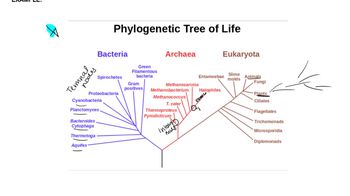
Population divergence occurs when groups within a species accumulate genetic differences over time, often due to geographic isolation or reproductive barriers. This process can lead to the formation of genetically distinct populations, which may eventually become separate species if divergence continues.
Recommended video:
Guided course
08:16
Phylogenetic Trees

Natural Selection

Natural selection is the process by which individuals with advantageous traits have higher survival and reproduction rates, causing those traits to become more common in the population. It drives adaptation by favoring beneficial genetic variants, shaping the genetic makeup of populations and contributing to genetic differences between them.
Recommended video:
Guided course
05:54
Natural Selection
Related Practice
Textbook Question

Under what circumstances might a lethal dominant allele persist in a population?

518
views
Textbook Question

Assume that a recessive autosomal disorder occurs in 1 of 10,000 individuals (0.0001) in the general population and that in this population about 2 percent (0.02) of the individuals are carriers for the disorder. Estimate the probability of this disorder occurring in the offspring of a marriage between first cousins. Compare this probability to the population at large.

619
views
Textbook Question

One of the first Mendelian traits identified in humans was a dominant condition known as brachydactyly. This gene causes an abnormal shortening of the fingers or toes (or both). At the time, some researchers thought that the dominant trait would spread until 75 percent of the population would be affected (because the phenotypic ratio of dominant to recessive is 3 : 1). Show that the reasoning was incorrect.

588
views
Textbook Question

Achondroplasia is a dominant trait that causes a characteristic form of dwarfism. In a survey of 50,000 births, five infants with achondroplasia were identified. Three of the affected infants had affected parents, while two had normal parents. Calculate the mutation rate for achondroplasia and express the rate as the number of mutant genes per given number of gametes.

828
views
Textbook Question

A recent study examining the mutation rates of 5669 mammalian genes (17,208 sequences) indicates that, contrary to popular belief, mutation rates among lineages with vastly different generation lengths and physiological attributes are remarkably constant [Kumar, S., and Subramanian, S. (2002). Proc. Natl. Acad. Sci. USA 99:803–808]. The average rate is estimated at 12.2×10⁻⁹ per bp per year. What is the significance of this finding in terms of mammalian evolution?

408
views
Textbook Question

What are considered significant factors in maintaining the surprisingly high levels of genetic variation in natural populations?

961
views