An insect species is discovered in which the heterogametic sex is unknown. An X-linked recessive mutation for reduced wing (rw) is discovered. Contrast the F1 and F2 generations from a cross between a female with reduced wings and a male with normal-sized wings when the female is the heterogametic sex.

An attached-X female fly, XXY, expresses the recessive X-linked white-eye mutation. It is crossed to a male fly that expresses the X-linked recessive miniature-wing mutation. Determine the outcome of this cross in terms of sex, eye color, and wing size of the offspring.
Verified step by step guidance
Verified video answer for a similar problem:
Key Concepts
X-linked Inheritance
Attached-X Chromosome Configuration
Phenotypic Expression of Recessive Mutations
An insect species is discovered in which the heterogametic sex is unknown. An X-linked recessive mutation for reduced wing (rw) is discovered. Contrast the F1 and F2 generations from a cross between a female with reduced wings and a male with normal-sized wings when the male is the heterogametic sex.
When cows have twin calves of unlike sex (fraternal twins), the female twin is usually sterile and has masculinized reproductive organs. This calf is referred to as a freemartin. In cows, twins may share a common placenta and thus fetal circulation. Predict why a freemartin develops.
Assume that on rare occasions the attached X chromosomes in female gametes become unattached. Based on the parental phenotypes in Problem 12, what outcomes in the F₁ generation would indicate that this has occurred during female meiosis?
It has been suggested that any male-determining genes contained on the Y chromosome in humans cannot be located in the limited region that synapses with the X chromosome during meiosis. What might be the outcome if such genes were located in this region?
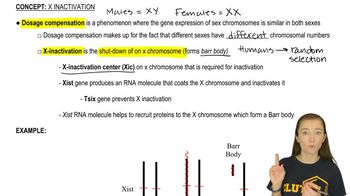
What is a Barr body, and where is it found in a cell?
