Pearson+ LogoPearson+ Logo
Ch.18 Metabolic Pathways and ATP Production
Timberlake - Chemistry: An Introduction to General, Organic, and Biological Chemistry 13th Edition
Timberlake13th EditionChemistry: An Introduction to General, Organic, and Biological ChemistryISBN: 9780134421353Not the one you use?Change textbook
Chapter 18, Problem 3d

Identify each of the following as catabolic or anabolic:
d. digestion of proteins in the stomach

Verified step by step guidance
1
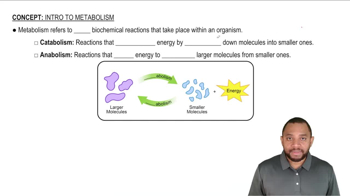
Understand the definitions of catabolic and anabolic processes: Catabolic processes involve the breakdown of larger molecules into smaller ones, releasing energy. Anabolic processes involve the synthesis of larger molecules from smaller ones, requiring energy input.
Analyze the digestion of proteins in the stomach: Proteins are large macromolecules that are broken down into smaller units, such as amino acids, during digestion.
Recognize the role of enzymes in the stomach: Enzymes like pepsin catalyze the breakdown of proteins into smaller peptides and amino acids, which is a characteristic of a catabolic process.
Consider the energy aspect: The breakdown of proteins releases energy stored in chemical bonds, which aligns with the definition of catabolism.
Conclude that the digestion of proteins in the stomach is a catabolic process because it involves the breakdown of complex molecules into simpler ones while releasing energy.

Verified video answer for a similar problem:

This video solution was recommended by our tutors as helpful for the problem above.
Video duration:
2m
Was this helpful?

Key Concepts

Here are the essential concepts you must grasp in order to answer the question correctly.

Catabolism

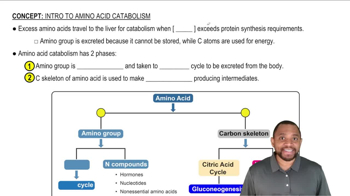
Catabolism refers to the metabolic processes that break down molecules into smaller units, releasing energy in the process. This is essential for providing the energy needed for various cellular functions. In the context of digestion, catabolic reactions occur when complex food substances, like proteins, are broken down into simpler molecules such as amino acids.
Recommended video:
Guided course
2:06
Intro to Amino Acid Catabolism Concept 1

Anabolism

Anabolism is the set of metabolic pathways that construct molecules from smaller units, typically requiring energy input. This process is crucial for growth, repair, and maintenance of tissues. Anabolic reactions are the opposite of catabolic reactions, as they build up rather than break down substances.
Recommended video:
Guided course
1:23
Intro to Metabolism Concept 1

Digestion

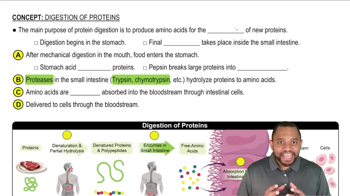
Digestion is the biological process through which food is broken down into smaller, absorbable components. It involves both mechanical and chemical processes, starting in the mouth and continuing in the stomach and intestines. The digestion of proteins specifically involves catabolic processes where enzymes break down proteins into amino acids, which can then be utilized by the body.
Recommended video:
Guided course
2:01
Digestion of Proteins Concept 1