Pearson+ LogoPearson+ Logo
Ch.18 Metabolic Pathways and ATP Production
Timberlake - Chemistry: An Introduction to General, Organic, and Biological Chemistry 13th Edition
Timberlake13th EditionChemistry: An Introduction to General, Organic, and Biological ChemistryISBN: 9780134421353Not the one you use?Change textbook
Chapter 18, Problem 8

What is the purpose of digestion in stage 1?

Verified step by step guidance
1
Digestion in stage 1 is the process by which large macromolecules, such as carbohydrates, proteins, and lipids, are broken down into smaller, simpler molecules that can be absorbed by the body.
Carbohydrates are broken down into monosaccharides (e.g., glucose), proteins are broken down into amino acids, and lipids are broken down into glycerol and fatty acids during digestion.
This breakdown occurs through enzymatic reactions, where specific enzymes target the bonds in macromolecules. For example, amylase breaks down starch into maltose, proteases break down proteins into peptides, and lipases break down fats into glycerol and fatty acids.
The smaller molecules produced during digestion are absorbed into the bloodstream or lymphatic system, allowing them to be transported to cells for energy production or as building blocks for cellular structures.
The purpose of digestion in stage 1 is to prepare nutrients for further metabolic processes, such as glycolysis, the citric acid cycle, and other biochemical pathways that occur in later stages of metabolism.

Verified video answer for a similar problem:

This video solution was recommended by our tutors as helpful for the problem above.
Video duration:
52s
Was this helpful?

Key Concepts

Here are the essential concepts you must grasp in order to answer the question correctly.

Digestion

Digestion is the biological process through which food is broken down into smaller, absorbable components. This process involves both mechanical and chemical actions, allowing nutrients to be extracted and utilized by the body. Understanding digestion is crucial for comprehending how the body converts food into energy and essential nutrients.
Recommended video:
Guided course
2:01
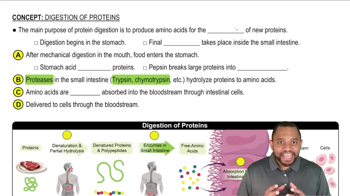
Digestion of Proteins Concept 1

Stage 1 of Digestion

Stage 1 of digestion refers to the initial phase where food is ingested and mechanically broken down in the mouth. This stage includes chewing and the action of saliva, which begins the chemical breakdown of carbohydrates. Recognizing this stage is important for understanding how the body prepares food for further digestion and nutrient absorption.
Recommended video:
Guided course
2:01
Digestion of Proteins Concept 1

Nutrient Absorption

Nutrient absorption is the process by which the body takes in the nutrients released during digestion. This occurs primarily in the small intestine, where digested food components are absorbed into the bloodstream. Understanding nutrient absorption is essential for grasping how the body utilizes the energy and materials necessary for growth, repair, and overall health.
Recommended video:
Guided course
03:29
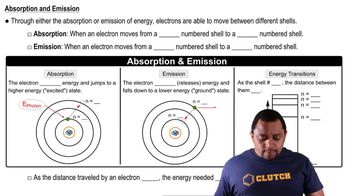
Bohr Model (Simplified) Concept 2