Pearson+ LogoPearson+ Logo
Ch.7 Chemical Quantities and Reactions
Timberlake - Chemistry: An Introduction to General, Organic, and Biological Chemistry 13th Edition
Timberlake13th EditionChemistry: An Introduction to General, Organic, and Biological ChemistryISBN: 9780134421353Not the one you use?Change textbook
Chapter 7, Problem 69b

Classify each of the following as exothermic or endothermic:
b. The energy level of the products is higher than that of the reactants.

Verified step by step guidance
1
Analyze the energy levels of the reactants and products. If the energy level of the products is higher than that of the reactants, it indicates that energy has been absorbed during the reaction.
Recall the definition of an endothermic reaction: an endothermic reaction absorbs energy from the surroundings, typically in the form of heat, resulting in an increase in the energy level of the products compared to the reactants.
Compare this to an exothermic reaction, where energy is released into the surroundings, and the energy level of the products is lower than that of the reactants.
Based on the given information, classify the reaction as endothermic because the energy level of the products is higher than that of the reactants, indicating energy absorption.
Conclude that the reaction is endothermic and explain that this classification is based on the energy flow and the relative energy levels of the reactants and products.

Verified video answer for a similar problem:

This video solution was recommended by our tutors as helpful for the problem above.
Video duration:
1m
Was this helpful?

Key Concepts

Here are the essential concepts you must grasp in order to answer the question correctly.

Exothermic Reactions

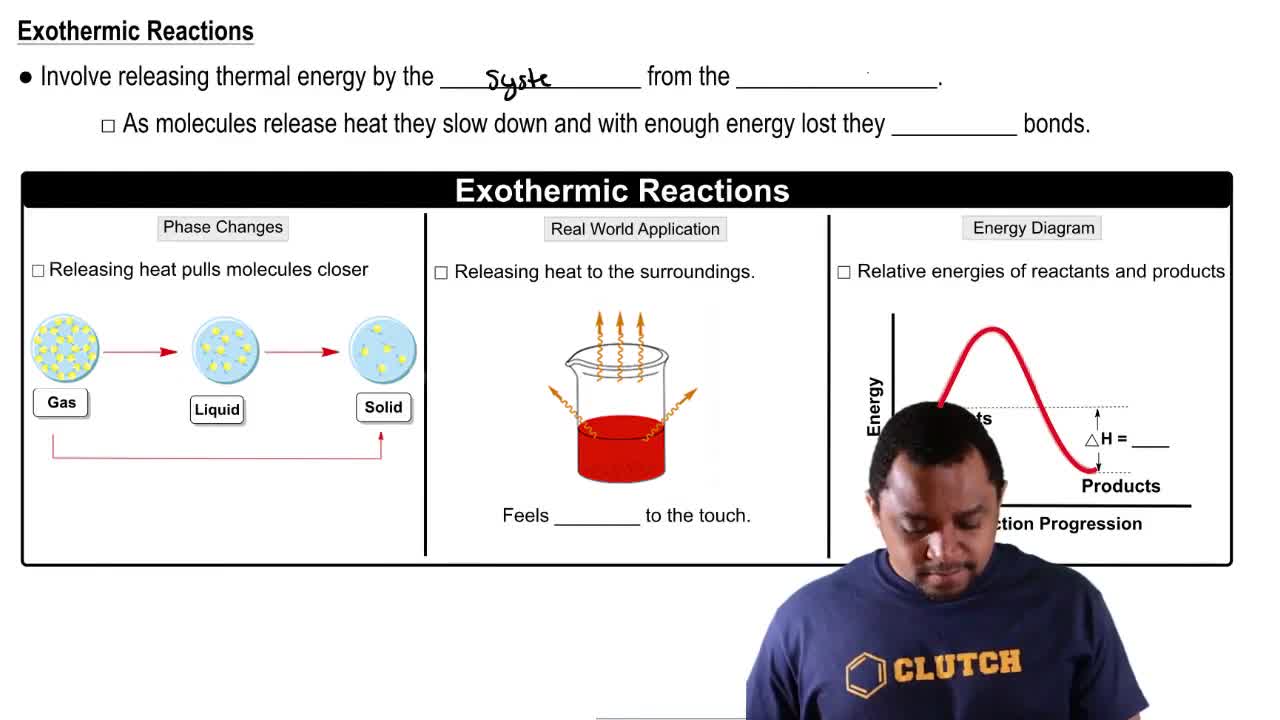
Exothermic reactions are chemical processes that release energy, usually in the form of heat, to the surroundings. In these reactions, the energy of the products is lower than that of the reactants, resulting in a net release of energy. Common examples include combustion and respiration, where energy is produced as a byproduct.
Recommended video:
Guided course
02:38
Endothermic & Exothermic Reactions

Endothermic Reactions

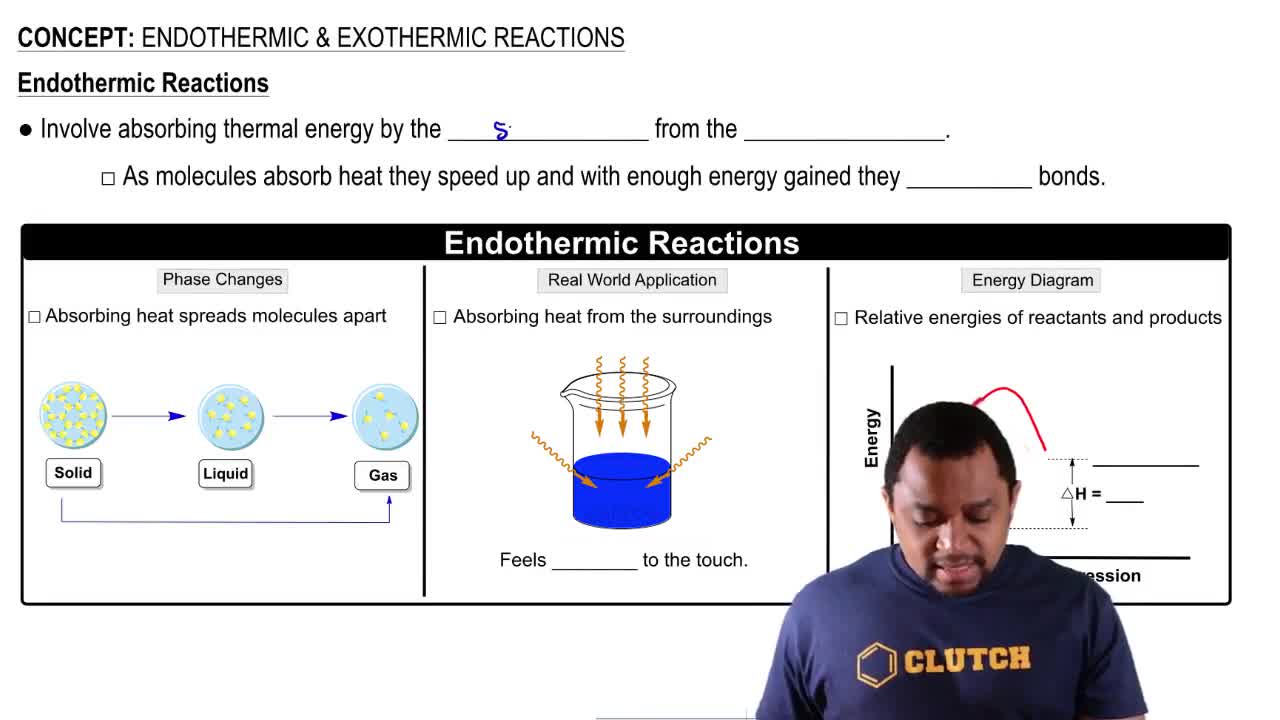
Endothermic reactions are chemical processes that absorb energy from the surroundings, leading to a decrease in temperature in the immediate environment. In these reactions, the energy level of the products is higher than that of the reactants, indicating that energy is required for the reaction to proceed. Photosynthesis is a classic example, where plants absorb sunlight to convert carbon dioxide and water into glucose.
Recommended video:
Guided course
02:30
Endothermic & Exothermic Reactions

Energy Level Diagrams

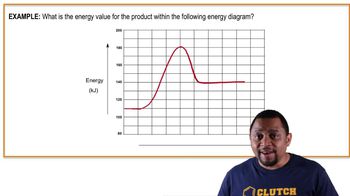
Energy level diagrams visually represent the energy changes during a chemical reaction. They illustrate the energy of reactants and products, showing whether a reaction is exothermic or endothermic. In an endothermic reaction, the diagram will show the products at a higher energy level than the reactants, indicating that energy has been absorbed during the reaction.
Recommended video:
Guided course
00:37
Energy Diagrams Example 1