Ch 39: Wave Functions and Uncertainty
Knight Calc - Physics for Scientists and Engineers 5th Edition
Knight Calc5th EditionPhysics for Scientists and EngineersISBN: 9780137344796Not the one you use?Change textbook
Chapter 39, Problem 1

An experiment has four possible outcomes, labeled A to D. The probability of A is PA = 40% and of B is PB = 30%. Outcome C is twice as probable as outcome D. What are the probabilities PC and PD?

Verified step by step guidance
1
Step 1: Start by understanding the problem. You are given probabilities for outcomes A and B, and a relationship between outcomes C and D. The total probability for all outcomes must sum to 100% (or 1 in decimal form).
Step 2: Write the equation for the total probability: Pₐ + PB + PC + PD = 1. Substitute the given values for Pₐ and PB: 0.40 + 0.30 + PC + PD = 1.
Step 3: Use the relationship between outcomes C and D. The problem states that outcome C is twice as probable as outcome D, so PC = 2 × PD.
Step 4: Substitute PC = 2 × PD into the total probability equation: 0.40 + 0.30 + 2 × PD + PD = 1.
Step 5: Combine like terms and solve for PD. Once PD is found, use the relationship PC = 2 × PD to calculate PC.

Verified video answer for a similar problem:

This video solution was recommended by our tutors as helpful for the problem above.
Was this helpful?

Key Concepts

Here are the essential concepts you must grasp in order to answer the question correctly.

Probability Basics

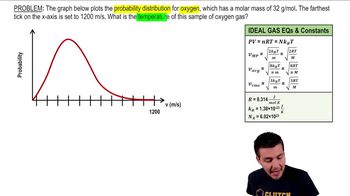
Probability is a measure of the likelihood that an event will occur, expressed as a number between 0 and 1, or as a percentage. The sum of the probabilities of all possible outcomes in a given experiment must equal 1 (or 100%). Understanding this principle is crucial for solving problems involving multiple outcomes.
Recommended video:
Guided course
04:03
Probability Distribution Graph

Setting Up Equations

In problems involving probabilities, it is often necessary to set up equations based on the relationships between different outcomes. For instance, if one outcome is defined in terms of another (like C being twice as probable as D), this relationship can be expressed mathematically to find unknown probabilities.
Recommended video:
Guided course
08:25
Kinematics Equations

Solving for Unknowns

Once the equations are established, solving for unknown probabilities involves algebraic manipulation. This may include substituting known values and simplifying equations to isolate the variable of interest. Mastery of these techniques is essential for determining the probabilities of outcomes in complex scenarios.
Recommended video:
Guided course
06:03
Solving an Unknown 2D Force