Inductive and Deductive Reasoning: Videos & Practice Problems
Inductive reasoning uses specific examples to identify a pattern, write a conjecture, and make a prediction. In number, figure, or equation patterns, this means focusing on what stays the same and what changes, then describing the rule clearly enough to extend the pattern. A conjecture is an educated guess, not a known fact, so different patterns can sometimes fit the same information and lead to different predictions.
Deductive reasoning works in the opposite direction: it starts with a general rule and applies it to a specific case. This is why using a formula is deductive reasoning, such as \(A=LW\) , where a known rule is used to find the area of a particular rectangle. Conclusions from deductive reasoning are true as long as the general rule is true.
An important part of Inductive and Deductive Reasoning is testing whether a conjecture always holds. A single counterexample is enough to disprove a conjecture, showing that a pattern observed in a few cases does not guarantee a universal truth.
Intro to Inductive Reasoning


Find the next two numbers in the pattern.
___, ___, …
Find the next two numbers in the pattern.
___, ___, …
Use inductive reasoning to find the next figure in the pattern.
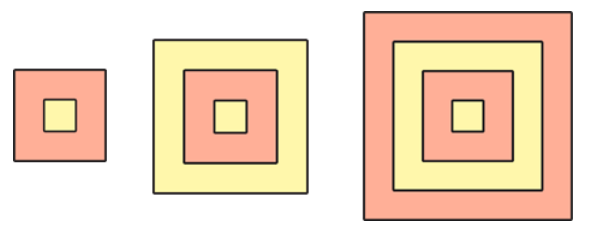




Use inductive reasoning to find the next figure in the pattern.

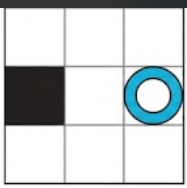
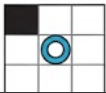
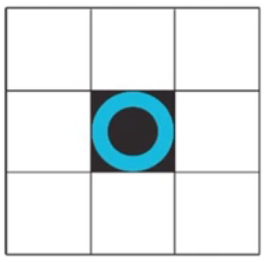
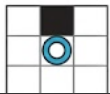
Intro to Inductive Reasoning Example 1
Intro to Inductive Reasoning Example 2
Counterexamples and Limitations to Inductive Reasoning
Counterexamples and Limitations to Inductive Reasoning Example 3
Counterexamples and Limitations to Inductive Reasoning Example 4
Deductive Reasoning
Classify the following as either inductive or deductive reasoning.
All students must pass calculus I before they can be enrolled in calculus II. Maria is enrolled in calculus II. Thus, we conclude Maria passed calculus I.
Inductive
Deductive
Cannot be classified
Classify the following as either inductive or deductive reasoning.
Looking at the student roster for geometry, all the students on the list have already passed algebra I. Thus, we can conclude that students must pass algebra I before enrolling in geometry.
Inductive
Deductive
Cannot be classified
Deductive Reasoning Example 5
Deductive Reasoning Example 6
Deductive Reasoning Example 7
Deductive Reasoning Example 8