AI in Assessment & Instruction: The Biggest Risk of AI Isn’t Cheating—It’s Missed Learning
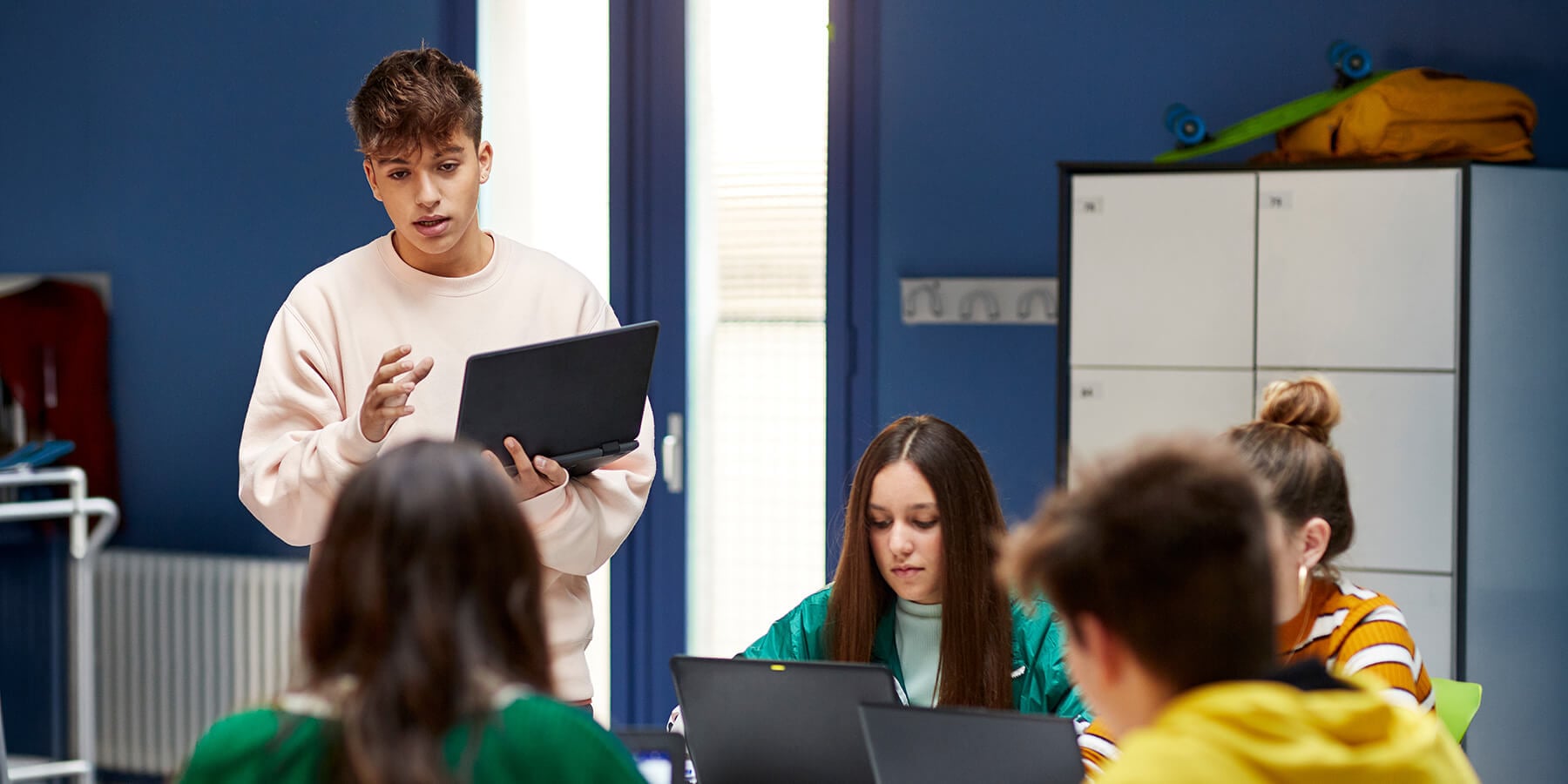
This is the conversation we can’t escape.
If you’ve stepped foot in a school’s teachers’ lounge in the last few years, you’ve probably heard the words cheating and AI mentioned more than a handful—perhaps a hundred—times. Not without reason. Generative AI has dramatically changed the landscape of education at every level. Teachers are grappling with this seismic shift while trying to keep up with a job that is already overwhelming.
While I share these concerns, I want to pose a different perspective: let’s shift our attention—and our invaluable energy—away from cheating and toward missed learning opportunities.
Looking for support implementing these ideas in your classroom or school? Connect with your Pearson Representative.
References:
Burns, Mary, et al. A New Direction for Students in an AI World: Prosper, Prepare, Protect. Brookings Institution, 2026.
College Board. U.S. High School Students’ Use of Generative Artificial Intelligence. 2025.
Perkins, Mike, et al. “Detection of GPT-4 Generated Text in Higher Education: Combining Academic Judgement and Software to Identify Generative AI Tool Misuse.” Journal of Academic Ethics, vol. 22, no. 1, 2024, pp. 89–113. Springer Nature.
Schwartz, Heather L., and Melissa Kay Diliberti. More Students Use AI for Homework, and More Believe It Harms Critical Thinking. RAND Corporation, 2026.
Stanford Graduate School of Education. “What Do AI Chatbots Really Mean for Students and Cheating?” 2023.
Walton Family Foundation, GSV Ventures, and Gallup. Gen Z Is Using AI — But Reports Gaps in School and Workplace Support. 2025.
Zou, James, et al. “James Zou et al. Warn on the Objectivity of AI Detectors.” Stanford Electrical Engineering, May 2023.
About the author

Morgan Lieske
Morgan Lieske holds a master's degree in Curriculum and Instruction and brings a decade of experience teaching, coaching, and leading curriculum initiatives in college preparatory K-12 education. As an educator, department chair, and instructional leader, Morgan has designed engaging learning experiences that foster critical thinking, inquiry, and student ownership of learning. Her work spans social studies and interdisciplinary studies, where she developed a passion for creating dynamic curriculum that connects learning across disciplines and prepares students for success beyond the classroom.
Throughout her career, Morgan has championed student-centered learning practices that promote collaboration, authentic learning, and higher-order thinking. As an Advanced Placement educator and facilitator of school-wide programs, including National History Day, she has helped students engage deeply with content while developing the skills needed for college, career, and civic life. She also has experience leading curriculum alignment efforts and instructional improvement initiatives, supporting educators in creating rigorous, engaging, and technology-enhanced learning environments.
A Fulbright Scholar and lifelong learner, Morgan enjoys exploring new ideas both professionally and personally. She lives in Minneapolis, where she can often be found attending live music events, biking, waterskiing, or painting.