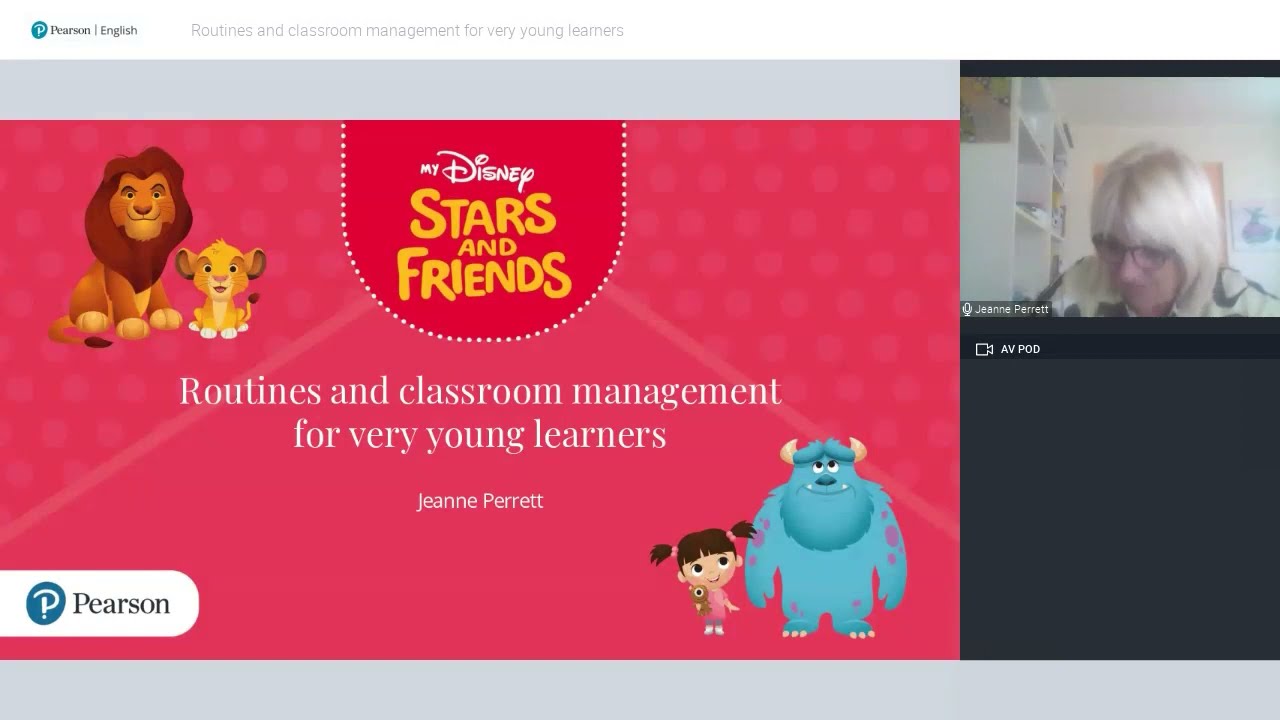
Çok genç öğrenciler için etkili sınıf yönetimi rutinleri

Jeanne Perrett
Jeanne Perrett
Bir masada oturmuş bilgi kartlarına bakan genç öğrencilerle bir öğretmen
Okuma zamanı: 4 dakikadır.

Çok genç öğrenciler, 3-6 yaş arası çocuklar için sınıfta olmak tamamen yeni bir deneyim olabilir. Çoğu, İngilizce kelimeleri hiç bilmeyecek ve İngilizce ne olduğu veya neden öğrendikleri hakkında çok az fikre sahip olabilir. Bazıları ana dillerinde henüz tam olarak akıcı olmayabilir. 

Okul yılının başında, bazıları ebeveynlerinden ayrılmayı üzücü bulabilir ve ayrıca yeni sınıf arkadaşlarıyla iyi geçinmeyi öğrenmek zorunda kalabilirler. 

Onları rahat ve güvende tutmak, samimi ve sıcak bir ortam sağlamak istiyorsak, rutinler oluşturmamız gerekir. 

Derslerinize rutinler eklemenin 7 yolu

İşte sınıf yönetimi rutinlerini İngilizce dil sınıfınıza kolayca dahil edebileceğiniz bazı alanlar.

1. Hedef dilinizi düşünün

Her ders için hedef dilimiz bir veya iki kısa kelime öbeği veya birkaç yeni kelime olabilir. Bunun sunumunu ve uygulamasını her zaman basit ve net tutmalıyız. 

Ancak İngilizce tüm selamlarımız, övgülerimiz, talimatlarımız ve açıklamalarımız için kullanabiliriz. Birkaç gün sonra, çocuklar bunu beklemeye başlayacak ve yavaş yavaş ne dediğinizi anlayacaklardır. 

2. Sınıfa giriş

Sınıfa girdiklerinde her çocuğu isimleriyle selamlamak için zaman ayırın ve onları birbirlerinin isimlerini öğrenmeye ve kullanmaya teşvik edin. Bu, kendilerini ve birbirlerini nasıl algıladıklarını değiştirecek ve arkadaşça iletişimi teşvik edecektir. 

Her çocukla ilgili küçük şeylere dikkat edin. Üzerlerinde yeni bir tişört olabilir veya saçlarını özel olarak yapmış olabilirler. Size dersleri için güzel görünmek için çaba sarf ettiklerini söylemeyebilirler, ancak fark ettiğinizde memnun olacaklar ve devam etmek için cesaretlendirileceklerdir. 

3. Çember süresi

Çember zamanını her dersin başlangıcı yapın. Çocukların birlikte oturmasını sağlar ve bu onların birbirlerini tanımalarına ve rahat bir grubun parçası hissetmelerine yardımcı olur. 

Gün için hedef dili sunduğunuz zamandır. Bunu yapmanıza yardımcı olması için bir kukla kullanın. Kuklayı belirli bir yerde tutarak ve her gün oradan çıkararak rutinin bir parçası haline getirin. Çocuklar adını arayabilir. 

Kukla çocukları isimleriyle selamlayabilir ve çocuklar cevap verebilir. İlk olarak, dili kuklaya sunmak için resimli kartlar veya nesneler kullanın. Daha sonra kukla anladığını gösterebilir veya tekrar isteyebilir. 

Çocukların bir grup olarak yanıtları söylemesine izin verin. İngilizce konusunda kendilerine olan güvenlerini artırdıkça, kendi başlarına konuşmak isteyeceklerdir. 

Her zaman kelimelerin ve ifadelerin yaklaşık değerlerini kabul edin. Çocukları düzeltmek yerine, kelimeleri modellemeye devam edin ve yavaş yavaş öğrenciler kendi kendilerini düzelteceklerdir. Bu ipucunu ebeveynlere de iletin. 

4. Kitap zamanı

Öğrencilere, kullandıkları kitaplarda beğendikleri sayfaları ve resimleri keşfetmeleri için zaman tanıyın. Her çocuğun doğru sayfayı bulmasına yardımcı olmak için her zaman zaman ayırın ve ardından dikkatlerini o sayfaya odaklamalarına yardımcı olun. 

Circle time'da dili tanıttınız ve ona bilgi kartları veya nesnelerle sundunuz. Kitap Zamanı'nda çocuklar bu resimlere bakabilir - içerik tanıdık gelecek ve öğrendiklerini sahiplenmeye başlayacaklar. 

5. Şarkılar, oyunlar ve miming

Şarkı söylemek, oyun oynamak ve mimik yapmak, öğrencilerin hedef dili özgürce kullanmaya ve anladıklarını göstermeye başlayacakları ana yollardır. 

My Disney Stars and Friends her oyunun her aşaması, sizin ve öğrencilerin kullanabileceği dil ile birlikte detaylandırılmıştır. Öğrenciler oyunun aksiyonuna o kadar dahil olabilirler ki, İngilizcekonuşmayı unutabilirler! Sorun değil – dili kullanmaya devam edin ve sonunda onlar da kullanmaya başlayacaklar. 

Bir oyun veya şarkı fiziksel aktivite içeriyorsa, su içeceklerini hazırlayın ve daha sonra dinlenmelerine ve rahatlamalarına izin verin. Aşırı heyecanlanmamaları veya yorulmamaları için her zaman devam etmeleri için bir 'oturma' aktivitesi bulundurun.

6. El sanatları ve çıkartmalar

Herhangi bir zanaat işi için dört aşama vardır: hazırlık, üretim, tamamlanan zanaat işi ile oynama ve toplama.

My Disney Stars and Friendskullanıyorsanız, özel bir Tidy Up şarkısı var ve tüm zanaat projeleri presleniyor, bu yüzden makasa gerek yok. 

3 veya 4 yaşındaki çocukların bir çıkartmayı nasıl soyacaklarını ve ardından yeniden yapıştıracaklarını öğrenmeleri gerekecektir. Bunun için zaman tanıyın ve bazıları bu ince motor beceride ustalaştıktan sonra birbirlerinden öğrenmeleri için onları teşvik edin. 

7. Sınıftan ayrılmak

Öğrencilerin aceleyle ayrılmak zorunda kalmaması için derslerinizi zamanlayın. Eşyalarını toplamaları, çantalarını ve paltolarını bulmaları biraz zaman alır. 

Ebeveynlerin bir şey bilmesini istiyorsanız, çocukların notu nereye koyduklarını bildiklerinden emin olun. Bu tür mesajlar için bir not defteri bunu yapmanın basit bir yoludur ve ebeveynlere her dersten sonra kontrol etmelerini söyleyebilirsiniz. 

Tıpkı içeri girdiklerinde her çocuğu isimleriyle selamladığınız gibi, ayrılırken de onlara tek tek veda edin. 

Etkili sınıf yönetimi rutinlerini dahil etmek, genç öğrencilerin dil derslerinden ne bekleyeceklerini bildikleri için kendilerini daha rahat hissetmelerini sağlar. Çocuklar için aşinalık memnuniyetle karşılanır, bu nedenle bu zamanları daha fazla dil öğrenme fırsatı için kullanın. 

Jeanne Perrett'ın genç öğrencilerden oluşan bir sınıfı nasıl organize edebileceğimize ve yönetebileceğimize dair pratik fikirlere ve öğretim ipuçlarına odaklandığı web seminerinde etkili sınıf yönetimi rutinleri hakkında daha fazla fikir edinin.


Çok genç öğrenciler için rutinler ve sınıf yönetimi I Pearson İngilizce Disney Day
Gizlilik ve çerezler

İçeriği izleyerek, Pearson'ın bir yıl boyunca pazarlama ve analiz amacıyla izleyici verilerinizi paylaşabileceğini ve bunu çerezlerinizi silerek geri alabileceğinizi onaylamış olursunuz. 

Genç öğrencilere öğretme hakkında daha fazla bilgi edinmek ister misiniz? 'İngilizce'nın genç öğrencileri daha fazlasını hak ediyor' yazımızı okuyun.

Pearson'dan daha fazla blog

  • University students stood in a class together working on tablets
    How PTE Express helps agents beat admissions deadlines
    By Alice Bazzi
    Okuma zamanı: 2 minutes

    For students applying to US universities, timing is everything. Admissions deadlines can be tight, and delays in English proficiency scores can lead to missed opportunities. Your reputation as an agent depends on helping students have a seamless process, which includes meeting timelines.

    Why speed matters for US admissions

    US institutions often require English test scores before issuing offers or processing visas. Traditional testing methods can take days or even weeks for results, creating stress for students and agents. PTE Express changes the game by delivering certified results within 48 hours, ensuring students can submit scores quickly and confidently.

  • Young students in a classroom raising their hands and smiling
    Putting inquiry-based learning into practice with young learners
    By Jeanne Perrett
    Okuma zamanı: 5 minutes

    What are the benefits of inquiry-based learning?

    Inquiry-based learning is all about using questions to generate interest. Starting a class with a question helps young learners engage with the topic straight away. Introductory questions can be big or small, and here are some examples of big questions: 

    • What makes someone a hero? 
    • Why do we go to school? 
    • Why do people live in cities? 

    These open questions get students thinking about lots of different aspects of each topic. However, small questions can work as well: 

    • What is your favourite superhero called? 
    • Do you like your school? 
    • Do you live in a village or a city?

    These closed questions don’t necessarily lead to further discussion. However, they are a way to introduce a topic and give learners an easy way to contribute without the pressure of getting an answer right or wrong. 

    When students are invited to share their opinions, they feel that their contributions are valuable. It also lets the teacher gain insight into what the learners already know. 

    How can we help students explore big questions?

    Inquiry-based learning can support students to answer these big questions in an easy and satisfying way, including:

    • Making notes on their ideas, or drawing a sketch
    • Working in pairs or groups to share ideas
    • Using a bulletin board

    A bulletin board fits in well with the concept of inquiry-based learning. The teacher pins a big question to the center and then encourages learners to add their notes, sketches and ideas to the board. 

    Because there are many possible answers to the big questions, it’s important to emphasize that learners can change their minds as they learn more: after all, that’s the whole point of learning.

    The Now I Know! series follows this structure. Each unit has language aims based around a big question to get learners thinking more deeply.

    How can inquiry-based learning work in practice?

    You can put it into practice in your own classroom by starting off with a topic, and then thinking of a big question to get things started. So, for example, if your topic is outer space, your big question could be: Why do we explore space? 

    That will get your students thinking and sharing their knowledge about space travel, moon landings, astronauts, aliens – you might be surprised at some of their answers. Ask them to write notes, do a sketch or do a mind map, then pin their contributions to your bulletin board. 

    There are lots of options for follow-up activities: 

    • Assign pairs a planet from the solar system to research
    • Share an interesting fact about an unnamed planet and encourage students to research which planet it is
    • Allow students to play to their strengths: one student can draw the planets and another can name their order from the sun (for example)
    • Create a game: get learners to write two false facts and one true fact about their planet, and the rest of the class has to guess which is which

    Once you’ve piqued their interest and the students are excited about the topic, it’s time to channel that enthusiasm into a more focused activity. For example, you could introduce the story of the Golden Record on the Voyager space probe. At the time of the Voyager launch in 1977, a phonograph record was included onboard which contained, in the words of then-president Jimmy Carter, “a present from a small, distant world, a token of our sounds, our science, our images, our music, our thoughts and our feelings.” The record included music from different cultures, greetings in 55 languages and sounds of the natural world. There were also 115 images of life on Earth, many annotated with explanations. 

    Bring it back to inquiry-based learning, and instead of telling students what is on the record, ask them what they think might have been included. Again, they can add their ideas to the bulletin board. 

    Follow-up activities could include: 

    • Making their own recording for an interplanetary space voyage
    • Doing a sound quiz where students record sounds and ask their classmates to guess what each sound is 
    • Making a modern playlist for aliens to listen to 
    • Taking photographs of their daily lives and adding comments, just as the NASA committee did, and doing more research into the Voyager space probe
    • Checking its progress through interstellar space on the NASA website

    This is just one example of a topic, but any topic can be treated in the same way. If you, as a teacher, share your curiosity and enthusiasm with your students, they’ll pick up on that and become enthused in turn.

    How do we nurture enquiring minds?

    The spirit of enquiry is one of the most important things we can instill in our young learners. Inquiring minds are innate - just think of the way toddlers ask “Why?” about everything. The mistake that adults can sometimes make is to reply to the ‘why’ questions with an answer, when actually, sometimes children just want to have a discussion. 

    As educators, it’s important to reply to children’s questions by opening up a discussion, no matter how abstract the question. For example, if a toddler asks something like “Why a leaf?”, you can expand that conversation to talk about colours, trees, nature, things that grow... the possibilities are endless. 

    In fact, this is our main role as educators: to facilitate and continue those conversations, to pique our learners’ curiosity, to share our enthusiasm and wonder rather than simply teach the correct answer.

    Show your students that you don’t have to find immediate answers, that there’s no such thing as a silly answer. It’s okay to wonder and muse. In your lessons, focus not on giving students the answers but on equipping them with the tools to research and find them themselves. In this way, you’ll create lifelong learners with a passion for education. 

  • A group of teenagers working on a activity gathered around a table smiling
    Helping students get out of the holiday slump
    By Charlotte Guest
    Okuma zamanı: 4 minutes

    The first days back can be slow. Routines are rusty. Focus is short. That is normal. You do not need to start again. With a few high-impact moves, you can help students switch back on, feel confident and build momentum for the term.

    Start with a short check, then act fast on feedback

    Open with a quick, low-stakes check of key ideas from last term. Keep it short (6–8 items). Include a mix of multiple-choice and one or two short answers. This is not for grades. It is to see what students still remember and where the gaps are. Even when students get items wrong, trying to retrieve helps learning later (Richland, Kornell and Kao, 2009).

    Follow up with clear, task-focused feedback so students know the next step (“Add units to your answer”; “Show the first step”) rather than general comments. Use the results to form two or three quick groups and assign a short, targeted task to each.