Ch. 17 - Skin and Eye Infections
Norman-McKay- Microbiology: Basic and Clinical Principles 2nd Edition
Norman-McKay2nd EditionMicrobiology: Basic and Clinical PrinciplesISBN: 9780137661619Not the one you use?Change textbook
Chapter 13, Problem 19

A 65-year-old patient calls the nursing hotline to ask about some painful blisters arranged in a band on one side of his waist. After hearing about the lesions, you ask him if he had chickenpox as a child. This is because you feel you are hearing about a case of:
a. candidiasis.
b. measles.
c. herpes.
d. shingles.
e. rubella.

Verified step by step guidance
1
Step 1: Identify the key clinical features described in the problem: painful blisters arranged in a band on one side of the waist. This pattern is important for diagnosis.
Step 2: Recall that the varicella-zoster virus causes chickenpox initially, and after recovery, the virus can remain dormant in nerve ganglia.
Step 3: Understand that reactivation of the varicella-zoster virus later in life causes shingles, which presents as painful, unilateral, band-like blisters following a dermatome.
Step 4: Compare the options given: candidiasis (fungal infection), measles and rubella (viral infections with different presentations), herpes (usually oral or genital lesions), and shingles (reactivation of chickenpox virus with characteristic rash).
Step 5: Conclude that the description and history of chickenpox strongly suggest the diagnosis of shingles.

Verified video answer for a similar problem:

This video solution was recommended by our tutors as helpful for the problem above.
Video duration:
2m
Was this helpful?

Key Concepts

Here are the essential concepts you must grasp in order to answer the question correctly.

Varicella-Zoster Virus (VZV) Infection

Varicella-Zoster Virus causes two distinct diseases: chickenpox (primary infection) and shingles (reactivation). After initial infection, the virus remains dormant in nerve cells and can reactivate later in life, causing painful, localized blisters typically arranged in a band on one side of the body.
Recommended video:
Guided course
02:33
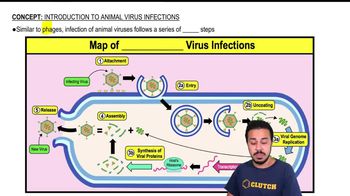
Introduction to Animal Virus Infections

Clinical Presentation of Shingles

Shingles presents as a painful, unilateral vesicular rash following a dermatomal pattern, often described as a band or belt on the torso. This pattern helps differentiate it from other skin infections and is linked to the reactivation of dormant VZV in sensory ganglia.
Recommended video:
Guided course
04:11
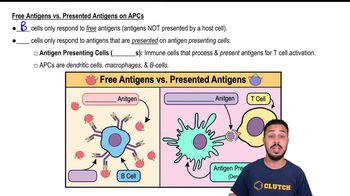
Free Antigens vs. Presented Antigens on APCs

Importance of Patient History in Diagnosis

Asking about prior chickenpox infection is crucial because shingles only occurs in individuals who have had chickenpox. This history helps confirm the diagnosis and distinguishes shingles from other conditions with similar skin manifestations.
Recommended video:
Guided course
01:25
Importance of Microorganisms
Related Practice
Textbook Question

Your patient is reminiscing about her childhood diseases while reviewing her medical history. She claims she had a really bad case of rubella (German measles) when she was a child and that she was very sick. You think she is confusing it with rubeola (measles) because:

a. measles can cause congenital rubella syndrome.

b. German measles causes a mild rash and is not likely to make a patient very sick.

c. the largest concern is for secondary infections like pneumonia.

d. she didn’t mention Koplik’s spots in the mouth or raised lesions.

e. the raised red rash usually begins on the trunk and spreads from there.

1173
views
Textbook Question

A child comes into your clinic with impetigo. The lab cultures a sample for further analysis. If the sample is S. aureus, which lab results would you expect?

a. Gram-positive cocci in clusters, catalase and coagulase positive

b. Gram-negative diplococci, catalase positive, and coagulase negative

c. Gram-positive cocci in clusters, catalase negative, and coagulase positive

d. Gram-positive cocci in chains, catalase positive, and coagulase negative

e. Gram-positive cocci in chains, catalase negative, and coagulase positive

1136
views
Textbook Question

A frantic mother comes into your clinic because her two-year-old child has had a very high fever for two days now, with mild diarrhea and coldlike symptoms. As you consider the differential list, which is the most likely causative agent if the fever breaks and is replaced with a rash by tomorrow?

a. Human parvovirus B19

b. Hand, foot, and mouth disease

c. Roseola

d. Rubella

e. Measles

1169
views
Textbook Question

Concept Mapping:

Using the following terms, create a concept map to organize and review microbial diseases of the eyes.


- Acanthamoeba

- Adenoviruses

- Aspergillus

- Candida

- Chlamydia trachomatis

- Flies, fomites, fingers

- Fusarium

- Haemophilus influenzae

- Herpes simplex 1 virus

- Keratitis

- Moraxella

- River blindness

- Scarring of eyelid

- Staphylococcus species

- Streptococcus species

- Turning of lashes and further scarring

1126
views