Ch. 22 The Digestive System
Amerman - Human Anatomy & Physiology 2nd Edition
Amerman2nd EditionHuman Anatomy & PhysiologyISBN: 9780136873822Not the one you use?Change textbook
Chapter 22, Problem 3d

Mark the following statements as true or false. If a statement is false, correct it to make a true statement.
The mucosa of the esophagus, pharynx, and oral cavity contains simple squamous epithelium to protect it from abrasion.

Verified step by step guidance
1
Understand the structure and function of the mucosa in the esophagus, pharynx, and oral cavity. The mucosa is the innermost layer of these structures and is responsible for protection against mechanical stress, such as abrasion from food particles.
Recall the type of epithelium found in areas subject to abrasion. Stratified squamous epithelium, not simple squamous epithelium, is typically found in these regions because its multiple layers provide better protection against mechanical damage.
Analyze the statement: 'The mucosa of the esophagus, pharynx, and oral cavity contains simple squamous epithelium to protect it from abrasion.' This is false because simple squamous epithelium is a single layer of flat cells, which is not sufficient for protection against abrasion.
Correct the false statement: Replace 'simple squamous epithelium' with 'stratified squamous epithelium' to make the statement true. The corrected statement should read: 'The mucosa of the esophagus, pharynx, and oral cavity contains stratified squamous epithelium to protect it from abrasion.'
Review the corrected statement and ensure it aligns with the anatomical and physiological characteristics of these regions. Stratified squamous epithelium is indeed the appropriate tissue type for protection in these areas.

Verified video answer for a similar problem:

This video solution was recommended by our tutors as helpful for the problem above.
Was this helpful?

Key Concepts

Here are the essential concepts you must grasp in order to answer the question correctly.

Mucosa Structure

The mucosa is the innermost layer of the gastrointestinal tract, consisting of epithelial tissue, connective tissue, and a thin layer of muscle. In the esophagus, pharynx, and oral cavity, the mucosa is primarily composed of stratified squamous epithelium, which provides protection against mechanical abrasion from food and other substances.
Recommended video:
Guided course
6:29
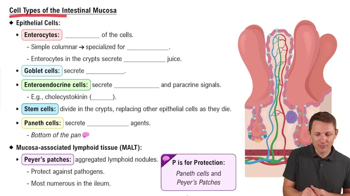
Cell Types of the Intestinal Mucosa

Epithelial Tissue Types

Epithelial tissues are classified based on the number of cell layers and the shape of the cells. Simple squamous epithelium consists of a single layer of flat cells, which is not suitable for areas subject to friction. In contrast, stratified squamous epithelium has multiple layers, making it more resilient to wear and tear, particularly in the esophagus and oral cavity.
Recommended video:
Guided course
07:25
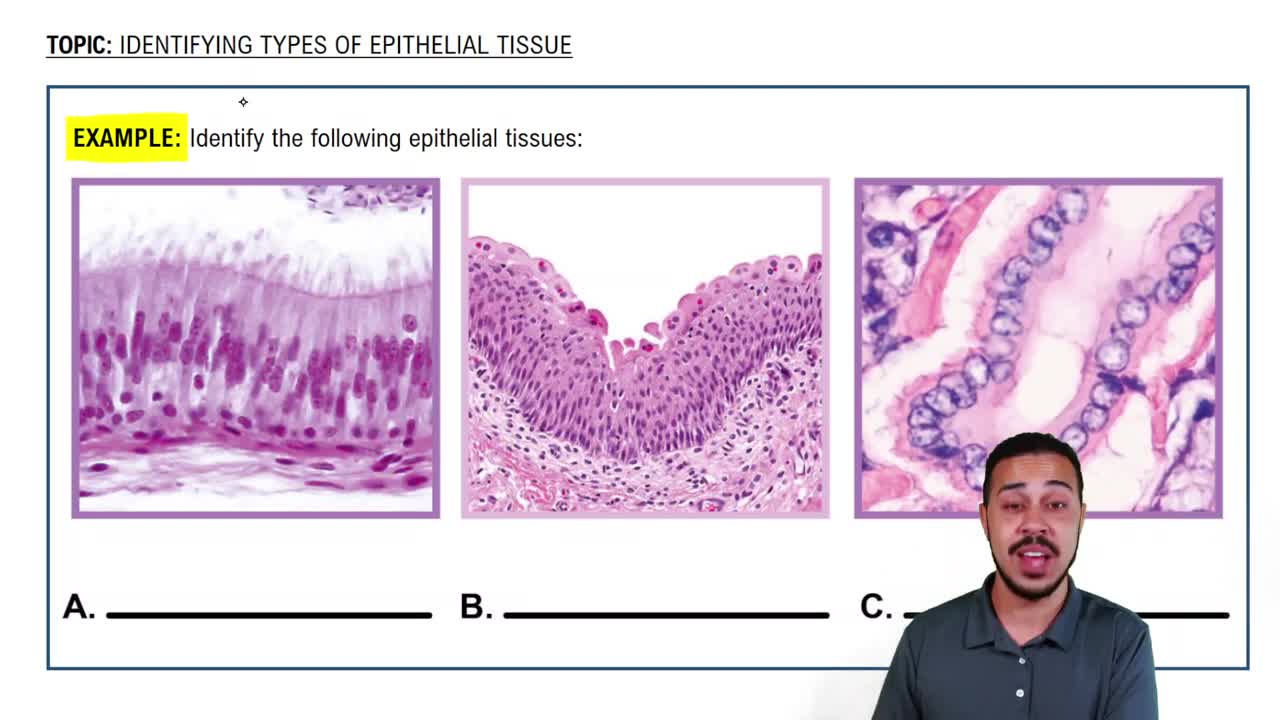
Identifying Types of Epithelial Tissue Example 1

Function of Stratified Squamous Epithelium

Stratified squamous epithelium serves a critical protective function in areas exposed to mechanical stress. This type of epithelium can withstand abrasion and is essential in the esophagus, pharynx, and oral cavity, where food particles can cause damage. Understanding this function is key to correcting the statement regarding the mucosal structure in these regions.
Recommended video:
Guided course
11:27
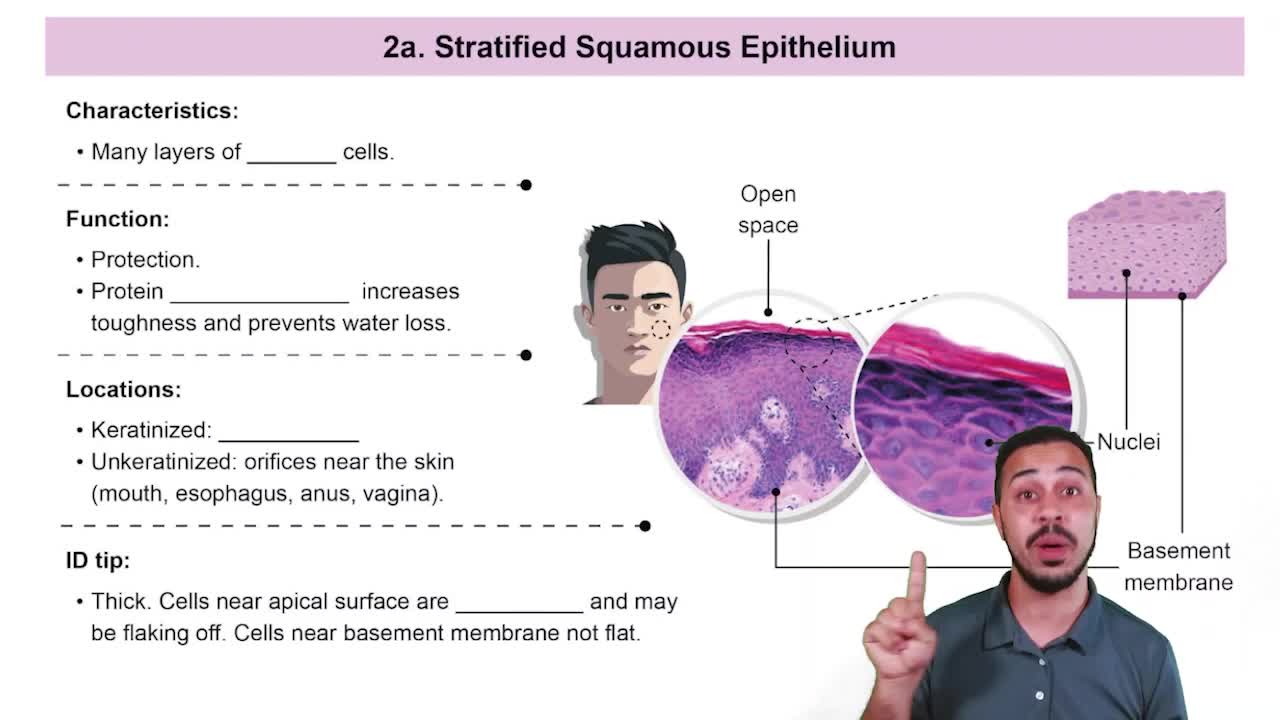
Stratified Squamous Epithelia
Related Practice
Textbook Question

The common hepatic duct and main pancreatic duct enter into the:

a. Pyloric sphincter

b. Duodenum

c. Ileum

d. Cecum

825
views

Textbook Question

Mark the following statements as true or false. If a statement is false, correct it to make a true statement.

The muscularis externa of most of the alimentary canal consists of inner circular and outer longitudinal layers of smooth muscle.

849
views
Textbook Question

Match the following terms with the correct definition. 

__Chief cells          

__Parietal cells           

__Gastrin           

__Pyloric sphincter         

__Diffuse neuroendocrine (DNES) cells         

__Gastroesophageal sphincter         

__Pepsin         

__Chyme

a. Hormone that stimulates multiple digestive processes

b. Enzyme that begins protein digestion

c. Produce acid and intrinsic factor

d. Liquid produced as a result of stomach churning

e. Produce pepsinogen

f. Cells in gastric glands that produce hormones

g. Controls passage of bolus from esophagus to stomach

h. Controls passage of stomach contents to duodenum

617
views
Textbook Question

Mr. Williams presents to your clinic with a complaint of abdominal pain in the right upper quadrant. He says that the pain worsens when he eats, particularly when he eats fatty meals. He has noticed that his stool has been an unusual clay color recently. You perform an ultrasound of his abdomen and find that gallstones are blocking his common bile duct, preventing bile from entering the duodenum.

Explain why his feces have become a clay color instead of a normal brown color.

639
views
Textbook Question

What are the three folds of the small intestine called? What is their purpose?

1010
views
Textbook Question

Mark the following statements as true or false. If a statement is false, correct it to make a true statement.

The mucosa from the stomach to the anus consists of an inner layer of stratified columnar epithelium.

1011
views