

Ch. 1 Introduction to Anatomy and Physiology
Amerman - Human Anatomy & Physiology 2nd Edition
Amerman2nd EditionHuman Anatomy & PhysiologyISBN: 9780136873822Not the one you use?Change textbook
Chapter 1, Problem L3.3

Later that same day, the surgeon performs a procedure on Ms. Norman's right kidney. She makes the incision in the right posterior lumbar region. Will she cut through the same serous membrane(s) and cavities as in the previous procedure? Why or why not? How would this change if the incision were made on the anterior lumbar region?

Verified step by step guidance
1
Understand the anatomy of the lumbar region: The lumbar region is located in the lower back, between the thoracic region and the sacral region. The posterior lumbar region refers to the back side, while the anterior lumbar region refers to the front side of the body.
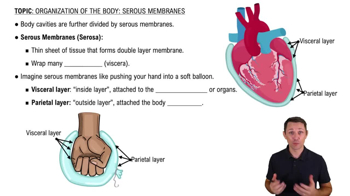
Identify the serous membranes and cavities involved: Serous membranes are thin tissues that line certain internal cavities and cover organs. The peritoneum is the serous membrane associated with the abdominal cavity, while the pleura and pericardium are associated with the thoracic cavity. The kidneys are retroperitoneal, meaning they are located behind the peritoneum and are not enclosed within the peritoneal cavity.
Analyze the posterior lumbar incision: If the surgeon makes an incision in the posterior lumbar region, she will not cut through the peritoneum or enter the peritoneal cavity because the kidneys are located behind the peritoneum. The incision will primarily involve cutting through the skin, subcutaneous tissue, muscles, and fascia of the back to access the kidney.
Compare with an anterior lumbar incision: If the incision were made in the anterior lumbar region, the surgeon would need to navigate through the abdominal wall and potentially displace or cut through the peritoneum to access the kidney. This would involve entering the peritoneal cavity, unlike the posterior approach.
Conclude the differences: The posterior lumbar incision avoids cutting through the peritoneum and entering the peritoneal cavity, while the anterior lumbar incision involves the peritoneum and the peritoneal cavity. This distinction is important for understanding the surgical approach and potential complications.

Verified video answer for a similar problem:

This video solution was recommended by our tutors as helpful for the problem above.
Was this helpful?

Key Concepts

Here are the essential concepts you must grasp in order to answer the question correctly.

Serous Membranes

Serous membranes are thin layers of tissue that line body cavities and cover organs, producing serous fluid to reduce friction. In the context of the kidneys, the peritoneum is the serous membrane that lines the abdominal cavity and covers the abdominal organs. Understanding the location and function of these membranes is crucial for determining whether the surgeon will encounter them during the incision.
Recommended video:
Guided course
4:09
Serous Membranes

Anatomical Regions

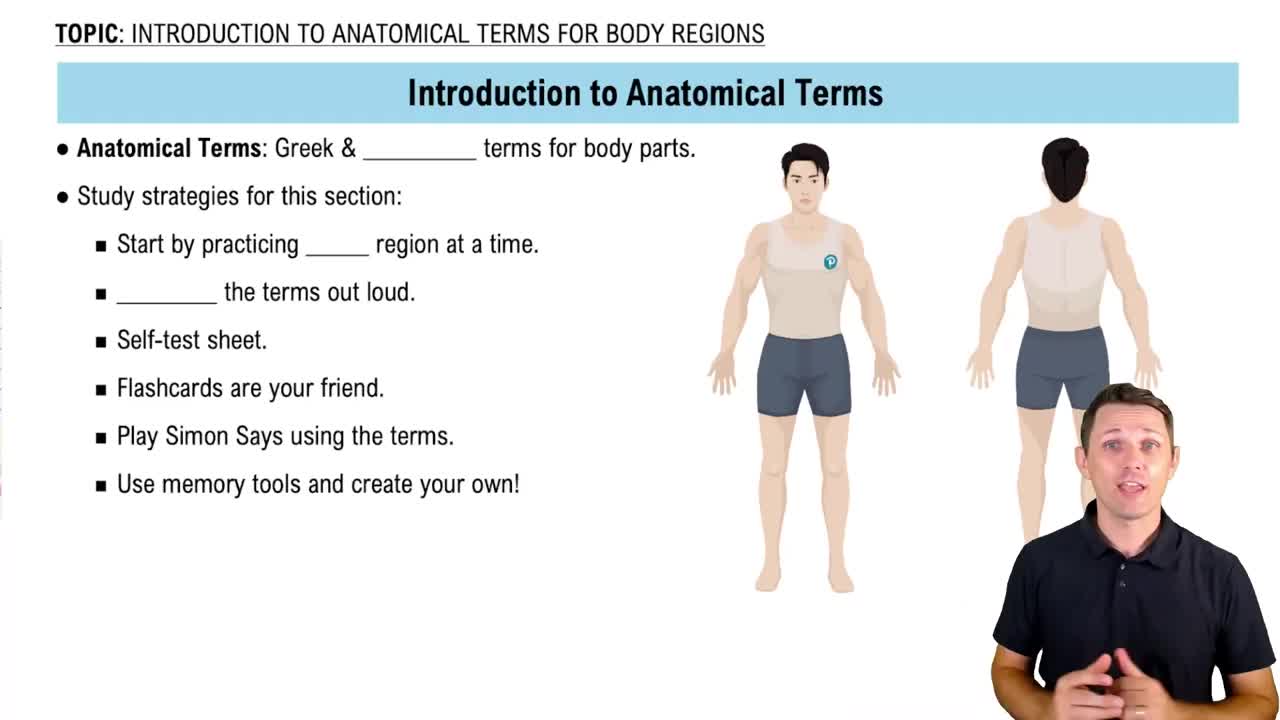
The body is divided into various anatomical regions, such as the anterior (front) and posterior (back) lumbar regions. The right posterior lumbar region is located at the back, while the anterior lumbar region is at the front. The choice of incision location affects which structures and membranes are encountered, influencing surgical access and potential complications.
Recommended video:
Guided course
03:21
Introduction to Anatomical Terms

Surgical Approach

The surgical approach refers to the method and location of incision made by the surgeon to access a specific organ or area. Different approaches can lead to different anatomical structures being cut or preserved. In this case, an incision in the posterior lumbar region may involve different serous membranes compared to an anterior approach, affecting the surgical outcome and recovery.
Recommended video:
Guided course
01:58
What is Anatomy & Physiology? Example 2