
Ch. 1 Introduction to Anatomy and Physiology
Amerman - Human Anatomy & Physiology 2nd Edition
Erin C. Amerman2nd EditionHuman Anatomy & PhysiologyISBN: 9780136873822Not the one you use?Change textbook
Chapter 1, Problem L3.4

The baroreceptor reflex causes blood pressure to drop when it rises dangerously high. Predict whether this is a positive or negative feedback loop. Explain your reasoning.

Verified step by step guidance
1
Understand the concept of feedback loops: Feedback loops are mechanisms the body uses to maintain homeostasis. A positive feedback loop amplifies a change, while a negative feedback loop counteracts a change to restore balance.
Identify the role of the baroreceptor reflex: Baroreceptors are specialized sensory receptors located in the walls of blood vessels, such as the carotid arteries and aorta. They detect changes in blood pressure and send signals to the brain to adjust it.
Analyze the response to high blood pressure: When blood pressure rises dangerously high, baroreceptors send signals to the cardiovascular center in the brainstem. The brain responds by decreasing heart rate and dilating blood vessels, which lowers blood pressure.
Determine the type of feedback: Since the baroreceptor reflex works to counteract the rise in blood pressure and restore it to a normal range, this is an example of a negative feedback loop. Negative feedback loops are characterized by their ability to reverse a deviation from a set point.
Explain the reasoning: The baroreceptor reflex is a negative feedback loop because it reduces the initial stimulus (high blood pressure) by activating mechanisms that lower blood pressure, thereby maintaining homeostasis.

Verified video answer for a similar problem:

This video solution was recommended by our tutors as helpful for the problem above.
Was this helpful?

Key Concepts

Here are the essential concepts you must grasp in order to answer the question correctly.

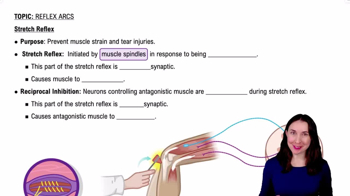
Baroreceptor Reflex

The baroreceptor reflex is a physiological mechanism that helps regulate blood pressure. Baroreceptors, located in the carotid arteries and aorta, detect changes in blood pressure and send signals to the central nervous system. When blood pressure rises, the reflex triggers a response to lower it, primarily through vasodilation and decreased heart rate.
Recommended video:
3:37
Stretch Reflex

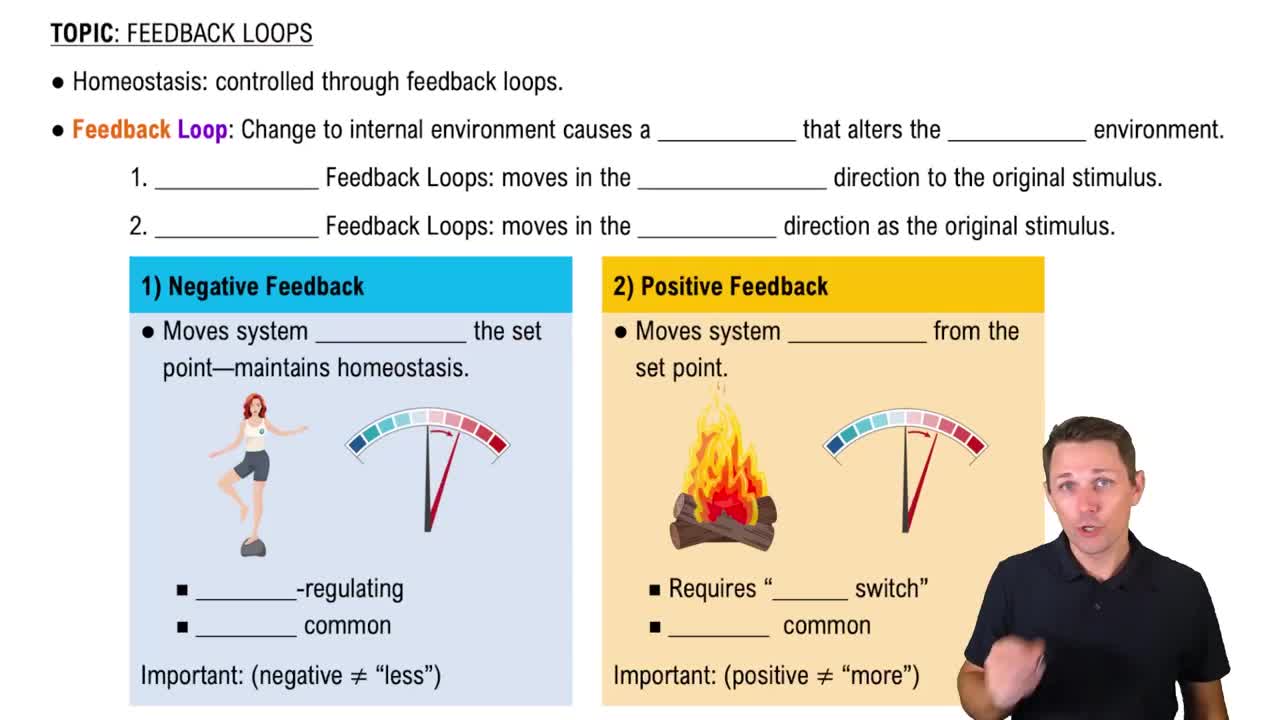
Feedback Loops

Feedback loops are processes in which the output of a system influences its own operation. They can be classified as positive or negative feedback. Positive feedback amplifies changes, leading to an increase in the output, while negative feedback counteracts changes, promoting stability and returning the system to its set point.
Recommended video:
Guided course
04:09
Introduction to Feedback Loops

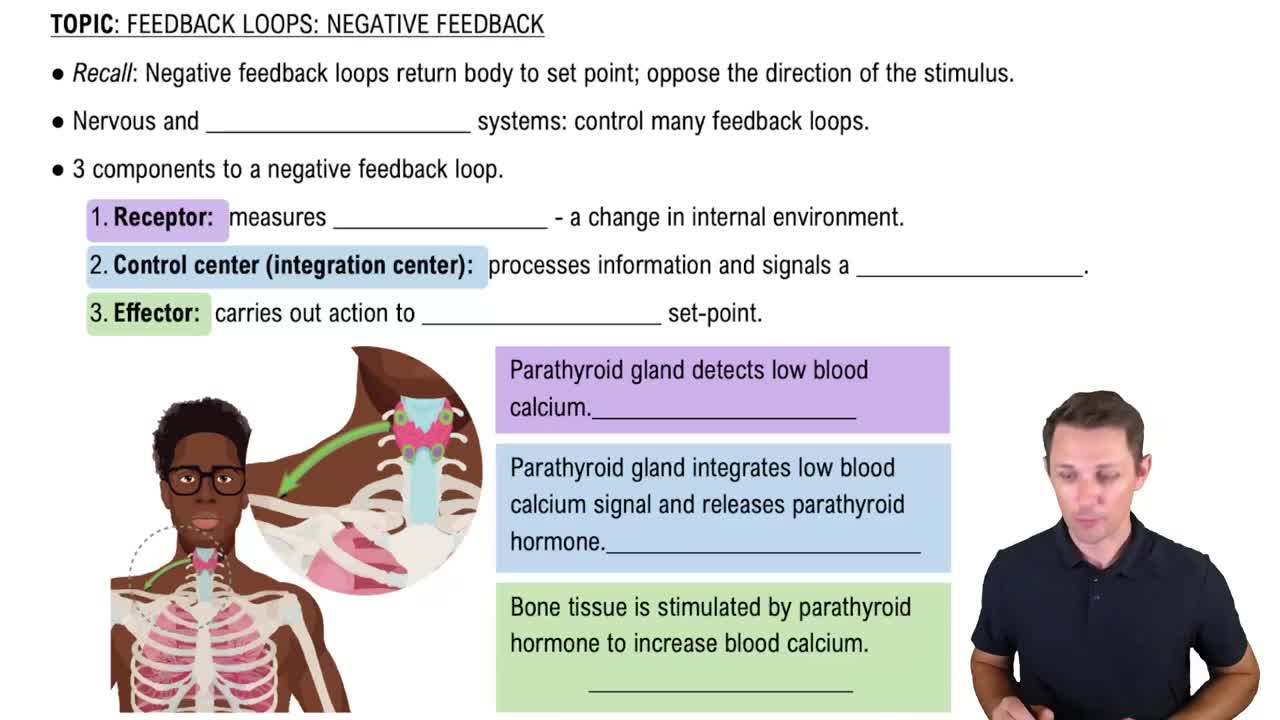
Negative Feedback

Negative feedback is a regulatory mechanism that reduces the output or activity of a system when it deviates from a desired state. In the context of the baroreceptor reflex, when blood pressure rises, the reflex acts to lower it, demonstrating a negative feedback loop. This mechanism is crucial for maintaining homeostasis in the cardiovascular system.
Recommended video:
Guided course
03:26
Negative Feedback Loops